Register

Aftermarket AC: New, Lighter Options

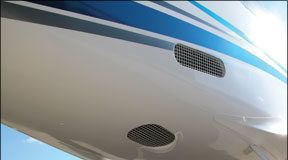
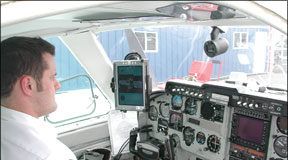
A few minutes of roasting in the summer sun on a hot ramp will leave most any pilot wishing for air conditioning. Unfortunately, three problems stand in the way: weight, power and cost. Light aircraft AC systems have been around for some time, but recent advances in technology are making the project more reasonable. You can add AC to almost any aircraft you want via several STCs or by field approval. Expect to lose between 40 and 90 pounds of useful load and send the aircraft to the shop for north of 100 hours. But it will give a new meaning to being cool on the ramp. The trouble with AC is that compressing the refrigerant takes serious power, either directly from the engine via a driveshaft and clutch or via an electrically-powered compressor. The engine-driven option is usually used for small aircraft. They work passably on the ground at a high idle, but don’t really pack a punch until the aircraft is flying and the engine is turning faster. The compressor must fit somewhere under the cowl but you don’t need a high-output alternator.

Read More »

Cylinder Survey: ECI and Lycoming are Tops

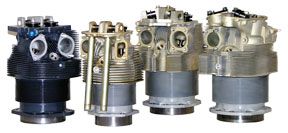
In the four years since our last survey (May 2004 Aviation Consumer), several things have changed in the world of engine overhauls. Teledyne Continental Motors (TCM) and Textron-Lycoming have both pumped up their marketing of zero-timed and factory-overhauled engines. Engine and cylinder rebuilders have expanded their presence with both Engine Components, Inc. (ECI) and Superior Air Parts offering complete engines to the experimental market. Superior is even certifying their Vantage engine to compete with the Lycoming O-360 and IO-360. For all thats changed, however, the long-term viability of your new engine will largely depend on the quality of your cylinders. Is it a better road to use aftermarket cylinders like Superior Millenniums or ECI Titans? Or is it a safer bet to go with the OEM product?

Read More »

Interior Shop Survey: Great Results for a Price

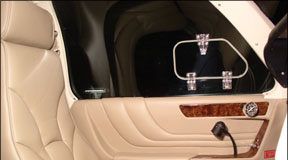
Its the scope of aircraft interior work thats hard for many owners to wrap their mind around. Imagine you want to spruce up your living room. You could spring for a couple slip covers for the tired couch and put down a new throw rug. Or you could strip out everything right down to the studs in the walls and build it up fresh with new wall boards, carpet, built-in bookshelves … you get the idea. Looking at our recent reader survey, aircraft owners exercise the same range of upgrade options on their aircraft. With over 200 responses we saw everything from slip covers to cabin-class makeovers that cost more than a small house. Even trying to narrow this down to the standard seats, panels, headliner, and carpet work to compare is difficult. Consider that some shops might remove a pilot-side panel, clean it, paint it, recover the armrest, and reinstall it. Other shops would take that same panel and refinish the surface, dye penetrate the plastic for color and UV protection or cloth-cover it, perhaps add pen and chart holders or remove and cover a long-unused ash tray, rebuild the foam in the armrest and cover that with Italian leather.

Read More »

Garmin GFC 700: Jet Quality Performance

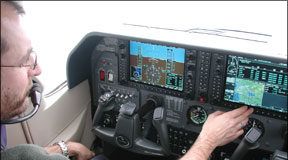
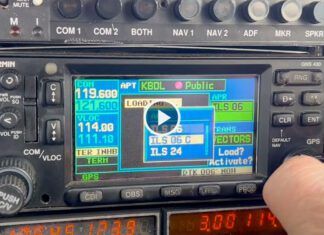
The correct name is the Garmin GFC 700, but most buyers think of it as the built-in autopilot for the Garmin G1000 flight deck. Youll find essentially the same system installed on aircraft from Citation Mustangs to Diamond DA40s. That could mean that the jets have an inadequate system or that the light pistons get jet-level equipment. Its the latter. The GFC 700 is, in a word, impressive. Because the system is deeply integrated into the G1000 flight deck itself, its hard to simply describe the autopilot. Its also tough to make global statements because the exact implementation varies with different makes and models. Well focus primarily on how the GFC 700 works in a piston-powered airplane, but understand that its performance is largely similar for the kerosene crowd.

Read More »

Synthetic Vision: VistaNav Rule

The glass panel revolution hasnt happened yet. The big leap is to synthetic vision, where blue over orange is replaced with a topographic terrain in 3D perspective and navigation is by some kind of highway-in-the-sky (HITS) guidance. The only company to make this leap in a certified system so far is Chelton. For the 99 percent of us who cant invest $100,000 in a full-panel overhaul, however, there are some portable options for under $5000.

Read More »

Online CFI Renewals: Jepp/AOPA is Top Pick

Heres a surprising statistic: Of the just under 600,000 pilots listed on the FAAs records 90,000-or about one in six-are flight instructors. How many actually actively teach? Probably under 50 percent, but instructor certificates are perishable items and the poor slugs who own them must renew them every 24 months. There are various ways to do this, but the most popular seems to be the flight instructor refresher clinic, or FIRC. For decades, these courses meant a three-day weekend sitting in a stuffy conference room with a bunch of other renewing CFIs in a ritual butt-numbing marathon. The dawn of the internet brought the option of grinding through 16 hours of online training sitting alone in front of a computer. All the drudgery without the camaraderie. Aint technology grand? But are these courses any good? Are they even tolerable? We looked at courses offered by American Flyers, Gleim Publications and a collaboration between Jeppesen and AOPA. Each approaches the online challenge differently, but they can be compared in three key areas: content, organization and price.

Read More »

FLIR for FLIBs: Night Vision at a Price

There isn’t one among us who hasnt felt the butt pucker of descending towards minimums on the ILS or approaching a blackhole airport at night when we know the obstacles are out there.What would it be worth to you to see the trees, pavement, towers, and even other aircraft in rain, fog, thin clouds, smoke and darkness? Several companies have true Enhanced Flight Vision System (EFVS) that allow for special approach flexibility under FAR 91.175, but usually these cost north of $1 million

Read More »