Register

Paul Bertorelli

Paul Bertorelli is Aviation Consumer’s Editor at Large. In addition to his valued contributions to Aviation Consumer, his in-depth video productions on sister publication AVweb cover a wide variety of topics that greatly contribute to safety, operation and aircraft ownership. When Paul isn’t writing or filming, he’s out flying his J3 Cub.
Upgrades Gone Bad: Delays Enrage Owners

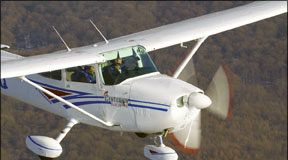
If there’s anything good about disputes between owners and aircraft maintenance shops, its that they don’t happen very often. Unfortunately, if a big upgrade job does go sour, there may be no ready recourse for owners. Legal action is expensive and likely to be unsatisfying and in the end, its better to avoid the dispute in the first place. In other words, pick the right shop at the outset and you wont need to hone your commercial combat skills.Thats the assessment we draw from the experience of two owners who recently contacted us concerning aircraft upgrade projects that took vastly longer than the shop promised and left one owner out a couple of thousand dollars in missing materials and another fuming over both the delay and poor quality.

Read More »

First Word: 12/07

Five years ago, when we began covering the emergence of diesel engines for aircraft, I thought we were certainly looking at the next big thing. I still think that, but the latest bright shiny object has lost some of its luster. Beginning on page 4 of this issue is an in-depth report on ownership experiences with aircraft diesels and the news is hardly joyful. I used the word “tarnished” in this report and I chose it carefully. Bottom line: After three years in the field in meaningful numbers, owners are pleased with the performance and economy of the market-leading Thielert diesels, but they are clearly unhappy with what many describe as poor reliability, high maintenance costs and, most troubling, weak factory support from Thielert. Make no mistake-the market forces favoring diesel are all but overwhelming. Avgas is scarce in parts of the world and expensive everywhere. Cost-sensitive owners are thus spring-loaded to at least consider, if not enthusiastically support, more efficient powerplants. Some want economy for economys sake. Even so, the entire diesel idea could still tank and take a portion of the GA market with it.

Read More »

Thielert Diesel Reliability: Mixed at Best…

When Diamond pulled the wraps off its proposed DA42 Twin Star at the Berlin Airshow in May 2002, we thought theyd lost touch with reality. A new twin in the current market? And powered by automotive-influenced diesel engines just then at the prototype stage? Surely they were joking.No, they werent. And 350 Twin Stars later, the jokes on us. The Twin Star has been a smash hit, especially in Europe and Australasia, where avgas is $8 a gallon, if you can find it at all. But there’s some tarnish on this bright success story. The Thielert Centurion 1.7 engines that power the Twin Star have accumulated what many owners consider to be a poor service history, with numerous premature replacements, cylinder head cracking and at least 22 inflight stoppages that Thielert confirms.

Read More »

Better Hypoxia Training: Rob Bests a Chamber

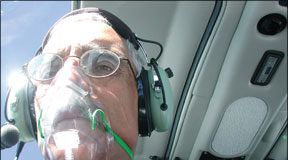
We sometimes think that another word for hypoxia ought to be denial or, at the very least, the phrase “false sense of well-being” should morph to “self-delusion.” In the aviation press, we have beaten the hypoxia topic to a pink pulp, because it lends itself so readily to the pointing of a boney finger at the profoundly stupid things pilots sometimes do. In this regard, hypoxia is the multi-headed beast-we can be dumb about ignoring its dangers, dumb about ignoring training meant to mitigate the risk and really dumb when it actually happens. And how often is that? We don’t really know, because even if an accident is caused by hypoxia, the post-mortem may offer only speculative conclusions. In many GA accidents, the true cause may drift downwind with the smoke from the wreckage simply because light aircraft forensics are so inadequate.

Read More »

First Word: 11/07

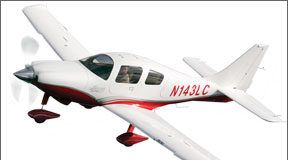
Cessnas announcement in September that it was seeking to buy Columbia had a bit of the sneaky Pete to it. Whether intended or not, the buyout offer got the harder play in breaking news stories, not the fact that Columbia was declaring bankruptcy. Stories in the aviation press seemed to assume that readers and reporters already knew about the bankruptcy and that the Cessna tender was the real news. Yet the two developments occurred almost simultaneously. Interesting timing.

Read More »

A Good Paint Job: How to Judge the Results

Any owner whos recently suffered the experience can tell you that sending an airplane to the paint shop is a six-week, $12,000 crap shoot. Thats if youre lucky and the shop is on its game. Dont be surprised if the airplane is down for three months and you get it back only after paying an invoice 25 percent higher than you agreed to. The world thus fairly wonders if you can buy a decent paint job for under $20,000 and expect an on- time delivery. In our view, there are enough shops out there capable of delivering first-rate paint jobs, but this much should also be obvious: If you expect speck-free dripless perfection for $8000, the people who call you delusional are right. Even the very best paint jobs will have flaws. The secret to satisfaction is to understand whats acceptable quality and whats not. Youll also need to have sufficient negotiating skills to arrive at a mutual understanding with the shop about what constitutes a complete and correct paint job.

Read More »

First Word: 10/07

Ill concede that selling airplanes costing more than a half million bucks isn’t exactly a picnic in the current market. There’s plenty of wealth out there to support such purchases, but the competition is fierce, especially between Cirrus, Columbia and Mooney, all of whom ply the high-performance single market with impressive airplanes that really are the best the industry has thus far produced.

Read More »

First Word: 09/07

Normally, about three days into non-stop AirVenture coverage at Oshkosh, I have a world-class case of the thousand-yard stare. If Im lucky, the vague rivulets of spittle in the corners of my mouth don’t run onto my shirt. This year, there was more new stuff, more airplanes, more vendors and more self-important media pukes running around with notebooks, cameras and recorders than I can ever remember. As Martha Stewart used to say before she taught the girls in C-block to make festive place settings out of prison shivs, its a good thing.

Read More »

Portable Traffic Nags: Zaon, Prox Alert Prevail

Although the odds of it happening are higher than, say, getting whacked by an errant comet, midair collisions don’t rank as top accident causes. Lets hear it for big sky theory. Nonetheless, enough pilots worry about midairs to have sparked a lively market in both panel-mount and portable traffic alerters. Between the portable and panel mounts, there are at least seven systems available ranging in cost from under $500 to nearly $20,000. But are the portables really worth the investment? We think the answer is yes, if a midair collision rises to the top of your list of personal fears. Even the most expensive alerter-Zaons XRX-is still a relatively modest investment and although it wont see all of the traffic, it will see enough to earn its keep.

Read More »

Oshkosh Diary: A Watershed Year

If Oshkosh is to airplane companies what Wall Street is to investors, the mood in the world of general aviation is upbeat bordering on ebullient. At EAA AirVenture 2007 we saw a bumper crop of new product introductions-major and minor-at a well-attended show that may signal a turning point of sorts. Thats especially true for the emerging Light Sport Aircraft category, thanks to both Cessna and Cirrus announcing full-blown LSA programs which send the unmistakable message that they finally take this idea seriously. There were lots of hey-did-ya-see-that moments at AirVenture, but the biggest came from Eclipse, which flew in an intriguing single-engine “concept” personal jet that it claimed to have built in about 200 days in an off-site skunk works in Virginia. We werent entirely surprised by this, given persistent rumors of Eclipses plans before the show. But the fact that Eclipse CEO Vern Raburn actually taxied the thing up to the Eclipse exhibition was a stunner that were sure got the attention of Diamond, Cirrus and Piper, all of whom are toiling away on single-engine jets of their own.

Read More »

More Cabin Coolers: Swampy Gets Chilly

Our June report on ice-based cabin coolers drew a challenge from one of the manufacturers, Swampy Cooling Systems. Shortly after our report appeared, Swampy fired off an e-mail asking if we had done our tests correctly. Swampys Jack Stich told us the companys own tests and reports from customers revealed that its IM30 cooler was capable of blowing 60-degree air. (Our tests showed about 70 degrees.)

Read More »

The LSA Purchase Conundrum

I will freely admit that I have taken cynical delight in shamelessly abusing lunchtime conversation with the tired old joke about knowing there’s money in aviation because I put it there. Its mercifully fresher than the old large-to-small fortune groaner and is thus funnier because it resonates so we’ll with anyone who owns an airplane or who has been remotely associated with anyone who has. And now comes the latest chapter in the dumping-money-into-aviation story, the Light Sport Aircraft phenomenon.

Read More »
Loading Posts