











Only 10 years ago, the idea of a certificated, “plastic” airplane had many old-timers shaking their heads in skepticism. It looks kind of interesting, but no “real” pilot would want of those things-its got a parachute, fergawds sake! Today, the Cirrus SR20-and especially its big brother, the SR22-have upended traditional ideas of what a personal airplane should look like, how it should be used and how it should be equipped. The SR20 could be thought of as the product that started changing how the industry thinks of a modern personal airplane. Those changes have been evolutionary, not revolutionary. For example, the early SR20s, in fact, retained the too-familiar vacuum-powered “steam gauge” flight instruments, albeit complemented by a large multifunction display. Todays copies have eliminated the vacuum system and gone all-electric, with full glass panels; steam gauges are only there for backup. And even if the SR20 responds respectably for its horsepower, performance didnt break new ground, either. Though living these days in the shadow of its big brother, the SR20 has a lot going for it: It is comfortable, is relatively economical to acquire and operate, has simple systems, comes with a well-defined support network and is faster than much of its direct competition. Later models feature the most-modern technology available in personal aircraft. Refinements continue to be applied, not just to the instrument panels but also to major airframe components. Oh, and it has an airframe parachute, too. Ten years in the making, the market for used SR20s is mature enough to make it a very real option for buyers considering more traditional designs offering less. 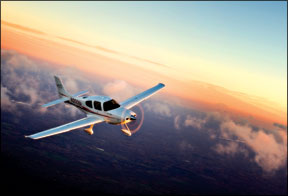
History
Cirrus Design began life offering a kit for the VK30, a composite piston-single pusher seating five. By 1993, company founders-and brothers-Alan and Dale Klapmeier announced kits were a dead end for them. Even so, they maintained traditional airplanes from Cessna, Piper and others were too hard to fly, lacked intelligent safety features and failed to push the technological edge in both design and manufacturing. “We have to lose a lot of this macho stuff,” Alan Klapmeier told us in a 1997 interview. “Making it too hard to fly is not a good value.”
What eventually became the Cirrus SR20 emerged from that philosophy and, from the beginning, was a different airplane. In addition to the materials used for construction, its side-stick controller, swing-up doors and then-state-of-the-art multi-function display immediately set it apart from the traditional airplanes coming from Wichita and Vero Beach.
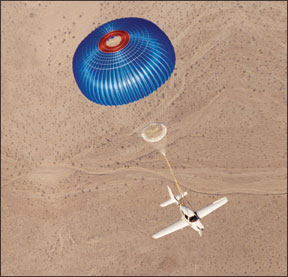
The most innovative detail, however, and the one garnering all the attention in the months and years leading up to the SR20s certification, was the Klapmeiers insistence every Cirrus sold would come with an airframe parachute as standard equipment. Their desire stemmed from a 1985 mid-air collision involving Alan Klapmeier, which resulted in the other pilots death. Based on that experience, the Klapmeiers realized no matter how well-trained or experienced one might be, there were situations where there was nothing a pilot could do to save the airplane, himself or his passengers unless some kind of “whole-plane” parachute was developed.
The Klapmeiers gambled the parachute would make their brainchildren stand out on the market and resolve much of the anxiety many passengers (and more than a few pilots) associate with personal aircraft. At the time, no one had proposed equipping an airplane as large and fast as the Cirrus with a ballistic parachute. Reaction was mixed, with many predicting the FAA would never sign off on the idea.
They were wrong. Cirrus worked with Ballistic Recovery Systems through a number of designs for what came to be known as the Cirrus Airframe Parachute System, or CAPS. The system exacts an 85-pound useful load penalty-and a recurring maintenance expense.
There is a six-year replacement on a pair of line cutters used in CAPS deployment that costs approximately $1200 total. Thats cheap compared to the 10-year CAPS repack, which is $9385 in parts, plus 30 hours of labor for pre-2004 aircraft and 8 hours for later ones. The difference comes from a CAPS access panel added in the G2 revision of the design.
The CAPS system has proven successful in our mind at what it was designed to do: lower an airplane and its human cargo to the ground, giving both a chance to fly again. To date according to Cirrus, there have been 20 CAPS events, involving five SR20s and 15 SR22s. In total, Cirrus points to 35 lives saved aboard the 20 airplanes. Notably and despite lore to the contrary, deploying the chute does not automatically total the airplane. One of the first deployments involved an airplane whose aileron detached in-flight. The pilot escaped without injury while the airplane was recovered, repaired and returned to service. In at least two other CAPS events, the airplanes were expected to be repairable.
The FAA granted a type certificate in late 1998, and the first airplanes were delivered as 1999 models. Cirrus initially offered the SR20 in three option tiers, originally designated A, B and C, which we’ll explore in a moment. Todays offerings continue that theme, with the S, GS and GTS versions, escalating in both features and price.
Borrowing a page from Henry Ford, customers initially could order their Cirrus in any color they wanted, as long as it was white. This lack of color choices stemmed from an FAA-imposed limitation borne from fear that darker, heat-absorbing colors would hasten the composite structures deterioration. As experience was gained, darker colors have been allowed. Most early Cirri come in a white or ivory base paint, with multi-
colored striping. Both the SR20 and the SR22 carry a 12,000-hour airframe life limit.
Model Differences
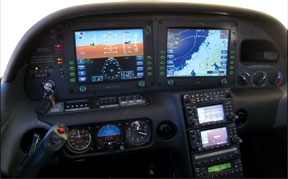
Trimble bailed out of the light aircraft avionics market before the first Cirrus was shipped and Cirrus wisely adopted Garmin for its panels. The A-spec airplanes came with a GNS430, a GNC250XL, an audio panel and GTX320 transponder, plus the ARNAV ICDS 2000, a then state-of-the-art multi-function display, or MFD. For autopilots, the “A” aircraft have S-TEC System 20s, upgradeable to System 30s, which include altitude hold. All of the early aircraft used vacuum instruments but had an electric back-up vacuum pump. Rounding out the panel are analog engine and systems gauges clustered on the far right.
Meanwhile, “B” airplanes have a GNS420 in place of the GNC250XL, the System 30 is the standard autopilot and a Century NSD360 vacuum/electric HSI is fitted in place of a vacuum-powered directional gyro. The C-spec airplanes have dual GNS430s, System 55 autopilots, dual alternators and a Century NSD1000 electric HSI. Options for the “B” included dual alternators, leather seats and three-blade propellers, with roughly 70 percent of SR20s being loaded “C” models.
Beginning with serial number 1268 and the 2003 model year, Cirrus did away with vacuum systems and introduced the all-electric airplane. The A, B and C designations evolved to 2.0, 2.1 and 2.2, respectively. The all-electric airplanes have dual alternators-a 75-amp main alternator and a 35-amp secondary unit-plus dual batteries. There also are two busses, a main bus and an essential bus for critical load items such as nav and comm functions, and lighting.
The 2.0 airplane didnt change much over the old A airplane except in the case of the ARNAV ICDS 2000: Cirrus switched to the Avidyne EX3000C, a higher resolution MFD widely acknowledged as more sophisticated than the one it replaced, but-since it wont accept external sensors such as data from a remote-mounted Stormscope-one intended for the VFR or IFR-lite pilot. The all-electric 2.0 offered a DG, but most buyers opted for the NSD1000 HSI. The 2.1 airplanes have an Avidyne EX5000C and NSD1000 as standard while the 2.2 airplanes featured a pair of Garmin GNS430s, the EX5000C and a Sandel SN3308 electronic HSI. Most airplanes delivered have the 2.2 package.
In early 2004, Cirrus introduced the G2 models of both the SR20 and the SR22, featuring a new door design, better interiors, a redesigned firewall for improved crashworthiness and other upgrades. Cirrus says G2 airplanes have slightly less drag and are thus a knot or two faster than previous models. Later that year, Cirrus began offering the SRV, a VFR-only model intended for the training and low-end market. For 2008, the G3 SR20 variant was introduced, featuring the wing from the SR22 G3, redesigned landing gear and a 50-pound useful load increase, among other changes. The new wing added a few knots to the airplane.
Many would-be buyers might wonder if an early SR20 can be retrofitted with a PFD or if a vacuum model can be converted to an all-electric model. Cirrus says these upgrades arent possible, but kits are available to replace the ARNAV ICDS 2000 with the more-capable Avidyne EX5000C, and many of the early aircraft have already had this upgrade. This change accommodates state-of-the-art options like displaying remote Stormscope and Skywatch data, incorporates EMAX engine monitoring, XM WX datalink and CMAX, Avidynes electronic approach plate system.
Current SR20 models start with a Garmin G1000 panel using 10-inch PFD and MFD screens, dubbed Cirrus Perspective, and then add options like larger screens, XM WX, enhanced vision, lightning detection, traffic or terrain warning. Avidynes Release 9 PFD/MFD also is available.
Thats a somewhat dizzying array of configurations over the SR20s 10-year production run, during which 1025 copies have been produced so far, according to the company. Of the total, 417 are in the original “A/B/C” configuration, 462 are G2 models and 146 are G3s.
Engine and Systems
All SR20s have been fitted with the same engine since production began: the 200-HP six-cylinder Continental IO-360-ES. Its a somewhat unusual choice but one yielding sufficient power and remarkable smoothness. The engines TBO is 2000 hours, but overhaul costs are on the high side, at about $28,000. Throttle and RPM control are done via a single lever that moves both cables. Full throttle will yield 2700 RPM. A reduction of power brings 2500 RPM where it will stay until power is so reduced it cant be maintained.
This is done through a cable-and-cam arrangement that works we’ll enough, but there’s no way to find an RPM sweet spot, and some owners have complained about rigging difficulties and trouble getting precise power settings. Most of these airplanes have three-blade props but those with two-blade props (especially in the early years) may have better weight and balance numbers without a hit to performance.
With the exception of aluminum control surfaces, the airframe is entirely composite. The wing is constructed with a beefy, continuous spar. Control surfaces are activated via cable from side controllers mounted on the cockpit walls. Trim is electric only, with coolie hat buttons on each stick, a sore spot for some owners, who say they would like a manual trim wheel for back-up and fine-tuning.
The Cirrus wing has a stepped leading edge thats supposed to stall the inboard section first-allowing roll control throughout-and be resistant to spinning. The airplane is not approved for spins, nor did it undergo official spin testing. If a spin develops, the first anti-spin response is roll input with ailerons, but the official response is deploying the parachute.
Cirrus airplanes are designed with crashworthiness in mind. The SR20s fuel supply, for example-60.5 gallons total; 56 gallons usable-is stored between the wing spars and we’ll outboard of the cabin, providing significant crash protection. The landing gear is designed to absorb energy and flex into the wing inboard of the fuel cells, thus leaving them intact in the event of hard landing or crash. The seats are 26G-impact designs and each has four-point harnesses with inertial reels. If the worst does happen, the airplanes come with a crash hammer so occupants can extract themselves. One major safety feature is the lack of yokes to impale front-seaters during a head-on impact.
Performance, Comfort
Performance-wise, the SR20 should be examined as both a high-performance airplane and as a fixed-gear cruiser. As a fixed-gear cruiser measured against the likes of the Cessna 172 or 182 or the Piper Archer, its respectably fast. Although Cirrus initially claimed 160-knot cruise speeds, 145 knots for the older models to 155 knots for a G3 SR20 is more like it. Cirrus notes that a slow SR20 should be checked for proper rigging.
Although the SR20 is adequately powered, its not overpowered. At 3000 pounds, its heavier than most airplanes with 200 HP. At moderate weights, expect 700 to 800 FPM initially, falling off to 500 FPM above 4000 feet. Given its weight and the power available, expect the airplane to be somewhat of a dog in high-density altitude situations. Owners say the POH is on target for fuel burn at about 10.5 GPH for typical cruise, although some report higher fuel burns. Still-air range is about 675 miles, with 45-minute reserve, when planning to use the full 56 gallons legally available. Down-fueling to the tabs allows more cabin load but dramatically cuts endurance to less than two hours.
Initial max weight for the SR20 was 2900 pounds but a later service bulletin, if complied with, allowed a gross of 3000 pounds. The SR20 G3, meanwhile, has a max gross of 3050. Cirrus initially claimed a standard empty weight of 1875 pounds for a useful load of just over 1025 pounds.
Not really, say owners. Empty weights are typically 2000 pounds or more with useful loads of just under 900 pounds. With full fuel, that leaves 560 pounds for people and stuff. CG tends forward rather than aft. This requires heads-up flying, for the airplane is not blessed with an over-abundance of elevator authority.
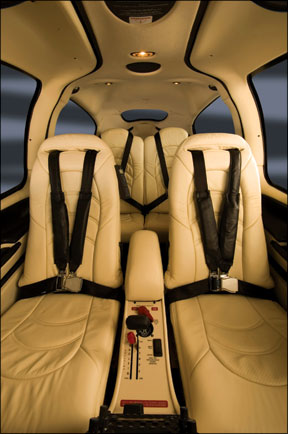
Both the front and back seats of the airplane are exceptionally comfortable by GA standards. With no yoke to obstruct the view, the front seats are like flying from an easy chair, with an expansive view out the generous side windows. The side-yoke controller is easy to adapt to by using a rest provided for your forearm. The airplane generally rivals the Bonanza in handling ease.
Maintenance, Support
Cirrus largely achieved its goal of building a low-maintenance airplane. There are 11 ADs on the airframe, two or which relate to minor issues with the parachute firing mechanism. Initial problems with hard starting of the IO-360 and failed starters were addressed with tweaks to the fuel system. Early models had landing lights mounted on the cooling baffling in the air inlet, which caused them to fail frequently. The mount was reworked and newer models have the light in the cowling.
One complaint involves failures and frequent repairs for the Century NSD1000 HSI, something not unique to Cirrus aircraft. We would consider replacing this with a used Sandel or a Bendix/King system. Service difficulty reports show several incidents of cracked crankcases due to vibration in the alternator bracket, which Cirrus has addressed. Another area of complaint is poor fit of the doors and in-flight openings. Cirrus concedes that the design and fit of the early (pre-G2) doors isn’t the best. However, the company insists that doors on any model can be made to close securely, if adjusted correctly.
A third area involves electrical connectors, which generally are taken from the automotive industry. Especially for an all-electric airplane, they might be a poor choice. They can be the source of system failures or intermittent gremlins. Maintainers often apply liberal doses of corrosion-preventing lubricants-along with harsh language.
Another issue, and one resulting in AD 2006-21-03, involves the brakes. Since all Cirrus models have free-castering nosewheels, directional control at low speed is done via differential braking. Some pilots may have used the brakes to control taxi speed instead of reducing power. The predictable result: overheated brakes, leaking fluid and the occasional fire. Depending on serial number, the AD calls for a one-time O-ring
or caliper replacement, plus trimming the wheel fairings, installing temperature indicators and inspection holes.
An AD issued in 2008 (AD 2008-11-18) requires a 100-hour pressure-test inspection of the exhaust systems installed on early SR20s, serial numbers up to 1815. Carbon monoxide can leak into the cabin from cracked components, potentially disabling the pilot. Were not aware of an alternative method of compliance.
None of the owners who have been through a couple of annuals and contacted us reported unusual costs. Note, of course, the ADs issued against the airplane so far have not involved the composite structure but, instead, involve systems or accessories. Its still too soon to say that composite airframes are less maintenance-intensive than their metal forebears, but indications so far are positive. Certainly, corrosion will not be an issue, but problems unique to composites may take decades to surface.
Service History, Type Club
In 2006, we tracked down the first SR20 in private hands to learn how it had fared. At seven years old and on its second owner, SR20 serial number 1005 had 1146 hours on it when we tracked it down. Gary Hudnall, the director of maintenance at the owners shop, summed up his experience with that mechanics shrug. “Its just like any other airplane,” said Hudnall. “They (Cirrus) had a lot of little problems at first, which is to be expected, but theyve been really good about addressing those problems.”
Wear and tear is inevitable, however, and the airplane had a few age spots. There was a small crack, for instance, in the finish of the leading edge of the right horizontal stabilizer. The owner was concerned enough to send photos to Cirrus for assessment; he was assured that the crack was a surface flaw and not a delamination of the composite material. His paint technician will sand out the crack and repaint the area.
By far, the most vexing problem on this aircraft involved premature vacuum pump failures. In all, Cirrus paid for seven replacement pumps in 17 months. An attitude indicator and two directional gyros also were replaced. Finally, the owner, Cirrus and engine maker Continental agreed it was time for drastic action: Cirrus and TCM replaced the entire engine with a new one, with the cost pro-rated.
At the time, we wrote, “The number of ADs, service bulletins and service difficulty reports (49) is surprisingly low for a clean-sheet airplane and none are major worries. With seven ADs and more than 300 SDRs, Cessnas re-heated 172S hasnt done quite as we’ll as the SR20 in this regard. On the other hand, Diamonds DA40 Star, also a clean sheet design, has no ADs at all.” In all, the SR20 seemed about average in durability, representing no major breakthroughs in either long-term durability or reliability.
As for type-club support, you cant get much better-organized than the Cirrus Owners and Pilots Association (COPA). The organization maintains an excellent Web site (www.cirruspilots.org) with both public access and members-only forum sections. Its a must for any would-be Cirrus buyer.
Owner Comments
I purchased a 2006 SR20 new from Cirrus in November of 2006, and traded it in for a demo SR22 this past November. I had just received my private pilot license when I bought the SR20, and it was my first airplane. I went on to get my instrument rating in the airplane, and flew it 100-150 hours a year.
Most of my flying was for pleasure-training, $100 hamburger runs, and up and back from Connecticut to the Adirondacks in the summer on weekends. Although I did go back and forth to North Carolina a number of times, and to Louisiana once for a Cirrus Pilots Proficiency Program (CPPP) training weekend.
The plane had a few squawks at delivery, but everyone at the factory worked hard to get it right and I trained on a loaner. The transition training was thorough. After I brought the plane back home (at the time HPN), I had a series of minor electrical squawks, that resulted in an MCU being replaced twice. After those initial kinks were worked out, the airplane was relatively squawk-free during my ownership.
I found the plane perfect for my missions. Comfortable, relatively simple to fly, terrific situational awareness with a sophisticated avionics suite (Avidyne/Garmin), and I loved having the XM weather. I ran the plane lean of peak at cruise, and could always plan on 140 knots and 8.9 GPH, and would often beat that by a few knots.
Climb performance was fine in the cooler months, but in the summer it could take some time to get to altitude (well under 500 FPM after 5000 feet). Useful load with full fuel (56 gallons) was 484 pounds, which was plenty for most of my missions. And at only 8.9 GPH, it had reasonable range at even less than full fuel. I had the ventilation fan, but in the summer, even at altitude, it could get pretty warm in the cabin due to the large windows.
My annual operating costs were $3161 for insurance (with $300K hull value), $1375 for subscriptions (Jeppesen-included CMAX charts for the MFD) and XM at $685. My annual inspection typically ran around $3000.
I really loved the plane, but a new business requires significant travel over greater distances, and the SR20 was just not suited for those trips (slower speed, lack of ice protection, range, etc.). I traded in the SR20 for a FIKI turbo SR22. But the only reason I did was because my mission changed. For a typical pilot with shorter trips and living in the east where climb performance isn’t as important, the SR20 is a terrific plane.
Andrew Barnard,
Via e-mail
We acquired the airplane in 2000 after a close study of the Cirrus and competitive airplanes. The airplane was placed in service on a leaseback to a flying club and it flew between 250 and 400 hours a year, of which our use accounted for perhaps half.
The airplane was delightful to fly but expensive to maintain. Problems with wire crimps, vacuum pumps, the master electrical control box and high and low temperature engine starts pushed the new Cirrus service capability to the limit. Parts shortages and erratic troubleshooting support continued for 2-3 years.
When Cirrus upgraded their support service business these problems moderated considerably. Still, ownership costs for the airplane continued to be higher than we expected, with the electrical and mechanical systems causing most of the difficulty.
We normally saw 145 knots (not 160) with fuel burn about 10 percent above the book. We created our own performance database for flight planning. Airplane speed is sensitive to dirt and contamination on the wing, washing and waxing before a long trip improved cruise speed several knots, at least until bug contamination occurs.
On long flights the airplane provides good comfort and excellent flight information for the IFR or VFR pilot. As with any high performance airplane, planning, practice and attention to detail are rewarded with safe and exhilarating flights.
We owned the airplane for nearly seven years and now fly a 2006 SR20 with Avidyne glass and GPS-WAAS. Maintenance costs for this airplane appear to be significantly lower than we experienced with our first airplane.
Peter Morton,
Langley, Washington
My wife and I owned a 2006 SR20 we bought directly from Cirrus. The factory certified aircraft was not we’ll maintained at all. We got home and found several things wrong with it. We had them all fixed, such as a leaky fuel pump, alternator belt chafing, brake fluid leak, etc.
The doors are hard to shut, the parking brake is hard to engage and the circuit breakers are hard to see. Then we were constantly bringing it in for some new AD and AD reversal so things could be altered. We also realized how bad the stall characteristics are with this aircraft. The wing falls off sharply in a power-off stall.
The only really nice thing about this overpriced airplane, besides the avionics, is the lean-of peak performance, whereby we were able to cruise at 132 knots at 7.6 GPH.
We sold it and bought a Grumman Tiger, which we love.
Brian and Ruth,
Via e-mail
I purchased a 2003 SR20 in April 2009. I live in Riverside, California, where it tends to get hot from spring to fall and a major expense has been the easy overheating of the engine. Solutions offered from other Cirrus owners included increasing the fuel flow, leaning aggressively right after takeoff, climbing at over 100 knots, not flying on a hot day. I tried all of these without a complete solution to the overheating problem.
Procraft at the Corona Municipal Airport was great in attempting to solve the overheating solution. We tried putting gills in the lower cowling. This gave a 30-to-50-percent improvement in cooling but wasnt the complete fix. Then, I came across a remote oil cooler from Steves Aircraft in Oregon, which was installed under a field approval and solved the problem. The cost for all of this was around $5000; expensive but much less than a new engine.
About the same time I was working on my problem, the shop next door had an SR20 getting a top overhaul because of overheating.
The SR20 is a little underpowered. Attempting to fly the downdrafts can produce a slight pucker factor. The airplane is challenged to get above 12,000 feet.
The weight and balance limits do not allow full fuel and four full-size people. I usually get 135 knots burning between 9.5 to 10 GPH. Both EGT and CHT probes need regular attention: Either a connection loosens or the $160 probe dies.
My airplane has the all-electric steam gauges. An upgrade to the Avidyne software was expensive, and I still have to upgrade the Garmin 430 to WAAS, but havent done so yet because of cost.
While not the fastest plane I have owned, nor the most capable, it is the most comfortable. I like the CAPS system, but am not looking forward to the 10-year repack expense.
Clarke Prescott,
Via e-mail
I purchased a new SR20 in October 2005 and traded it in for a Turbo SR22 in June 2009. In the 3.5 years we owned the SR20, we put 720 hours on it and loved every minute of the experience.
It was a steady 9.7-GPH plane and cruised at 150 knots, as advertised. The insurance on the plane at one million liability and replacement hull value for two instrument-rated pilots was only $2600 per year. With our fixed costs, the 20 averaged $125 per hour to operate. I know of no better value in aviation.
Once you go glass you’ll never go back. With the Avidyne avionics and the XM on-board weather it was safe and a dream to fly. We all know how nice the interiors are, which makes it a great family and friend flyer.
I would recommend this plane to anyone that it fits their mission profile. With the increased costs of flying the Turbo FIKI SR22, I do miss our SR20.
Brian Bailey,
Via e-mail