











As a professional aircraft appraiser, I was retained to perform an appraisal on a 1978 Grumman AA5B Tiger not too long ago. I met the owner at his hangar and when he rolled open the hangar door, I wasnt prepared for what I saw. It was one of the saddest airplanes that I have ever seen. It sat in a hangar that had housed it for three years as it collected dust on what had once been a good, fresh paint job. Its partially deflated tires were sitting in an inch of water, possibly from a roof leak. This airplane showed three years of neglect. Fortunately, the sliding canopy was closed so most of the dust had not penetrated the interior. The airplane was about three years out of annual and it had not been flown or even run in those three years. This airplane was not going to appraise for very much money, even though the owner expected that it would. What was really sad was that the owner had owned the airplane for several years and had taken good care of it until three years before the appraisal. He had even installed new avionics just before he abandoned the airplane to sit idle in the hangar. If he had performed just two annuals and taken a trip around the patch once a month, it would have been worth several thousand dollars more in its market value.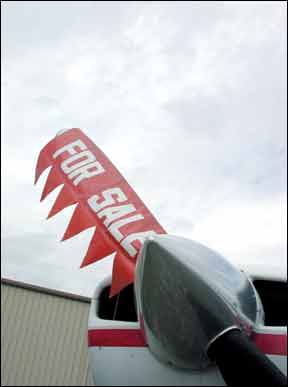
Neglect Kills Value
This owner was not alone in presenting his airplane for appraisal without properly preparing it. It doesnt take much effort to make an airplane more presentable and valuable without investing much or any money. I have appraised airplanes that have not had the interior cleaned since the last long flight. Surprisingly, this occurs quite often in corporate, cabin class and turbine equipment, which you would expect to be better cared for.
One Navajo had a week-old fried chicken dinner that had been left to spoil in the cabin. After one week in a closed cabin sitting in the Texas summer sun, the cabin was pretty rank. This was not an isolated case, either. For some reason, many owners don’t clean the cabin even when they know an appraiser will be looking at the airplane.
“Just check with the FBO and they will give you the key and/or open the hangar for you,” is about all the effort some owners are willing to exert. When I ask about the logs and records, many owners sound puzzled and even ask if I really need them. Yes, I really need them. They are a core part of assessing the value of an airplane. Make no mistake, the logs and records are 80 percent of what I need for a good appraisal.
Lets go back to our poor abandoned Grumman Tiger. Up until the day he began neglecting it, the owner had kept meticulous records and had maintained the airplane on a regular basis. This was reflected in the logs and records. While nothing could erase three years of neglect, good records helped establish that the airplane had been we’ll cared-for most of its life.
Consequently, the appraised market value was for more than it would have been without the records. Keep this in mind when youre organizing your own records. we’ll preserved records will return far more than the effort it takes to organize them.
Technically, I guess it shouldnt make a difference in the appraised value. But, lets