











Not so long
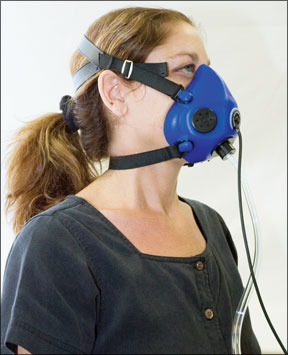
monitoring devices, all at competitive prices. In fact, since we last reviewed oxygen equipment in our August 2001 issue, the industry has almost reinvented itself, due in part to advances in the medical market.
If your portable system dates back to the days when loran was the hot choice for navigation, there’s no need to spring for a complete new system to benefit from the latest stuff. After all, a cylinder is a cylinder. Instead, upgrading some basic components may be the way to go. We asked Aeromedix.com, Mountain High and Precise Flight for examples of their latest oxygen gear, then we plugged and unplugged hoses, donned masks and played with high-tech regulators. In the process, we found some good reasons to upgrade.
Regulators
Once oxygen is in a portable cylinder at something like 2000 PSI, you need some means to reduce the pressure to breathable limits. Regulators perform this function by stepping down the high cylinder pressures closer to the values youd expect when inflating the airplanes tires. Regulators also distribute the oxygen to more than one user, depending on how many hose fittings they accept. Older designs, with push-and-twist quarter-turn fittings-like a BNC connector-could be difficult to connect and disconnect. Not the new stuff.
The latest regulator designs offer a more positive locking and release mechanism; we doubt wed be fumbling around to ensure all the plumbing was connected in the midst of a high workload situation while at high altitude. These regulators appear to be better made and more robust than the old medical stuff, with hose fittings that are either Delran or nickel-plated brass. Aeromedix.com and Precise Flight have metal connectors, while Mountain Highs are Delran, a hard, nylon-like plastic.
The regulator we liked best was Mountain Highs $295 FPR (four-place regulator). Optionally available with its own pressure gauge, this regulator is we’ll made, with medical-grade push-to-release fittings. For lack of a better description, the regulator is shaped like a tulip, with the flowers upper third lopped off, producing a flat top surface, which is where the outlet hoses connect.
Finished in a matte silver-gray with black, we liked the aesthetics more than the green-anodized regulators offered by the competition. For one, you can see that all hose connections to the regulator are fully seated at a glance and for another, you can get a finger on the disconnect plungers without twisting or turning the whole tank. That can be a pain in a tight cabin. Regulators from both Aeromedix.com and Precise Flight featured the same kind of connectors, but located around the regulators circumference, not its top.
As noted in our previous report, Mountain Highs conserver, the $800 EDS O2D2 two-person electronic oxygen-conserver kit, is a three-AA-battery-powered device (with a 4.5-volt external power option) about an inch thick, slightly wider than a card deck and weighing a couple of pounds. Keep in mind that this isn’t a regulator; you still need one of those to reduce pressure into the conserver itself. Two electromechanical buttons select the desired oxygen flow, with predetermined mode settings for certain altitude ranges, masks instead of cannulas or if more O2 is needed on a spot basis.