











Just as you thought it was finally safe to buy a cylinder, now comes a crisis over camshafts. Specifically, engine shops tell us theyre seeing premature wear and failures due to spalling and many also report that cams that used to make it through one TBO run and into another are now too worn to reuse.
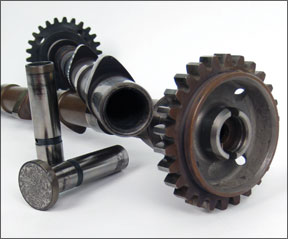
This trend has actually been brewing for a number of years and no one seems able to say definitively if its getting better or worse. Opinions bridge the divide. “Definitely worse, in my opinion,” says Penn Yan Aeros Bill Middlebrook, who shipped us a couple of scrapped cams to prove the point, along with a couple of spalled lifters. “We had a brand new cam come apart in the test cell-it wiped one lobe,” he added. This sort of thing used to be limited to Lycomings, whose cam is mounted higher in the engine core, away from oil misting from the crankcase and in line with blowby from the cylinders.
But lately, shops tell us theyre seeing more cam-related wear issues in Continental engines, too. TCM seems to have noticed this and in 2005, it issued SID 05-1, a service directive related to cam and tappet wear.
Chicken or Egg?
And speaking of tappets, some in the industry think thats definitely the problem and a worn cam is the secondary result. “We think the problems definitely start in the lifters, predominantly,” says Greg Merrill at Aircraft Specialties Services, a Tulsa house that regrinds and reconditions cams and tappets for many engine shops. His company also developed CamGuard, an anti-wear, anti-corrosion oil additive.
“We do see the occasional cam with a bad lobe, but its rare. Its almost always a problem with the tappets,” Merrill adds.
What exactly is going on here? Everyone has a theory, so take your pick. Some, like Allen Weiss at Opa Locka, Floridas Certified Engines believe that something changed in the fuel or the oil in the recent past, recent being perhaps in the last 10 years.
Weiss has been in the engine business since 1978 and he and other shop owners tell us that they used to routinely reuse camshafts from first-run engines, often with a regrind. “Im going from memory, but we used to reject one cam in 20 for reuse; now its more like one in seven,” Weiss told us.
Weiss doesnt necessarily buy the standard explanation that infrequently flown engines are subject to corrosion and since flying hours are down, rust is up and thats whats causing the problem. “I just don’t see a pattern here. We see cam failures in engines that are flown a lot, in engines that arent flown much, in airplanes that are hangared and not hangared. Even in some flight school airplanes,” Weiss told us.
One shop, who asked not to be named, said it conducted a metallurgical evaluation of cams and tappets and believes the problem is tappets, not cams. During a period prior to 2000, this shop owner said, both Lycoming and Continental used the same manufacturer for tappets and they were being produced without the correct hardening of the tappet-to-lobe surface. Because the point loading between cams and tappets is among the highest load in the engines, slight variations in hardness or surface quality can rapidly degrade into a lunar landscape. (See the photo above.)
Not So Fast
Aircraft Specialties Greg Merrill doesnt buy that theory. “Weve crawled down into the pits of these things with electron microscopes and were just not seeing a metallurgical issue. I think the chemistry in the metal is generally okay,” he explains. While he concedes that occasional quality issues are inevitable in both cams and in tappets, he believes that corrosion is probably the larger actor.
“Corrosion pits set up the chain of events. Usually, its the lifter first, predominantly,” says Merrill. Moreover, Merrill says he doesnt totally agree that the incidence of cam failure is on the rise. But he has his own theory.
“We see a direct relationship in Lycomings-when a cam has failed, its very likely that a cylinder had been removed at some point,” he says. That means the engine ran on mineral oil for awhile to break in the new jug and if it was replaced, chances are the compression tanked. That means the cylinder may have run for an unknown number of hours with a hot stream of blowby blasting the cam, which is located