











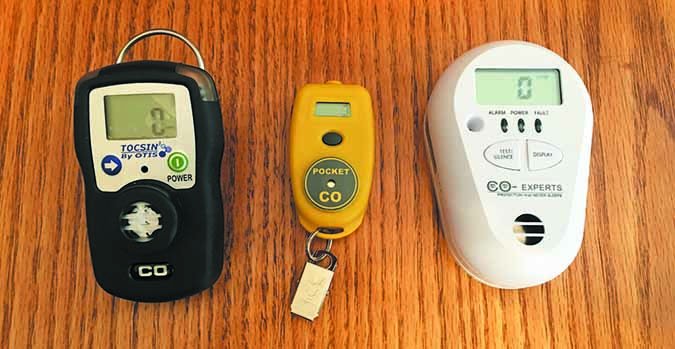
We’ll say it up front—in the great scheme of things, your risk of getting hurt or killed in an aircraft accident due to carbon monoxide poisoning is on the low end of the spectrum. From what we can tell, it’s a little below that of having a midair collision. Nevertheless, it’s not zero, our airplanes are aging and maintenance isn’t perfect, so if you fly in an area where you use your heater during at least half the year, we think it’s wise to have a detector in the airplane that will alert you to even very low levels of CO.
CO in the cockpit usually arrives through the heater ducting due to a crack in the muffler. Cracks don’t heal themselves. Worse, they can get dramatically larger on short notice and deliver a massive quantity of toxic, odorless, colorless gas. Being able to detect low levels of CO means being able to fix a problem before it becomes severe.