











Hows this for the ultimate incongruity: Bose headset, full glass panel, electric trim and a Garmin GPSmap 496 with NEXRAD and TIS traffic, all slipped into the front end of a Cub with quite a lot of room to spare. Although were sure William T. Piper could never have imagined it, thats exactly where we are in the brave new world of emerging light sport aircraft. If the original LSA concept included as much as a passing nod to simple and unsophisticated, the reality may be anything but. Not that were complaining. Over the years, weve paid periodic homage to that which William T. wrought, the venerable yellow J-3 Cub. Were doing it again in this issue, with a revised 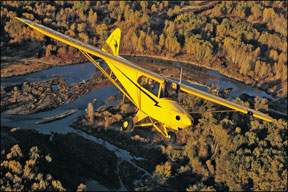
In the meantime, we recently examined both aircraft and compared them in brief flight demonstrations. For our purposes, the overarching question is this: You can buy a real Cub for about a third of the cost of a new CubCrafters or Legends LSA version. So why do these guys think they can sell reheats of the old design, when something like 5500 of the original 14,125 Cubs are still out there, churning through the used market? Two answers: One is the lure of new. Some buyers simply want factory fresh airplanes. Period. Second, a substantial number of LSA buyers don’t know the yellow Cub mystique from a cow pie, they just want a cool little airplane. Thats what William Piper figured out 70 years ago and its still true today. Only the numbers have changed.
Two Approaches
Were calling these airplane Cub clones, but thats a misnomer of sorts. The only thing cloned is the Cub mystique-the airplanes themselves represent substantial departures from the original. In fact, CubCrafters, the longer-established of the two companies, is highlighting the differences between its Sport Cub and the original. American Legends, on the other hand, produces model variants that look and feel like the original, but have significant improvement in engines, avionics, construction and safety features.
CubCrafters was established by Jim Richmond in 1980, primarily as a Super Cub rebuild shop, for which it earned a respected reputation. When Piper ended PA-18 Super Cub production in 1994, CubCrafters took up the slack by building its own Super Cubs and it eventually morphed this into a FAR 23 version of the Super Cub that it calls the Top Cub.
The Top Cub is a fully certified, genuine working airplane with a 180-HP Lycoming O-360 and a gross weight of 2300 pounds with a maximum useful load of 1100 pounds. Its a player for bush and utility operators who want a new working airplane with a Super Cubs performance.
Building on that experience and anticipating the arrival of LSA rules, CubCrafters developed what it called Cub Light, a PA-18-95 Super Cub with a 100-HP Continental O-200. It weighed 930 pounds empty, a bit fatter than the 890-pound LSA limit. Rather than trim down the Cub Light for an LSA entrant, CubCrafters used the original J-3 as a reference for a clean sheet design, rethinking the idea to modern build and safety standards, but still meeting the LSA weight limits. (Worth noting is that Pipers original E-2, F-2, J-2 and J-3 models meet the LSA limits, if unmodified.) CubCrafters Sport Cub has a base price of $99,500.
American Legend Aircraft has taken a different tack, having formed in 2005 for the purpose of building sport fun-to-fly aircraft but, like CubCrafters, with a sideline in rag-and-tube restoration in Cubs and other types. Legend builds one LSA-certified model, but in three variants, starting at a base price of $84,785. (Look for that to increase by about 8 percent by the time you read this.) The AL3C-100 has an open cowl, with the O-200 cylinders in the airstream, like the original Cub. The AL11C-10 has the same O-200, but with a closed cowl and the AL11J-120 has a 120-HP Jabiru engine.