








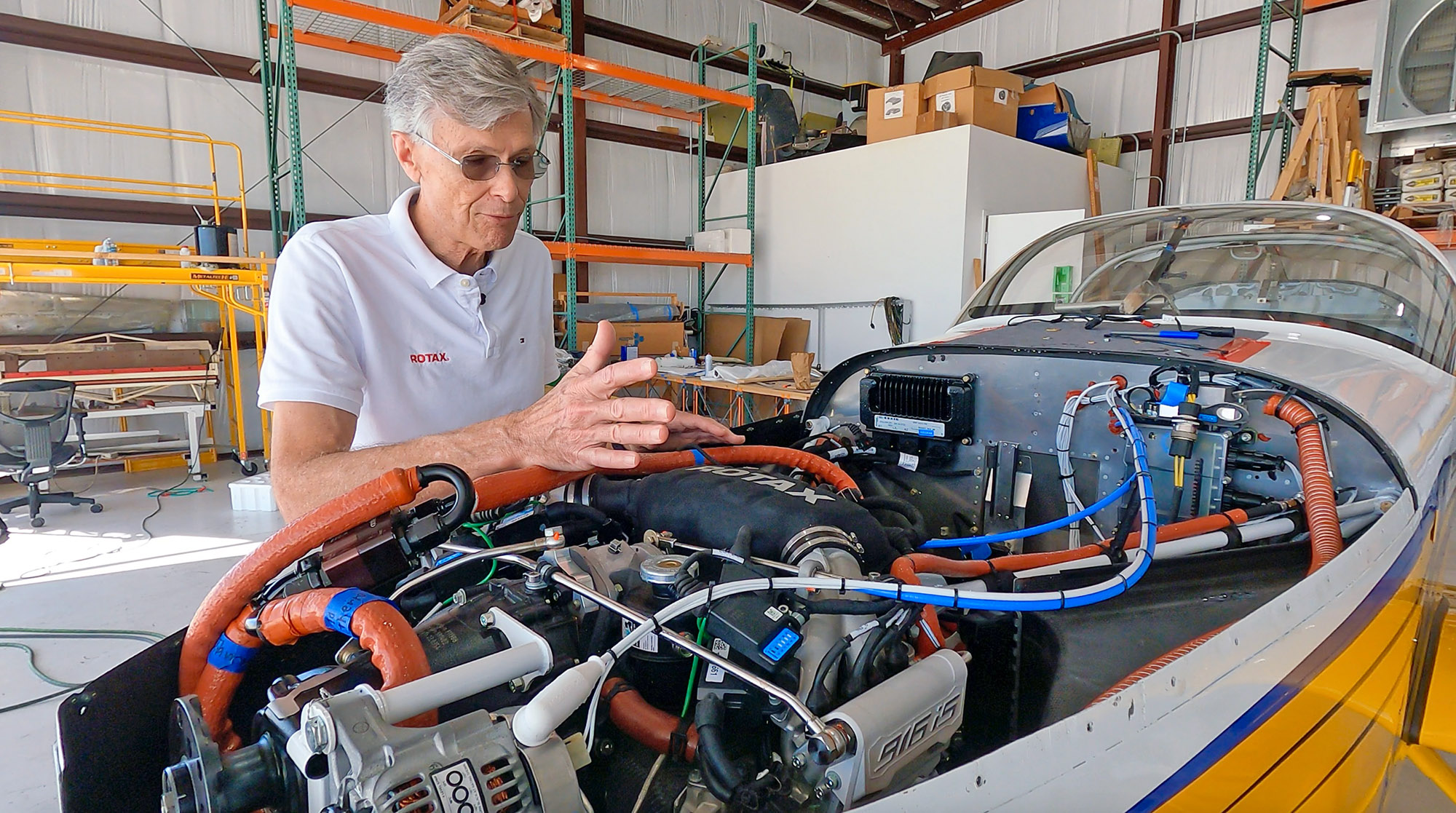
And for that matter, I welcome more forward-thinking aero engineers like Phil Lockwood, pictured at the bottom giving my cameras a tour of the firewall-forward Rotax 916 iS engine install in a Van’s RV-9. The RV-9 project has been quietly in the works at Lockwood’s R&D hangar in Sebring, Florida, for a couple of years and the project’s success (it’s taken a couple of tries to get right) couldn’t come at a better time because even if you don’t plan on building an RV-9 kit or yanking the Lycoming from your existing one in favor of a Rotax, I think the project sends an important message: We need more engine choices and Rotax is the one to watch for filling the void.
Long backorders and big price increases have been adding to consumer frustration across a wide sector of the piston engine market. Using the Lycoming Thunderbolt engine for experimentals as just one example, the company recently told us that buyers of new Thunderbolts should expect lead times greater than 36 months. Part of the problem is that a Thunderbolt engine is built by one or two employees. But the bigger problem that can apply to all engines—boutique, experimental or certified—is the shortage of skilled Non-destructive Inspection (NDI)/Non-destructive Testing (NDT) workers because certified NDI inspectors require hundreds of hours of logged training. This is but one of many examples of why it takes so long to get an engine.