











Cirrus Aircrafts installation of the Avidyne Entegra PFD in 2003 was really the turning point for glass cockpits in GA. But at the time, there was no attitude-based autopilot on the market capable of using the digital gyros (AHRS) from the PFD to fly the aircraft. That meant that Cirrus (as we’ll as Columbia, Piper and anyone else who used the Avidyne system) hid an electric turn coordinator behind the panel and used it to drive the S-Tec 55X rate-based autopilot. Weve always seen the S-Tec 55X as an acceptable, but not stellar performer. Its weaknesses are most pronounced on coupled ILS approaches in strong, gusty winds where it will often hunt left and right to try and find a heading that keeps the needles centered. GPS steering (GPSS) largely fixes this issue, but that doesnt help on an ILS. Nor does it work we’ll on an LPV because the 55X was conceived before the days of GPS approaches with vertical guidance so it cant combine vertical guidance, with GPSS. Owners have adapted, sometimes muttering to themselves as they manually “helped” the autopilot get settled in on approaches or harsh intercept angles. They also got really good at pushing the 55Xs buttons just right when arming an altitude or navigation capture-or let out another muttered curse when they leveled off accidentally instead of climbing.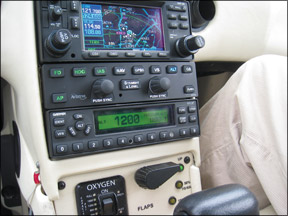
A Digital Attitude
Avidyne now has an alternative, designed as a slide-in replacement for the S-Tec 55X. The DFC90 uses the same tray, wires and servos as the 55X, but gets its data directly from the PFD. This means its an attitude-based autopilot with access to additional data, such as the winds aloft. The result is an autopilot that can outperform its predecessor in performance and safety.
The performance gain is two-fold. Using aircraft attitude, the autopilot should ride more steadily through turbulence. We tested the DFC90 on a relatively calm day, so we cant verify that. But we do know the S-Tec 55X wasnt a gold medalist in this category compared to even older attitude-based systems, such as the Century.
The gain we could see was in intercepts and approaches. Avidyne makes the rather tongue-in-cheek claim that the maximum intercept angle for the DFC90 is 179.9 degrees. We tried a 90-degree intercept with a quartering tailwind to a GPS course and an ILS, and saw perfect joins both times. The winds werent challenging on the coupled approaches, but there wasnt even the minor hunting for the correct pinch and heading as we descended like were used to with the 55X. It was also unfazed by any flap or power changes we put in or took out while on glideslope.
The only place we did see the autopilot get behind was on a non-precision approach using the new airspeed-hold function. It works through a new airspeed bug on the PFD controlled by a dedicated knob on the face of the DFC90. We commanded 100 knots at the FAF and chopped the power. The DFC90 held 100 in the descent just fine, but had trouble when we powered up and punched ALT to level off, dropping to as low as 89 knots before speeding back up.