











Hauling half a ton without feeding two engines is just the ticket for air taxi, small cargo outfits and families of five plus a dog. The number of makes is actually surprising if you look worldwide and count antiques, and its growing with aircraft like the Piper Matrix, Expedition (Found) Aircraft E350 and Gippsland Airvan. The used market, however, is still dominated by four venerable models that have been around since the ’60s: Pipers Cherokee 6/Lance/Saratoga line, Beechs 36-Series Bonanza, the Cessna 206/207 and the Cessna 210. This is likely where you’ll find a good deal, although were told well-priced six-seaters don’t last long, even in this economy. 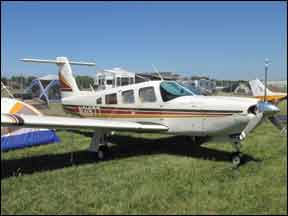
Piper Sixes
Pipers six-seat line reminds us of the old Avis car rental commercial-“Were number two.”-with number one being the Cessna line. But shopping the less-favored has perks.
The first Cherokee Six appeared in 1965 with only 260 HP (PA-32-260). Realizing that buyers might need max-gross climb rates that didnt inspire prayers to St. Christopher, Piper offered a 300-HP option the next year (PA-32-300). In 1976, a retractable option hit the market in the form of the Lance (PA-32R-300).
The idea of a T-tail looked good in the light of a 1977 disco ball, and Piper offered the Lance and Turbo Lance (PA-32R-300T) with T-tails for two years. The downside of these aircraft is a stabilator that isn’t effective until about 80 knots (some technique is required for smooth takeoffs and landings) and needing a ladder to preflight for ice in the winter. Buyers willing to put up with these quirks can get an especially good deal on these model years, however.
Pipers shed the T-tail and gained a semi-tapered wing in 1980. The line was now the fixed-gear Saratoga (PA-32-301-the “1” indicates the tapered wing) and Turbo Saratoga (PA-32-301T), and the retractable Saratoga SP (PA-32R-301) and Turbo SP (PA-32R-301T). The fixed-gear option was dropped, only to reappear briefly as the Piper 6X from 2004-2007. The retractable version saw iterations under the Saratoga name until 2008.
Piper pluses are a huge rear door for passengers, club seating in most later models and a four-foot-wide cabin for the first two rows (3.5 feet for the third). They are also quiet, largely due to a baggage compartment between the engine and the cabin. There’s a second baggage area behind the rear seats and both areas have 100-pound capacities. There’s usually some configuration that will keep the load within the CG limits. Two pilots and light gear putting the plane out of forward CG is the most common issue.
The earliest 260-HP models have the most useful load (up to 1700 pounds) but they have the least power to lift it come hot or high temps, and they are the slowest. In fact, the Piper line is five to 10 knots slower than the corresponding Cessna or Beech, if arguably more comfortable. An average early ’80s Lance can carry six