











There are so many headsets on the market today-ANRs, passives, in-the-ear, featherweight designs-that we often wonder if there are enough buyers to keep all of the companies in business. And even if there are, what distinguishes one headset from another sufficiently to choose it? There’s no simple answer. In the past, weve evaluated headsets purely on a subjective basis and for this review, were doing that again. But this time, we also subjected the headsets to a thorough battery of audio laboratory testing. Why? Although lab test results don’t always correlate with perceived performance, they do shed a bright light on what manufacturers consider important in designing their products. Combined with in-the- cockpit trials, technical tests give a more balanced view of how we’ll headsets actually perform. To accomplish this testing, the audio lab at Plantronics, Inc. in Santa Cruz, California, was made available to us. Plantronics has been a leading maker of telecommunications headsets since it was founded in 1961. Because Plantronics has no representation in the around-the-ear GA headset market, its a neutral party by our estimation. With the help of senior product engineer Dr. Nirmala Ganapathy, principal engineer 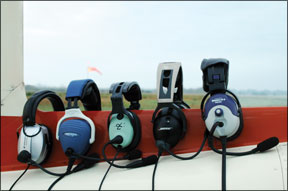
ANR Headset Shootout: Bose is Tops
There are so many headsets on the market today-ANRs, passives, in-the-ear, featherweight designs-that we often wonder if there are enough buyers to keep all of the companies in business. And even if there are, what distinguishes one headset from another sufficiently to choose it? There's no simple answer. In the past, weve evaluated headsets purely on a subjective basis and for this review, were doing that again. But this time, we also subjected the headsets to a thorough battery of audio laboratory testing.