











The first time we clapped eyes on what was then the prototype of Diamonds new four-place single-what eventually became the Star-we politely oohed and ahhed. But secretly, we thought the thing didnt have a prayer. First, it was small. Second, it had a canopy rather than doors and last, it had that weird hatch for the rear-seat occupants. Who would buy that? Quite a few flight schools and individual owners, it turned out. The current FAA registry shows nearly 600 DA40s on the rolls in the U.S., with the total production now at about 1040 worldwide. Given its European roots, Diamond came at the DA40s design as sort of hybrid between the sleek glass gliders the company started out producing when it was Hoffman Flugzeugbau and more traditional aircraft U.S. customers are accustomed to. This yielded what we think can fairly be called a world airplane. History of The Line Hoffman Flugzeugbau began life in 1981 in Friesach, Austria, producing the H36 Dimona motorglider, a popular recreational airplane in Europe. Ten years later, Christian Dries and family took over Hoffman and in 1992, it launched an effort at the North American market by opening a new plant in London, Ontario, in a converted World War II aircraft factory. Diamond-then called Dimona-got its feet wet in the U.S. market by importing the Austrian-built DV20 Katana. In 1995, it began building Rotax-powered DA20-A1s in the London plant and selling these into what was then a lukewarm market for new trainers. By the time the company changed its name from Dimona to Diamond in 1996, it realized that both the North American and world markets had room for a composite four-place airplane. In 1997, Diamond announced the DA40 Diamond Star at the big European show in Friedrichshafen, Germany, with the prototypes powered by the Rotax 914 and Continental IO-240. But the airplane clearly needed more power. In 2000, the DA40-180 was certified with the Lycoming IO-360 and a year later, production began in the London plant. Sales were initially brisk, especially to the trainer market which, increasingly, was turning to Cessna 172s for new training aircraft. Many flight schools found would-be students werent as price-sensitive as they once thought and wanted the option of two additional seats, which the Katana couldnt provide. When it initially appeared in the 2000 model year, the DA40 sold for $189,900, typically equipped. Not resting on its laurels, Diamond had more surprises up its sleeve. In 2001, it revealed what it called “the worlds first modern production GA diesel,” the Thielert Centurion 1.7-powered DA40-TDI. Although Diamond declined to market this airplane in North America, the diesel was we’ll received in Europe and Asia. As we reported in the December 2007 issue of 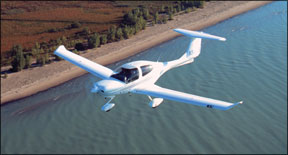
Initial deliveries of DA40s were equipped with dual Garmin GNS430s and Bendix/King KAP140 autopilots. In 2004, Diamond announced that new Stars would have the Garmin G1000 EFIS system and that same year, Diamond announced a joint venture to sell and build DA40s for the Chinese market, primarily for training in that countrys burgeoning airline sector. Knowing it had found a niche, in 2005, Diamond announced the DA40-FP, a fixed pitch-only version of the airplane, with the carbureted Lycoming O-360. This model was aimed specifically at the training market. The FPs base price at the time of introduction was $187,800.
In 2006, the DA40XL appeared, which was basically just packaging of high-end options, such as the Garmin GFC 700 autopilot, Powerflow exhaust system, a composite three-blade MT prop, a 110-pound gross weight increase, electrically adjusted rudder pedals and a premium interior. The airplane was clearly aimed at the upscale owner-flown market, which Cirrus was having good success serving. Fully equipped, the XL model sold for $329,000.
In late 2007, yet more versions of the DA40 appeared, the XLS and the CS. The XLS has a wider, higher canopy and a luxury interior while the CS is essentially an a la carte model with a constant-speed prop that lets flight schools configure it with interiors and other options. The base price of the CS was $259,950, while the XLS base was $334,950, or over $380,000 fully loaded.
Construction
When Diamond bought Hoffman, it paid attention to the companys core expertise: building clean, strong glass structures. This is definitely reflected in the DA40s construction, which is built along the same lines as the two-seat Katana/Evolution/Eclipse series.
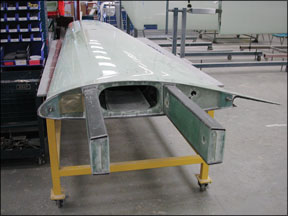
The fuselage is constructed of wet layup material in two halves which are bonded together longitudinally, with the vertical stab as part of the assembly. The T-tail is attached separately, as are the wings which, unlike the Cirrus aircraft, are two separate pieces joined at the fuselage center section. The wings themselves are laid up top and bottom in vacuum molds, then bonded together after the internals are installed.
The spar is a massive twin carbon-fiber spar layup between which the fuel is stored in removable aluminum cells. The fact fuel is exceptionally we’ll protected may explain why Diamond aircraft have shown no tendency toward post-crash fires.
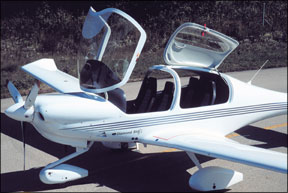
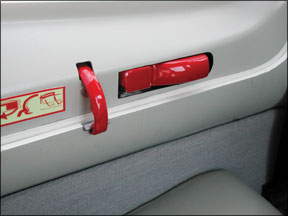
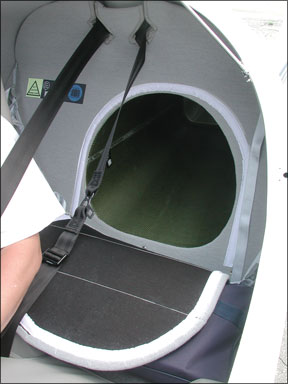
The cabin and cockpit is best thought of as a bathtub arrangement with a wraparound canopy in the front and a hinged rear hatch for the backseat occupants. The canopy hinges at the front, rather than the rear, as on the DA20. The rear hatch is on the airplanes left side and is equipped with a pin release for emergency egress. As with most of the modern composite aircraft, the DA40 has spring steel gear and a castoring nosewheel, with steering via differential braking. The gear attach point loads are carried into the center section through attachments on the spar.
Unique among the big three composite lines-Cirrus, Columbia/Cessna and Diamond-the DA40 has center sticks with push-pull rods for elevator and ailerons and cables for the rudder. Rather than sliding seats, the DA40 has rudders that can be repositioned to adjust legroom. Trim is both electric and manual-there’s a trim rocker on the sticks and a center console wheel-and is activated by cables to an anti-servo tab on the horizontal stab.
Engine, Systems
Diamond kept it simple when it came to the powerplant: Lycomings 180-HP IO-360 has proven reliable and inexpensive to overhaul, at the expense of giving up some smoothness to six-cylinder Continentals. Its also fairly light, an advantage in an
airframe as light as the DA40. (Gross weight in early models was 2535 pounds, while newer ones are 2645, compared to 2450 pounds for the Cessna 172 and 3050 pounds for the Cirrus SR22.)
Systems wise, the Star has just enough new-age glitz to demonstrate Diamond is paying attention. The fuel system is Piper simple, with right/left/off settings only, so fuel management is a no-brainer. The fuel selector is on the center console. One of the airplanes operating limitations includes a requirement to keep the fuel load balanced.
As is the fashion, the DA40 is an all-electric airplane, with no vacuum system. It has a single starting battery, but also a single alternator, although there’s a battery backup for the electric gyros. The diesel versions of the DA40 are also all-electric. Because the Thielert 1.7 Centurions FADEC must be powered up to keep the engine running, the engines alternator is configured to power the FADEC; there’s also a FADEC backup battery in the event the aircraft bus fails.
One of the DA40s strongest suits is the fabulous visibility afforded by the wraparound canopy; nothing else in GA comes close. But what plastic giveth, plastic taketh away. The cockpit can be boiling hot in the summer, although an opaque shade along the top of the plastic bubble helps. Air conditioning isn’t an option in the DA40s; it lacks the power and payload. However, the canopy can be opened during taxi and is equipped with partial-open latches. The heating and ventilation, once airborne, are good. In early models, the panel air vents emitted a noticeable and irritating howl, but this has since been quieted down.
Performance, Payload
When we reviewed the first production model DA40 in 2002, we pined for a bit more speed-our trials showed the Star cruised along at 135 to 140 knots. In retrospect, we have to concede these cruise speeds blow away the competition, mainly the Cessna 172 and 172SP and the Piper Archer, both entry level four-placers. Only the Tiger comes close in older designs, although the Cirrus SR20-also entry level-is faster by about 12 knots or so on 20 more horsepower. The early 180 Stars toot along all day on 9.5 to 9.8 GPH at speeds up to about 140 knots. Subsequent models, say owners, are about 10 knots faster and, for the DA40XLS, Diamond claims a 158-knot top speed.
With its long wing and relatively high aspect ratio-reflecting its sailplane heritage-the Star is a terrific climber, even when loaded. Moreover, it leads the league in short-field capability, easily hopping off the runway in 1200 feet or less with a heavy load. At 2535 pounds (2635 for newer models) gross, the Star is light; at 14 pounds per HP, its power loading puts it in the middle of its class. (The Cirrus has power loading of 15.25 lbs/HP, while the Cessna 172 is lower, at 13.6 lbs/HP. Nonetheless, any competent pilot should be able to comfortably operate a Star out of 2000-foot runways, at reasonable density altitudes.
Payload-wise, the Star is really a three-place airplane with baggage space, even at the higher gross weights. Useful loads are in the 850-pound range, although some
owners report less. So with the tanks full, it can carry about 600 pounds-three people with some bags. There’s a 10-gallon extended-range fuel tank option that further reduces cabin load.
In early Stars, the baggage compartment was a bit of an afterthought, accessible only through the cabin by tilting the rear sears forward. The area itself was quite shallow. This was later redesigned and now the rear seats fold forward to essentially turn the backseat into one huge baggage bay.
The Stars weight-and-balance envelope is relatively benign, narrowing a bit toward the gross weight limit. It tends toward forward, rather than aft CG. Offloading fuel is always an option to stuff in more payload, but the airplane carries only 40 gallons usable to begin with, so its range is hardly exceptional. The 10-gallon extended range option helps, but owners complain it narrows the CG envelope, something that needs watching.
Ergos, Handling
Entering the Stars cockpit requires hiking up onto the wing and stepping down into the we’ll of the cabin. Its a bit of a practiced art, requiring gripping the canopys tubular hinges to gain purchase, both for ingress and egress. Not easy, perhaps, but you get used to it. The rear seat passengers simply step through the hatch and into the rear cabin, which is quite spacious. (Watch the opened rear hatch, though-its just the right height to bonk an unwary head.)
The front seats don’t slide fore-and-aft, although they do recline slightly. Rear-seat passengers enjoy adequate footroom, thanks to footwells. With their adjustable rudder sets, the front seats have good legroom for such a small aircraft. As noted, cockpit visibility is nothing short of fabulous-the best of any GA airplane, other than the Katana/Eclipse/Evolution series.
Of all the GA airplanes weve flown and tested, the Star ranks at the top as being the most fun to fly. Its not quite as we’ll balanced as a Bonanza, but it has no bad habits and pitch and roll forces are light and easy to manage with the stick. Slow flight and stalls are non-events and even deep into the stall, the airplane simply mushes and could probably touch down that way in a survivable impact. Flaps have little or no effect on trim condition, but neither are they as effective as the barn doors on a Cessna 172.
Landing a Star isn’t particularly difficult, but the sight picture over the nose requires some acclimation to avoid too-high flares. Flown into the flare faster than
about 65 knots, the Star will float; slower is better.
Maintenance
Typically, airplanes new to the market evidence characteristic maintenance weaknesses at some point. But the Star has done we’ll in this regard. The Lycoming IO-360 is one of the most reliable four-cylinder powerplants available; we heard no complaints from owners about it. One owner complained of teething problems with the Garmin G1000 and two owners said they had chronic problems with electric fuel pumps. The early Stars weak landing lights are a point of contention. We found only three ADs against the airplane, one requiring inspection of the nosegear pivot axle, one requiring inspection of the universal joint on the fuel switch and one requiring fuel system inspection.
Owner Feedback
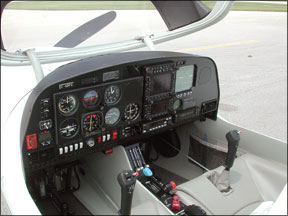
Overall, the DA40 has a sleek, modern look that never fails to attract attention from ramp workers and fellow pilots. The coolest thing about flying the DA40 is that there’s a stick, just like a P-51. The DA40 cockpit has a functional layout with the backup steam gauges placed in a neat row at the top and the throttle, fuel, mixture and cabin air controls in the center console, all within easy reach. I have flown a G1000-equipped Cessna 182 and the dash-mounted yoke really gets in the way of the soft-key buttons on the PFD. This is not the case in the DA40.
We have the Bendix/King KAP140 two-axis autopilot installed in our DA40. Having an autopilot helps to hold altitude and maintain heading during high-workload situations and on long cross-country flights, but the DA40 is already stable and when trimmed properly, it doesnt require much control input.
Initially, our KAP140 had a disturbing tendency to porpoise during autopilot-controlled descents. The fix was to install a secondary static pressure port, which Diamond paid for. (Did I mention that Diamonds customer support is outstanding?) After the port was installed, the KAP140 controlled climbs and descents with unwavering accuracy.
The leather-covered seats recline slightly and are comfortable to sit in for long cross-country flights. They are fixed to the frame of the aircraft and certified to 26Gs for crash protection. The downside of the DA40 cockpit is that its a little on the small side. The comfortable height of a front-seat occupant is limited to less than 6 feet 3 inches to keep your knees from hitting the dashboard.
The rear seats are even more comfortable than the front seats, with integrated foot holes for the longer-legged occupants. The large side door for rear access is a class stand-out in a world of four-place GA aircraft where you have to squeeze through, climb across and crouch down into your seat. The large door opens wide and the rear seats also fold down flat, leaving a long (seven-plus feet) cargo bay for golf clubs, skis and other bulky luggage.
Scanning the skies for traffic and checking the pattern before takeoff are easily accomplished, thanks to the low wing and wrap-around canopy. The downside is that it gets warm on the ramp and at low altitudes during the summer. When the temperature hits 90 degrees, you tend to taxi with the canopy open and climb for cooler air as soon as you can. Fortunately, the DA40 has a two-position canopy latch, so you can crack the canopy during engine run-up and on landing rollout to restore airflow to the stifling cockpit. .
The large air vents pump a lot of air into the cabin when fully opened, but what the DA40 really needs is air conditioning. I cant imagine what it would be like to fly a DA40 in Florida in the summer. For cold weather ops, the cabin heat works we’ll and the door seals keep out stray drafts. The defrost vents work okay, but it can take a while (10 to 15 minutes) to clear the windscreen of all traces of breath-induced frost.
Flying the DA40XL is effortless and quite a lot of fun. With 40 gallons of 100LL and three big people on board, the aircraft comes off the ground quickly and readily climbs at 700 FPM on a 95-degree day. The large rudder gives plenty of help on tough crosswind landings, providing a 20-knot demonstrated component.
The large rudder also provides effective ground maneuvering without the need for much differential braking on gently curved taxiways. Due to its motor glider heritage and long wings, the DA40 can be challenging to land simply because it wants to fly. Landings are easy enough, but careful attention must be paid to airspeeds on base and final, or you’ll end up floating halfway down the runway. If you try to land the DA40 with an aggressive flare, you may end up with a tail strike on your hands. However, Diamond has thoughtfully provided an aluminum skid plate to prevent any real damage to the expensive airframe.
The biggest drawback to the DA40 is the weak 35-watt halogen bulbs that are a poor excuse for landing lights. Night flying out of rural airports can be challenging
and downright scary sometimes, since the dim lights don’t provide much advance warning of nocturnal wildlife hanging out on the runway. They also don’t provide enough light to effectively navigate strange taxiways at night-a real drawback. One of the frustrating things about this deficiency is Diamond offers a HID lighting option on the DA40XL, but has not provided DA40-180 owners a retrofit kit or service bulletin to take advantage of the increased safety that better lights would provide.
We have had two defective fuel pumps in our DA40. The pumps would simply not turn on when the switch was activated, requiring us to get out of the aircraft, crawl under the belly and tap on the pump to get it going. To Diamonds credit, they replaced both pumps at no charge, which is great service, especially when you consider that they arent really Diamonds problem. Good job, Diamond!
Overall, the DA40 is an efficient and capable aircraft. With the 100-pound gross weight increase, the useful load of the DA40-180 is just over 900 pounds. That means with the extended-range 50-gallon tanks, you can fly with three adults for four hours at a fuel burn of 9 GPH. The DA40 is not a speed demon, but is reasonably fast at 135 to 150 knots true. The DA40 is a great cross-country machine and is a true pleasure to fly.
Daniel Wiley
Coshocton, Ohio
I have owned my Diamond 2004 DA40 since September 2004 when I purchased it new. I previously flew many Cessna, Piper and Beech aircraft-this is one of the safest airplanes on the market today. The accident rate on this airplane is either the lowest, or among the lowest of any. Some pilots might claim that this is due to the airplane being used extensively in training and so not exposed to the difficulties of cross-country trips. Yet I, and many other owners I know, use the DA40 principally in this latter role. I fly in the Southeast and use it regularly in IMC, where it performs admirably.
Aviation Consumer
previously reported the DA40 is one of the nicest handling airplanes on the market. I concur. It is easy to fly, light on the controls and completely enjoyable to land. Visibility is second to none. Trimming the airplane is simple; it has both electric and manual trim. I flight plan for 145 knots, and typically see between 140 and 150 (older models are 10 knots slower).Because the cruise is slightly higher than some of the spam-can airplanes, the DA40 at full cruise bounces around in turbulence more than other airplanes. It is not due to low wing loading, since it has about the same wing loading as the 182. I find that if I just slow down by 10 knots, the effect of the turbulence drops substantially.
The G1000 is awesome for IFR. Once you go glass, you never go back. One wonders how many accidents have occurred because a pilot loses control in IMC while looking at a three-inch attitude indicator, or because the vacuum pump failed.
There are two downsides to the DA40 for serious IFR. The first is that it has only one alternator. It has the main battery as a backup (about 45 minutes) and a smaller, secondary battery that runs the backup instruments for another 30 minutes. Of course, the alerting system on the G1000 will tell you instantly if you are losing your alternator, so that helps. The second issue is that airplane isn’t deiced and never will be. For that, you’ll need to move up to the Twin Star or the new DA50 Super Star.
During the first 200 hours on my G1000, I had some teething problems. I had the PFD screen delaminate and I experienced some infant mortality on some of the electronic boxes. Garmins responsiveness, however, was absolutely stellar and continues to be even with the airplane out of warranty.
Diamonds build quality is superb. Ive had zero problems with the airframe, with the exception of a small crack in one of the main gear wheel pants. I think this reflects some of the attention to detail that the Austrian designers put into this aircraft. They put some 16,000 cycles on the DA40 prototypes during testing, one of the most extensively tested GA aircraft brought to market. They paid extensive attention to safety as well, with a double spar in the wing, and aluminum fuel tanks (less likely to leak post-crash).
I had flown an older model of the DA40 previously but did not like its small baggage compartment. Diamond designed an extended baggage compartment that is far better than what is available in most other aircraft. With the back seats folded down, I can fit my mountain bike in the rear space with room to spare for other luggage. The payload of my aircraft is 540 pounds with full fuel so, like most four-seaters, the DA40 is really a three-person airplane with full fuel.
Unlike the Cessna 182, however, its hard to offload much fuel for a tradeoff in payload and still maintain reasonable range. I usually fly with less than three people on board so for me, it is not an issue. Improving on this, Diamond recently came out with a 100-pound gross weight increase requiring little more than a paperwork change and is available on all their new DA40s. This is retrofittable to existing DA40s with the “speed gear” (model year 2004 and later). Non-speed-gear DA40s must upgrade to the speed gear to utilize the GW increase.
I live in South Carolina and while the interior is hot in the summer, I cant say it is any worse than most other small airplanes. The DA40s Lycoming IO-360-M1A itself is bulletproof. Ive had zero problems with it in three-plus years. There were, however, quite a few instances of cracked exhaust risers in the fleet until Diamond came out with a mod to the muffler mount. That mod fixed the problem. There also were problems with a wire running to the alternator being too short, causing the wire to break. Diamond fixed this with a longer lead.
Even though fuel costs were fairly low in the spring of 2004, I suspected that they would rise at some point during my ownership of this airplane. In addition to the G1000 and the DA40 safety record, this is one of the principal reasons I bought the DA40 over a higher performance six-cylinder aircraft. In the three years I have owned the airplane, it has flown 710 hours. The total cost of operation during that time has been $111,700. The major components of that include loan interest cost: $36,300; fuel cost: $22,700; maintenance : $17,300 (parts and labor; $12,100 for scheduled maintenance; $5200 for unscheduled maintenance, mostly post-warranty avionics and updates; insurance: $10,000; subscriptions: $3300; (XM, Jepp); hangar rent, $7400 and taxes $9000. The remainder is miscellaneous expenses. This translates into an approximate full-up hourly cost of $157. It includes all expenses related to flying, both those directly associated with the airplane as we’ll as any peripheral costs, but doesnt include engine reserves. These numbers also don’t include the principal paid against the loan, $46,800 (a cash outlay, but not a cost).
Yet for all of the numbers above, the DA40 is still one of the most economical certificated airplanes available today, especially so when I factor in capability.
Diamond customer service is outstanding. They are we’ll capitalized and will be around for the long haul. They continue to work on product enhancements for the DA40 and for those who are so inclined, they offer a range of products for an in-family path for upgrade. Overall, I have been very pleased with this airplane. Of course, I would like it deiced or another 40 knots of additional speed, but for the price I paid, it has provided excellent service and value.
Michael Rigg
Via e-mail