











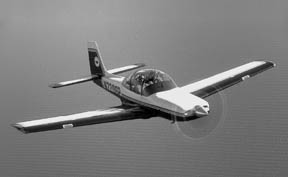
If Hollywood and the music industry can dust off antique works and package them as new, some are asking why it cant be done by aircraft manufacturers. In a sense, Cessna has already proved the point with the new 172 and 182.
Three more airplanes are poised to take on the market for two-seat certified sport planes with significant cross-country potential. All are taildraggers that boast sticks instead of yokes. All are capable of positive aerobatic maneuvers and feature a military-like glass canopy. And all owe their roots to designs more than half a century old, making their antecedents ancient even by Cessna standards.
With three such offerings-actually a fourth if you count the Katana Eclipse, a non-aerobatic nosewheel entry-we have to wonder how many buyers these models will draw, given the relatively specialized capabilities and asking prices more than $150,000, the buy-in for a new Cessna. Then again, when has a Walter Mitty fantasy ever met price pushback?
Post-War Designs
The period immediately after World War II was a mini-golden age of sorts for sport airplanes and all three of these revised offerings-the LoPresti Fury, Aviat Millenium Swift and Micco SP20-owe their roots to post-war designs. The manufacturers hope the two-seat sportsters will capture some measure of romance absent from the spam cans rolling out of Wichita and Independence, not to mention a dollop of adrenaline from occasional loops and rolls.
Certainly demographics are on the side of these new ventures. Many people willing to buy new aircraft are empty nesters who find the back seats are only carrying luggage these days, anyway. Two seats are fine with them as long as there’s enough room in the back for the golf clubs.
There are some interesting corollaries here in the auto market, including the wildly expensive Plymouth Prowler and the wildly successful redo of the Volkswagen bug. Those buyers might not be pilots but the thinking is the same.
Theyre definitely niche products, says Decki Becketty, marketing manager for Micco Aircraft Co., whose SP20 is based on the short-lived Meyers 145. And Id say it falls into the fun category.
The two-seat sport planes are aimed in part at professional pilots who find that the thrill is gone after years of watching a jet fly itself straight and level. Many are ex-military pilots who are interested in both gentlemans aerobatics and cross-country transportation. Although they have a good income, they cant afford or don’t want multiple airplanes. These airplanes, the thinking goes, will satisfy their love of flying while still being somewhat practical.
The old trademarks of sex appeal and speed are strong, very strong, says speed guru Roy LoPresti, who is on the brink of announcing production plans for the LoPresti Fury, a derivative of the Globe Swift.
LoPresti argues the same logic weve heard elsewhere: The strength of the market is reflected by the success of kit planes such as the two-seat Lancair. The Fury, he says, will eliminate the need for the owner to build the thing.
Performance, Payload
The three airplanes have some measure of utility, offering a payload of more than 400 pounds with full fuel and the potential of five-hour legs at Bonanza-eating speeds. All three will be capable of positive-G aerobatics, but none are planned for hardcore yank-and-bank hardware such as inverted fuel or oil systems. And all promise upscale accommodations for the humans on board, sharing a feel with the Lexus the pilot might have driven to the airport.
Whether the market will bear two-seat, 190-knot airplanes for $150,000 to $200,000 remains to be seen, but other aircraft makers have been sniffing around as well. Mooney has been teasing for some time about possibly certifying its 300 HP Predator if it can secure 100 firm orders. Mooney designed the Predator for the Air Forces primary trainer competition in the late 1980s, losing to the now-grounded Slingsby Firefly.
Ironically, LoPresti showed the SwiftFury to the Air Force at that time as we’ll and it earned the highest scores among the 12 aircraft screened, he says. Air Force brass nixed any sale when they discovered the airplane was not certified. Lockheed stepped in and offered to fund certification, but military planners werent willing to wait the year it would take for fast track certification to be completed. As it turned out, it took the Air Force two years to pick a winner.
To take the cynical view, these modified designs amount to marketing a fighter-wannabe to a bunch of fighter pilot wannabes. How we’ll they handle the mission largely depends on how the mission is defined.
Micco SP20
Based on the Meyers 145, the Micco bears only passing resemblance to the original. The SP20 is longer and wider and the cockpit is covered by a canopy instead of having a conventional roof with doors. It retains much of the construction features of the original, including a Mooney-like steel cage around the cockpit.
The new airplane ups the horsepower ante, going from the 145 HP Continental in the original to a 200 HP Lycoming IO-360. The gross weight has been increased to 2600 pounds max ramp weight and 2585 pounds max takeoff weight, which makes it not much lighter than a four-place Mooney 201.
Other changes include a center console, retractable tailwheel, three-blade prop and electric gear instead of hand-pumped hydraulic. The SP20 incorporates the vertical stabilizer and rudder from the Meyers 200 and the wing and flaps from the turboprop Meyers Interceptor 400. The original Meyers was certified in 1948 and was built until 1954, when the four-place Meyers 200 killed it. Just 20 of the two-seat models were made, with 14 still flying and three being rebuilt.
Micco, which is owned by the Seminole Tribe of Florida, got involved in the project six years ago when the type certificate for the Meyers 145 went up for sale. The company took its first deposit on the airplane 3-1/2 years ago and claims to have 30 airplanes in the order book.
Micco has invested about $11 million on developing the airplane and tooling and getting ready to launch production at its 40,000-square-foot factory in Fort Pierce, Florida. Micco anticipated beginning deliveries in July.
In May the company had the parts for 10 airplanes in stock. The company expects to build 50 airplanes per year to start, with a production goal of 75 to 80 per year within two years, Becketty says. Some of that expected demand will come from flight schools seeking trainers capable of limited aerobatics because of the increased interest airlines have shown in unusual attitude training.
The company may upgrade the SP20 with the 215-HP Lycoming IO-390 when the new engine is certified. It may also bolt a 260-HP engine on the front and create a new model, tentatively designated the SP26.
The SP20 is priced at $147,500 for a VFR version that contains a single King KLX 135A GPS/comm and $162,900 for an IFR-equipped model.
The only available options at this point are an S-TEC System Thirty autopilot for $8700, leather seats for $1000 and custom paint.
LoPresti Fury
The Fury will greatly resemble the neon-painted prototype LoPresti has been tinkering with for 10 years. LoPresti and former Piper owner Stuart Millar collaborated on the earlier SwiftFury project in the late 1980s. Pipers financial troubles killed the program, but not before 569 people put in orders for what appeared then to be a novelty design. The prototype gathered dust in a hangar for a full-decade until being recently revived.
Fury orders are coming in again and LoPresti says he has 72 on the books, 80 percent of which come from people who had originally ordered one a decade ago. In the grand tradition dating back to Glenn Curtis and the Wright Brothers, every new project seems to ignite some sort of legal bickering and LoPrestis Fury is no different.
Legal maneuvering between LoPresti and Aviat Aircraft, which owns the rights to the Globe Swift type certificate, led LoPresti to drop Swift from the name. In addition, LoPresti will redesign the tail and tailcone of the Fury, making it a completely different airplane that doesnt share so much as a wing rib with the original design.
LoPresti calls the Fury a poor mans warbird and says that by the time its certified, it will go even faster than the 189 knots he now quotes-perhaps up to 195 knots. The aircraft has a 90-degree-per-second roll rate and the control forces have been balanced so that at cruise, pitch and roll take identical stick forces. Although the Fury is not being planned with inverted fuel and oil systems, LoPresti says hell build it that way if the demand is there.
LoPresti is still trying to generate the $20 million it will take to see the Fury through certification and into production. The company is exploring the possibility of an initial public offering and several communities have brought offers of tax breaks, airport space and other financial incentives to the table.
LoPresti says that he will make a decision on the production site by September, at which time the initial price will be set more firmly. The SwiftFury was offered at $129,500 in 1990, and applying the CPI to that yields a current price of about $165,000, which makes it competitive with the other offerings.
LoPresti is guessing the airplane will be offered at about $175,000, but admits that figure is pie in the sky at this point. He also says the airplane will be priced at what the market will bear.