











Wh
It shouldnt really be this way, however. Despite the current XM hoopla, WSI (Weather Services International) was first out of the gate with reliable satellite-based weather, but was quickly outpaced by XM-based systems for two reasons: WSI ran into unresolvable technical snags with their satellite technology and they fooled with Mother Nature: They reverse-engineered a GNS400/500 interface without Garmins cooperation, effectively stunting vibrant growth.
That should have been enough to kill WSIs weatherlink efforts, but to their credit,
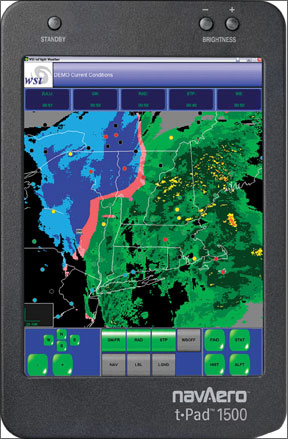
the company has come back with a new datalink box and is signed on with Sirius Satellite Radio as the pipeline provider. Further, Avidyne is marketing their own version of the WSI system.
New Page
WSI says the decision to abandon its launch satellite provider and join with Sirius not only provides for a wider service area but also allows for growth and longevity through product enhancements. Thanks to the three-satellite Sirius constellation, WSI coverage can be had we’ll into Canada as we’ll as south into the Caribbean. Further, the ability to receive both Sirius entertainment programming and WSI weather through a single receiver meets the increasing demand for satellite entertainment in the cabin.
The new receiver fixes a big problem WSI ran into with its customers starting in 2003, when it introduced two new datalink receivers, the AV-200 and AV-100, the former a certified box for panel mounts, the latter for portables. WSI contracted with a third-party satellite provider for the datastream and used its own inhouse expertise to create weather products for pilots called Inflight service.
The products were we’ll received, but there was trouble brewing. Because of satellite technical problems that WSI said it couldnt resolve, owners experienced dropped coverage in some parts of the U.S. Further, some owners were miffed to learn that WSIs aggressive backdoor reverse engineering of the Garmin 400/500 series interface wouldnt work with navigators upgraded to WAAS. Understandably, this sowed lots of bad will in the market among owners who spent $5000 or more for an obsolete box.
WSIs response to this has been forthright, in our view. It got busy with a new pair of datalink receivers-the Sirius-based AV-300 and AV-350-and these are now becoming available. For owners who now have the older WSI boxes, which will become dysfunctional in February of 2008 when the old satellite network is abandoned, the company promises a seamless and cost-effective Sirius transition, but not without a trip to the avionics shop for a change in receiver hardware.
Stepping Up
For owners of AV-200s, the swap-out to the new AV-300 should be relatively painless. Since the AV-300 can use the same serial data wiring installed for the AV-200, the changeover requires only nominal rewiring. The 1.6-pound receiver, a -6