











There’s not a pilot out there who hasnt pined for an AC button to push after just minutes holding short of the runway in the summer heat. But the harsh reality is that aircraft AC systems cost in all the ways we hate: weight, power draw and money. How much? Try 45-90 pounds, several horsepower and five digits before the decimal for the equipment. Now add the install time, which can top 100 hours. Not much has changed with installed systems since we last looked at AC in 2008, except for the option of a “portable” AC unit.
Engine or Electric?
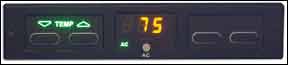
Compressing AC refrigerant is either done directly off the engine or via an electrically powered compressor. The engine-driven option is usually used for small aircraft. It works passably on the ground, but doesnt really pack a punch until the engine is turning faster. The compressor must fit somewhere under the cowl, but you don’t need a high-output alternator.
Electric compressors can be put anywhere (the tailcone is popular) and they can be run on the ground by GPU. After engine start, you’ll need enough RPM to energize the alternator, usually at least 1300 RPM. Thats usually a 100-amp alternator. Make it two for systems that cool bigger cabins. Thats because the AC will draw between 40 and 100 amps all by itself, depending on the system and the size of the area its designed to cool.
No longer Keith
The STC leader by a mile in aircraft AC is still called Keith by everyone, even though they were acquired by Meggit (Addison), Inc. The company offers over 80 STCs, as we’ll as supplying the OEM air conditioning for companies like Cessna, Cirrus and Socata. Keith also offers conversion kits for R-12 (Freon) systems to make them work with the somewhat more environmentally friendly R-134a.
Keiths single-engine systems are all engine-driven. Size and power varies, but a Cessna 172 would use a 59-pound, 10,000 BTU system. Step up to the Bonanza and its 14,000 BTUs and 79 pounds. Theyre not cheap, either. The kit for the Cessna is $16,065 for the hardware and takes 120 hours to install. The Bonanza costs $22,005