











For the pilot of even modest equipage, a flashlight is something of a necessary fetish item, so much so that some pilots we know carry a half-dozen in the cockpit. Fear of darkness or just prudence? Both, we think. A decade ago, most of us bought a D-cell bat handle with a penlight backup, but now the market is flooded with sophisticated LED choices. And in our view, LED is the only illumination type worth considering, given the variety of choice, low power consumption, durability and color choices. And what choices there are. We shopped the popular pilot emporiums and Web sources for some practical choices and winnowed the field down to 15. You might pick an entirely different 15, but we have to start somewhere.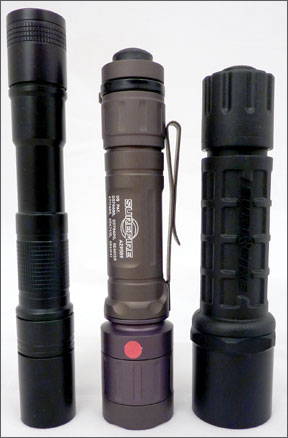
Whats Wanted
Were skipping the large D-cell and C-cell models in favor of smaller two and three-cell LEDs. These smaller flashlights provide more than enough choice in illumination. The FAR requirement (91.503) applies only to large and turbine aircraft and is woefully outdated in an age when two AA batteries drive an LED for a week.
Some design criteria: Given the power illumination from LEDs, we think a smaller flashlight is more desirable than a larger one. Its easy to carry, point, aim and stow. Most of the models we examined are in the four- to six-inch range.
Second, batteries: The favored battery in these small LEDs is three AAAs in a carrier. The expensive flashlights have 3-volt lithiums ($7 to $9 a pair), but these are long lasting so the sting isn’t so bad.
In the cockpit, AAAs don’t play in other gadgets like GPS, so that means carrying more battery types. Also, the carriers can be a nuisance to load because polarities arent always marked clearly. Again, you don’t have to do it often, but you wouldnt want to load batteries in the dark. (Thus the argument for a second or third flashlight.)