










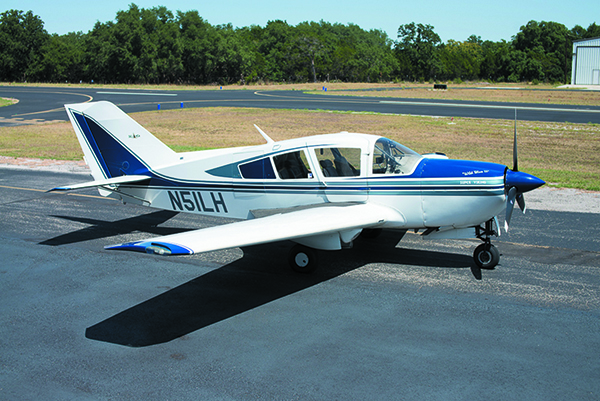
The Bellanca Viking is one of general aviations split personalities: a powerful four-place retractable that has great handling and superb built-in craftsmanship, but on the other hand is an antiquated design thats cramped, noisy, short-ranged and not very fast.
On top of that, the fuselage is fabric-covered and the wing is made of wood. That means maintenance by properly qualified individuals, who are getting to be as rare as hens teeth.
But Viking prices are low on the used-plane market, so you can get a lot of airplane for your dollar if youre willing to put up with its idiosyncrasies-and to vigilantly guard against dry rot in the wing, which has triggered several fatal Viking wing failures and much expensive repair work.
Genealogy
The Vikings family tree (pun definitely intended) traces its roots back to the old Bellanca Cruisaire, a triple-tailed retractable taildragger design that looked old-fashioned forty years ago. The first Model 17 Viking appeared in 1967, powered by a 300-HP Continental IO-520-D. Over the years, major changes were few, consisting mainly of various engine options. The Continental-powered Viking was called the 17-30, while the 17-31 Super Viking, introduced in 1969, was powered by a 290-HP (later 300-HP) Lycoming, either normally aspirated or turbocharged. Either engine was available for much of the early production run; the 17-31 was discontinued after 1979, and in 1996 the Continental IO-550 was made available as an option.
The original hydraulic gear and flap actuation system was notoriously balky, and was redesigned midway through the 1968 model year with the introduction of electric flaps, which improved matters. The complex fuel system-five tanks, two fuel selectors, eight possible combinations of selector settings and several sometimes incomprehensible gauges-was simplified a bit in 1974, after a spate of fuel-mismanagement accidents.
Other than these few changes, the newest Viking is not much different from the oldest, complete with hand-crafted wooden structures.
Production continued at a modest rate-in the peak production year, 1973, just under 200 were built- until Bellanca Aircraft Corp. went bankrupt in 1980, the year things turned sour for the whole industry. In 1984, though, the company got back on its feet and started building Vikings again on a limited, custom-order basis. Only nine were built in 1984 and 1985, and none in 1986. Only about 30 were produced between 1987 and 1997. Two were built in 1998 and one was delivered in each of 1999 and 2000.
Resale value
For all the praises sung by loyal owners, historically the Viking has not fared we’ll on the used market, though recent years have seen an upsurge in prices. In the last five years or so, the price of the oldest Vikings has gone from under $30,000 – an astonishingly low price for a 300-HP retractable – to about $40,000 two years ago and nearly $45,000 now. Thats a prettyg good return on an airplane investment, even if not the absolute best around.
Bellancas have been a pretty good deal in terms of purchase price all along, and that continues today. The cost of a new Viking is not too different from that of a new Cessna Skylane, and you get a bigger engine and retractable gear.
Performance
By the standards of other aircraft in its peer group (big-engined retracts), the Viking is not exactly what one would call an overachiever. Normally aspirated models cruise at only 163-165 knots by the book, which appears to be about five knots optimistic. Thats a good ten knots slower than big singles like the 210 and A36 Bonanza. On top of that, its got a much smaller cabin.
The turbo helps, of course: get it up to FL200 and you’ll see 190 knots. Respectable, but still down compared to its peers.
The reason for the lack of speed is easy to see. The aerodynamics of the design leave much to be desired, with lots of sharp edges on the fuselage, a strut-braced horizontal stabilizer, and landing gear that protrudes from the wing even when retracted. The wing, on the other hand, benefits from having no rivets or noticeable seams. It is rather thick, though, for structural reasons.
Though it may be slow, the Viking climbs very well. Older models, with gross weights of only 3,200 pounds, have book climb rates of up to 1800 FPM. Although these numbers are highly suspect (the Bellanca marketing department was given to wild enthusiasm regarding claims of this sort), owners do report excellent climb rates, much better than Bonanzas and 210s.
The Viking also has good high-altitude performance. One owner reports flying over the Rockies at 17,000 feet in a normally aspirated Viking. He also claims to have once climbed to 16,000 feet with the gear extended.
Payload and range
Again, the Viking suffers in comparison to more modern designs. The Viking structure is heavy, and the airplane typically has an empty weight of about 2300 pounds, or about 500-600 pounds more than a typical Mooney (the bigger engine only accounts for 200 of those pounds).
For all its power, the Vikings useful load is typically only 1,000 pounds or so, and even less with a lot of equipment on board. Thats in the range of an average 200-HP retractable, like a Mooney or Arrow. On top of this, the big engine requires a lot of fuel, which further limits the cabin load. Furl capacity is either 60 or 75 gallons; with the bigger tanks full, cabin load is limited to only 550 pounds. With full fuel, my 1973 Viking will carry three passengers, or two passengers and baggage, reports one owner. Comments another about his turbo: Lycoming engine, heavier than the Continental, plus two turbos, equals a pathetic full-fuel legal load of two adults plus bags.
Compare that to a Cessna 210, which has a useful load pushing 1,400 pounds in some cases, and can typically haul 90 gallons and four people plus baggage. On the other hand, we imagine some owners may take advantage of the Vikings excess climb capacity by stretching the limits a bit on takeoff.
The Vikings standard 60 gallon fuel supply is woefully inadequate (three hours at fast cruise would be pushing it) and even the 75-gallon system is marginal to feed an engine that typically burns 13-15 GPH at cruise and will suck over 20 GPH during climb. Count on a practical IFR range of no more than 450 NM with the smaller tanks and perhaps 600 with the bigger system. And thats with tanks full. With all four seats occupied by FAA-standard humans and 100 pounds of baggage, the airplane can ship maybe 40 gallons of avgas-enough to fly 250 NM with IFR reserves.
Handling
The Viking is almost universally praised for its light, smooth aileron control. The best flying characteristics, bar none, of any airplane flying today, raves one owner. It practically begs to be rolled. Another says, It spoils you for riding in any other airplane. Indeed, the Viking is one of the few production aircraft to have flown regular airshow routines.
Landing is another matter, however. Power off, with gear and flaps out, the Viking has an awesome sink rate that owners liken to Steinway pianos and elevators. Below 100 MPH, exercise caution, warns one. The aircraft is heavy and the power curve is deep. Comments another, Precise speed control is necessary to assure an acceptable landing. A third advises, One has to apply aggressive back pressure after the flare to avoid a bouncy landing. Several Viking pilots have told us they do not lower full flaps until landing is assured; apparently, even with 300 horses out front, a full-flaps go-around is quite dicey.
The steep descent angle, however, does allow a skilled Viking pilot to make very short landings, and the excellent climb rate enables the airplane to depart from short fields as well.
IFR stability is reasonably good, according to owners. It rides very we’ll in turbulence, much better than an Arrow or Bonanza, says one. On takeoff, however, a heavy foot is required on the rudder to counteract the big engines torque.
Accommodations
The Vikings cabin dimensions are modest at best, a reflection of its 1930s design heritage. The cabin is small for two guys my size, reports a 210-pound Viking pilot. Even a rabid pro-Viking zealot admitted that the cabin is not roomy. Hes an inch shy of six feet and 160 pounds, and says he has plenty of room without bumping elbows with his front-seat passenger. Wives, kids and other small-to-medium sized people will find the rear seats comfy enough, but big men will feel cramped.
Interior appointments draw raves, however. Many Vikings have a leather or crushed-velour upholstery that puts the chintzy interiors of Pipers and Cessnas to shame. Cabin noise, on the other hand, is awful, a fact that virtually every Viking owner we heard from complained about. Atrocious, said one.
Engines
Although power output is the same from the 300-HP Continental IO-520-K and Lycoming IO-540-K engines, the original buyers seemed to prefer the Continental-powered version, which typically outsold the Lycoming by about two to one. This was probably due in part to the higher price tag of the latter and partly to the higher listed cruise speeds of the Continental version, though we doubt that real world performance is any different. The Lycoming-powered 17-31 was also listed as weighing about 60 pounds more than the 17-30; much more of a factor in our view, given the limited useful load of the Viking to begin with.
Prices for the two are about equal, though the turbo Lycoming version commands a premium of about $5000 in the used marketplace. The Lycoming costs about $3500 more to overhaul, but it also has a TBO thats 300 hours greater. Per-hour engine reserve is close: $9.70 for the Continental versus $10 for the Lycoming.
We don’t think there’s much to differentiate the two normally aspirated engines from an ownership point of view. Both are reasonably reliable, and we have no reports of unusual problems with either in the Viking. We imagine that most pilots will simply follow their personal preference and brand loyalty, but the individual history and condition of a particular engine should be a more decisive factor than the nameplate.
The turbo is another matter. Prospective buyers should carefully consider whether the extra acquisition cost, complexity, fuel consumption and potential overheating problems are worth the benefits of turbocharging. In most cases (outside the Rockies, at least) the answer is probably not. One reader who owns both advises against the turbo version.
Older models have a simple manual wastegate which, when properly used, minimizes stress on the turbocharger. Later versions have an automatic wastegate that can be turned off by the pilot.
Safety
Light aircraft safety is a tricky thing to discuss, since the vast majority of accidents have little to do with the make and model of aircraft being flown. Further complications arise when the missions being flown are taken into account and the experience level of the pilots is considered (for example, a trainer will have a very different accident profile than a high-performance retractable, simply because the two airplanes are flown differently and by different classes of pilot). The picture is clouded further when one considers that for any given combination of circumstance, aircraft, pilot, weather and so forth, there may not be enough accidents to generate a valid statistical sample.
The end result of all this is that a number such as accidents per 100,000 hours flown (a typical measure) has so many caveats associated with it that its essentially arbitrary.
Occasionally, however, trends emerge that are clearly tied to a given design. The Viking is one such airplane. A detailed look at the Vikings past accident history shows two major design-related problems: wing spar failures and fuel mismanagement.
Given the potential for dry rot in the wings, the need for careful inspection to catch it, and the relative scarcity of properly qualified technicians expert in the vagaries of wooden airplanes, the fact that the Viking has suffered a number of in-flight spar failures is not too surprising. The breakup rate, in fact, is comparable to that of the infamous V-tail Bonanza before the tail mod AD was created. There is an AD, originally drafted in 1976 in the aftermath of a wing failure during illegal aerobatics that was caused by wood rot, that calls for careful inspections.
It pays to remember that the combination of wood, preservatives and glue that makes up the Vikings wing is subject to greater variability than an all-metal structure. A number of factors-the effects of aging on the chemicals in the glue and preservatives, humidity and the mere fact that no two pieces of wood are truly identical-make the structure one that should be carefully monitored. Needless to say, the entire wing should be minutely inspected at every annual by somebody who truly knows what theyre doing.
The other big accident category is fuel mismanagement. In the 1970s, fully a quarter of all Viking non-fatal accidents were caused by it, an extraordinarily high percentage. In one year-1973-an astonishing 50 percent of all Viking accidents were caused by fuel mismanagement; it may be no coincidence that the fuel system was redesigned the following year.
The fuel system betrays the ancient origins of this aircraft. In the 60-gallon fuel system, for example, there are two 15-gallon main tanks and two 17-gallon aux tanks. Unfortunately, there is only a main and an aux fuel gauge. When using the mains, you can monitor fuel in the active main tank and one of the aux tanks. When using the aux tanks, the main gauge goes inactive, and only the selected aux tanks registers on the aux gauge. Proper fuel management takes quite a bit of practice, and the situation is further complicated in systems with the optional third aux tank.
The overly complex fuel system leads to phrases like these, taken from typical accident briefs: Engine quite after takeoff, forced landing in field. Fuel selector on empty tank, fuel quantity gauge showed full. Or, Left main full, right main empty, right aux three gallons. Selector on right aux. Aux tanks approved for level flight only.
The problem is exacerbated by fuel system quirks that sometimes make it difficult to restart the engine after a tank has run dry in early (up through 1973) models. Even a former president of the Bellanca Owners Society admitted that, if the fuel boost pump is not used, its possible to lose up to 5,000 feet of altitude before the engine will restart. On the other hand, if the fuel boost pump is turned on, there’s a very good chance the engine will flood and quit. Youve got to have a delicate touch on the boost pump and tickle it just right, he says. The 1974 and later Vikings have a two-position high-low pump with an admonition not to use the high boost position when switching tanks.
Gear collapses and gear-up landings, both inadvertent and mechanically caused, accounted for a large portion of Viking non-fatal accidents. Other notable trends include electrical failures and, in the 17-30 models, muffler failures that allow hot gases to leak and melt the magneto wires.
Later models seem to have better structural integrity, and the post-1973 fuel system is preferable, though still a bit short on human engineering.
Maintenance
First and foremost, find a mechanic who knows his or her way around a wooden airplane, and make friends. The maintenance demands for wood are very different from those for metal, and given the very real possibility of catastrophic failure due to lack of proper inspection and maintenance, your relationship with your mechanic takes on great importance.
Over the years weve gotten mixed reports on Viking maintenance. Some owners complain about high maintenance costs (cheap to buy, expensive to own is a typical comment), while others praise it as simple and reliable. It seems that a Viking that is hangared and we’ll cared is reasonably cheap to maintain, but leave it outdoors and let a few little things start to go, and it may drive you to the poor house, particularly if there’s wing spar trouble.
Owners were virtually unanimous, however, in emphasizing the need to hangar a Viking. Absolutely imperative! said one. A crucial necessity, echoed another. The primary reason is to prevent the accumulation of moisture that can trigger wood rot in the wing, but its also a good idea to protect the fuselage fabric from ultraviolet radiation and moisture. The supposed lifetime Dacron covering will last a very long time in a hangar, but owners report the need to re-cover in as little as six years if the airplane is left outside. We have to agree: don’t even think about buying a Viking unless you have hangar space, and be sure to factor in its cost as part of the normal operating expenses.
A wing spar problem can be hideously expensive. Its real easy to go through several thousand dollars, said Peter Connor of Yankee Aviation in Plymouth, Mass., whos repaired a number of Viking wings. The Bellanca factory will inspect and repair Viking wings If necessary, as well.
The other potential bank-buster is a fuselage re-cover, which can cost we’ll over $10,000.
The Vikings landing gear is a touchy area. Comments one owner, The nose gear linkages do not have adequate provision for lubrication. He has his mechanic completely disassemble and lube the gear at every annual. Reports another, The one maintenance weakness that needs to be mentioned is the landing gear. It is extremely critical in terms of adjustment, and parts of it wear out regularly. I have very carefully re-bushed the whole system, repaired cracks in the main struts, replaced countless O-rings and in general worried over the gear a great deal. I have had to replace the power pack twice. Despite all this care, it has failed to come up on several occasions, and I have had a couple of emergency gear extensions as well. I love the airplane, but I with it had a better landing gear.
Other repeated problems include fuel tank leaks, especially in the 1969-73 models, and hydraulic leaks.
On the plus side, the Vikings fine workmanship and structural strength draw raves. The wings were essentially hand-built by old-time woodworking experts, and they are very tough. One owner tells of a bird strike that splattered blood and feathers over the leading edge, but didnt even scratch the surface. A metal wing, of course, would have been badly dented.
The Viking is one of those airplanes that should be maintained by a specialist in the breed. The factory can help you find one.
SDRs and ADs
Our scan of SDRs confirms that the gear is the Vikings number-one recurring problem, with nearly a third of reported problems having to do with it. In particular, cracked drag strut brackets and worn bolt holes in the nose gear drag braces were mentioned. The most recent Viking-specific AD, 96-18-7, deals with it, calling for recurrent inspections and replacement of parts that are out of tolerance, bent or broken. AD 90-2-17 also deals with the gear, calling for repetitive inspections of the main landing gear drag strut assembly.
Other chronic problems: dry rot in the spar and ribs (AD 76-23-3 calls for 100-hour inspections) and bad engine mounts (AD 77-22-2 requires 100-hour inspections or the installation of a beefup kit).
Other ADs, for the most part, are of the shotgun variety affecting the engine and prop.
Owner comments
I owned two Bellanca Vikings, consecutively a 1973 normally aspirated Continental and a 1974 Turbo Lycoming for nine years. There were very few problems with either plane, but maintenance at a shop that understands Bellancas is important. I must emphasize the importance of keeping the wings in good shape, inspected by someone who has Bellanca experience. Dry rot is both dangerous and expensive. Spares can be iffy, but weve never failed to find what was required, either new or used. Soon after buying the first one, I realized that a hangar is essential to protecting and preserving the wood and fabric.
Positives: outstanding aileron response, which puts some fun into flying; eye appeal on the ramp; reasonable maintenance and inspection costs; modest price on the used market.
Negatives: noisy, small cabin; limited payload (especially in the turbo version); not as fast as people think (or the book claims); not as fuel efficient as other retractables with the same-size engines.
Wayne Thoms
N. Hollywood, Calif.
We have owned a 1972 Super Viking for four years. We have the Continental engine, which gives us initial climb rates in the 1500 FPM range. This tapers off to 700-900 FPM at our normal cruise altitudes of 7000-8000 feet. Takeoff runs, even with full loads, average less than 1000 feet. Cruise speed is 150 knots on about 14 GPH. The cruise speeds are satisfactory, but for this engine output and fuel burn, it is about 10-15 knots slow.
We have the 60-gallon fuel system, which makes the airplane a bit short-legged for serious long-distance travel, especially IFR.
The Viking is beyond compare in the balance of its controls. This sweetness gets a little sloppy at low speeds, however, and I feel this is why many Bellanca pilots fly fast approaches. It is also very much a trim-sensitive airplane, especially on landing. Pitch control gets quite heavy with power reductions and slower airspeeds. Sink rates can initially be a little unnerving to the novice Bonanza pilot who may apply too much flap too early in the approach.
Overall comfort is good. Shoulder room is not bad if you have the front seats staggered a couple of inches. The baggage area is limited. We now have two small children, and have had to cut back our long-distance traveling because we don’t have the volume to carry all the associated baby paraphernalia. Cabin sound levels are atrocious.
The overhead trim crank seems archaic, but I prefer it to a trim wheel. The landing gear is a good but slow design. Loss of hydraulic pressure causes the gear to lower, but damage can occur because the pump continues to cycle in an attempt to get the gear up again. This can quickly burn up the motor.
Maintenance is one category that is not pleasant to talk about. We purchased the airplane in a fairly rough state with a high-time engine, and in the ensuing years had to practically rebuild it. First there was a leaky fuel tank, then a hydraulic leak caused by an exhaust system failure that cooked the hose. A crack in the left main gear required a complete replacement. Then came propeller and motor mount ADs. Surprisingly, though, the wood wings and fabric covering have been trouble-free (we do live in the dry Southwest, though). A mechanic well-versed in the nuances of the Bellanca is a necessity.
Frank Motycka
Midland, Texas
I have owned a 1974 Bellanca 17-31ATC for eight years. The planes strong suit is performance: strength and speed, but not payload. We burn 15 GPH and get an honest 200 MPH at 10,000-20,000 feet. We outrun most Bonanzas and 210s. Other good points are fit and finish and interior lighting. It is comforting to sit inside a steel roll cage. Stalls are gentle.
Weaknesses are the small cabin, limited payload, and only 75 gallons of fuel. Useful load is what youd expect in a plane with two-thirds the horsepower, but it is overbuilt and hell for stout. It is heavy, so we avoid rough fields even though ground clearance is adequate. The glide ratio is reasonable, but power off at low speed, it has the sink rate of a Steinway piano.
John Trudel
Scappoose, Ore.
Also With This Article
Click here to view charts for Resale Values, Payload Compared and Prices Compared.
Click here to view “Pointers from a Viking expert.”
Click here to view the Bellanca 17-30A Viking features guide.