










We recently looked into the market for inexpensive basic aircraft that new pilots or students on tight budgets could buy reasonably and use for a range of missions including travel, training or building time toward aviation careers.
What typically comes next is a high-performance aircraft. Even pilots who buy barebones airplanes with modest power and features, and enjoy them for many years, eventually find themselves yearning for more–more speed, more hauling capacity and more comfort. Often the only way to satisfy these desires is with a high-performance airplane, defined as one with more than 200 hp.
The upgrade can be costly, but there are economical paths into this high-power category. We picked a price ceiling of $100,000 because general aviation seems to define any price of less than six digits as “inexpensive.” We have also seen and flown enough aircraft in this price range over the years to know that such deals exist.
The used aircraft market is complicated, though, and runs on a general rule that lower-priced airplanes require buyers to give up certain things they would like, and tolerate things they would rather avoid. For example, shoppers are unlikely to find high-performance airplanes with modern avionics, low-time engines and lovely paint for less than $100,000. Often they will have to put up with dull, peeling paint and 1970s instrumentation in the hope of finding a candidate with a low-to-mid-time engine.
Disciplined buyers with reasonable expectations and the willingness to spend lots of time researching and inspecting many aircraft can find good deals on high-performance models. The following examples, picked from Firecrown Media’s Aircraft For Sale listings, hint at what is available today and serve as a starting point for pilots seeking to step up.

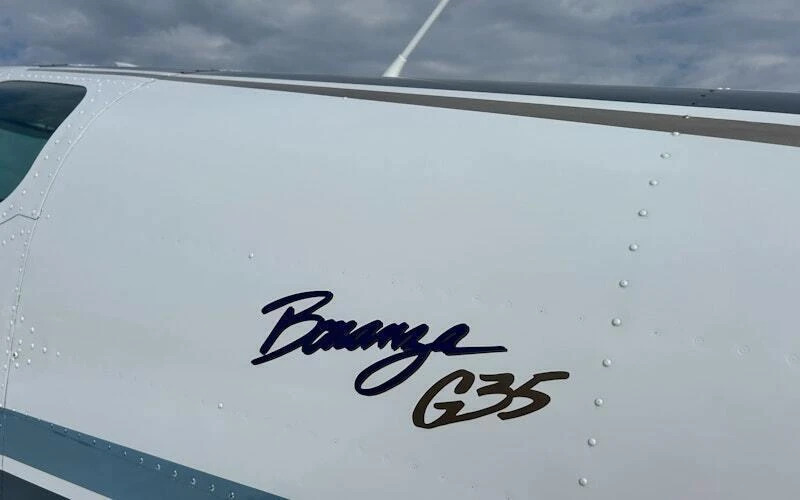
1956 Beechcraft Bonanza G35 ($85,000)
In general, Beechcraft Bonanza’s are especially coveted among used GA aircraft and command high prices as a result.
As with most airplanes, though, prices tend to fall off for examples that have passed the age when many professional pilots face mandatory retirement. The trend favors shoppers who like the midcentury flair of a well-kept V-tail with thoughtful updates.
The decades have been kind to this sporty septuagenarian, whose vintage looks will add a touch of style to any airport ramp. Bonanzas have always been excellent cross-country travelers, and upgrades ranging from Cleveland brakes and an engine preheater to newer avionics and LED exterior lighting keep this one ready for modern missions.

1960 Piper PA-24-250 ($95,000)
When sleek, stylish, and speedy Bonanzas took the GA market by storm starting in 1947, other manufacturers scrambled to respond, with some pursuing other market segments and others following Beechcraft’s lead.
Piper was in the latter group, stepping outside its rag-and-tube comfort zone to produce the modern, all-metal, high-performance PA-24 Comanche with a laminar flow wing, retractable landing gear and a constant-speed propeller.
The Comanche was a hit with pilots for its good looks, performance, and price, which was lower than the Bonanza’s. Despite its popularity, Piper dropped the model after a 1972 flood wrecked the aircraft’s assembly line at Piper’s Lock Haven, Pennsylvania, factory.
Even though its production life was cut short, there are plenty of PA-24s on the FAA registry and on the used market. And they still look great and fly well.

1967 Cessna 182K Skylane ($89,900)
As the 1950s got rolling, Cessna felt the need to modernize its fleet to include a high-performance model but aimed for a broader audience than the Bonanza.
The company’s 182 Skylane, which debuted in 1956, had considerably more power and capability than the 172, which Cessna had introduced earlier the same year. Instead of all-out cruising speed, the 182 delivered all-round utilitarian performance. It was reasonably fast, carried a heavier load than most, and could operate easily from short fields. It might not have been the best at any single mission but generally outperformed its rivals.
The 182’s do-anything reputation continues to this day and contributes to relatively high prices on the used market. Many earlier examples, like this 1967 model, however, offer versatility and value to those willing to shop around.

1973 Bellanca 17-30A Viking ($89,900)
Bellanca developed the successful Cruisair and Cruisemaster retractable taildraggers during the 1940s and ’50s before going out of business.
Another company, Downer Aircraft, acquired the designs and developed them into larger models with more power and tricycle gear. The 17-30A Viking essentially marks the final evolution of the design, though Viking production continued, very slowly, through the early 2000s.
The main thing to remember with Vikings is that they have wooden wings—spruce structures with plywood skins—and tubular fuselages and empennage with fabric covering. Owners say the 300 hp airplanes are fast and handle remarkably well, but their old-fashioned construction requires expert inspection and maintenance by mechanics who are well versed in Vikings’ special needs.

1976 Rockwell Commander 114 ($99,000)
In the name of full disclosure, I have to mention that I own and fly a 1992 Commander 114B and trained for my complex and high-performance endorsements in a 1976 model similar to the example featured here.
Fans of the design, including yours truly, tout its sharp looks, roomy cabin, and smooth, forgiving flight characteristics. Critics point to its wide, draggy fuselage and heavy construction as factors that hurt cruise performance and fuel economy.
Like the Viking, the Commander is an orphan, with no formal factory support to help keep them in the air. Type clubs do a good job of filling that void, though, and the reluctance of some buyers to commit to lesser-known models like these keeps prices relatively low.
I am in my fourth year of ownership and continue to enjoy my Commander. I feel like I found “a good one.”