










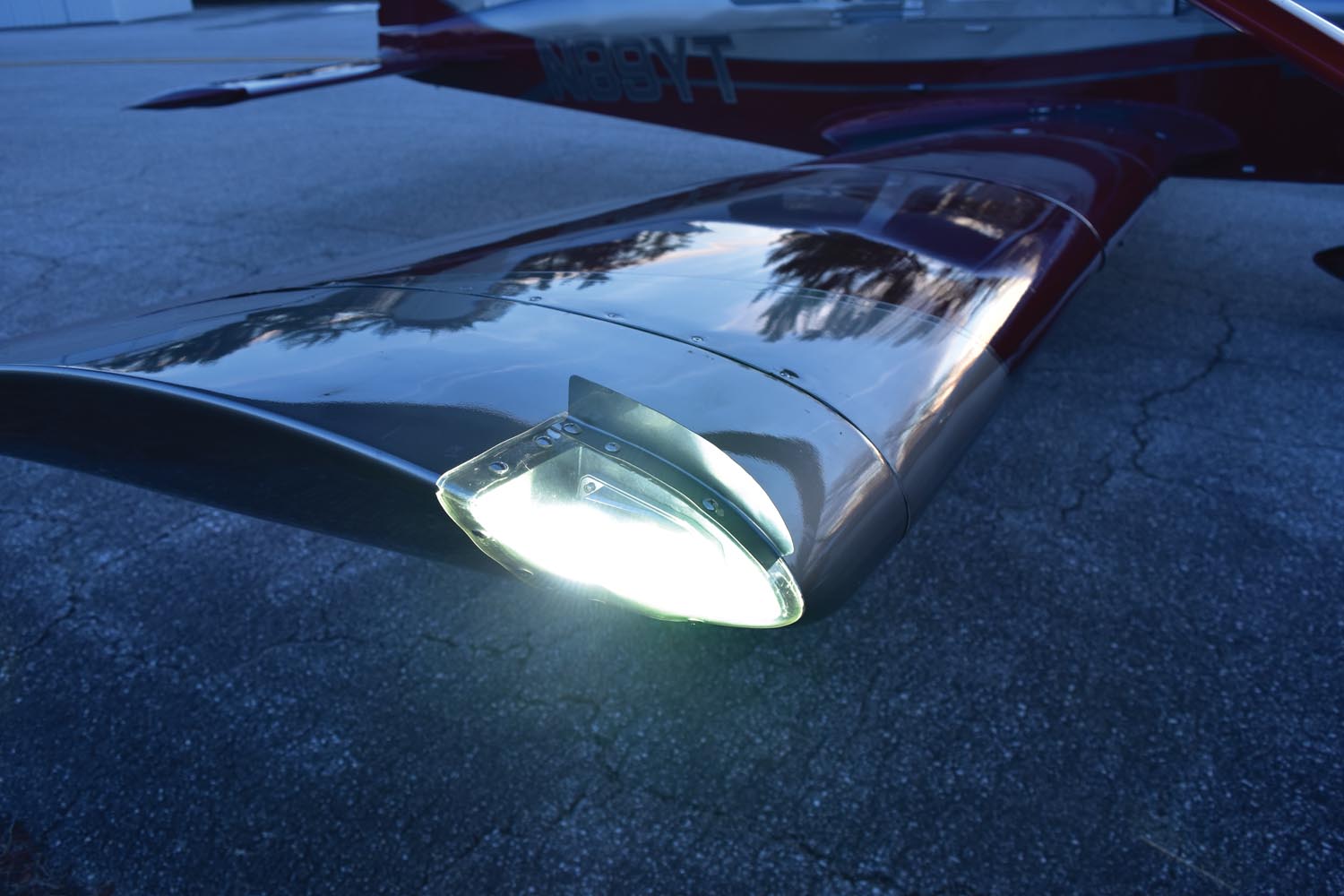
Though the simple concept of see-and-avoid has been the key to collision avoidance for decades, many owners still overlook LED anti-collision lighting upgrades. While the investment and shop effort are far from trivial, these modern smart lights kick the visibility factor up several notches.
Moreover, from a technical standpoint, the argument for LED strobes is easy. Compared to old-school incandescents, LEDs deliver longer life, increased brightness, reduced power drain and the simplicity of having fewer associated components in the airframe. Plus, unlike many legacy systems with separate nav lights and strobes, most all modern LED wingtip units combine nav and strobe functions into one self-contained single unit. Plus, there’s a potential weight savings since there are no external power supplies—somewhat streamlining the installation.