











From the moment light singles started shipping with no pneumatic (vacuum or pressure) instruments, its been the dream of many an owner to yank out the maintenance-hungry vacuum pumps and replace the pneumatic instruments with electric ones. Doing away with pneumatics makes even more sense after a glass panel upgrade where the only item left is usually a vacuum-driven attitude indicator doing duty as a backup. A dry-vane vacuum pump with over 500 hours in service is of questionable reliability. Many pneumatic instruments last over 1000 hours, but thats the exception rather than the rule. There are also the filters to check and replace. Meanwhile, the mean time between failures (MTBF) of electric gyros with spinning components is many thousands of hours. For MTBF for digital “gyros” you’ll have to add another zero. Or two. There’s nothing ignoble about keeping a pneumatic attitude indicator and pump after a glass panel upgrade. Its the cheaper option short-term and is probably cheaper even over the long haul. But when upgrading to digital primaries, its worth looking at going all-electric. 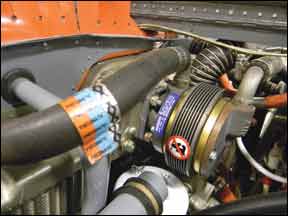
Bookwork
The first question is whether you can legally ditch the pneumatics. This is a multi-step process that starts with the aircrafts type certificate data sheet (TCDS). These can be downloaded from the FAA (http://snipurl.com/27u3bq).
If the TCDS specifically lists the pneumatic system or instruments, you have to keep them. Our search of several popular GA aircraft showed this was rare. One exception was the Mooney M20 series, where the vacuum pump is specifically listed, however, the TCDS was revised in December 2010 to include a note saying that the vacuum system can be removed if the attitude indicator was replaced with an STCd installation of a non-vacuum system and that the remaining vacuum system is no longer connected to any operational system. Peter Lyons, VP of product management and co-founder of Aspen Avionics, points to this as proof that, “The FAA has clearly recognized that vacuum pumps are going away and doesnt want to have barriers standing in the way.”
Another catch might be in the common TCDS phrase, “The airplane must be operated according to the appropriate AFM.” Many newer aircraft have a “kinds of operations” list in section two of the AFM (the Aircraft Flight Manual, a.k.a., the POH). A mid-70s Bonanza wont have this but if you wanted to remove the vacuum-powered attitude indicator from a G1000 Cessna 182 youd be out of luck. It specifically says the vacuum instrument is required for IFR.
Now heres a stumper: You get a great deal on an early Cirrus SR20 with its Rube Goldberg vacuum system and want to upgrade the whole thing to glass panel and