











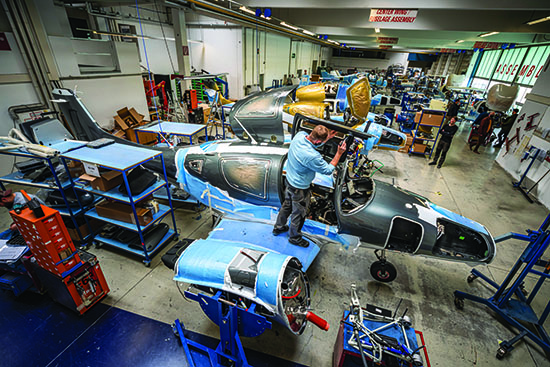
From Charlie Taylor’s cast aluminum block for the original Wright Flyer engine, aerospace manufacturers have been on a never-ending quest for lighter, stronger and better materials. From early airplanes constructed of doped fabric over wood substructure to metallic substructure and then to all-metal airplanes, the pursuit to achieve a higher/faster/longer-range (with more payload) flight continued to push the boundaries of materials science. Models from Cirrus and Diamond, as two examples, are proof of serious progress.
Still, the specific materials—and the critical manufacturing techniques—used to construct composite airframes should be considered when searching for a used airplane. Not all are created equal (especially with homebuilt experimentals), and repair and modification (including paint work) will be very different than on most metal airframes.