









Register

Search Results for: insurance

Uncategorized

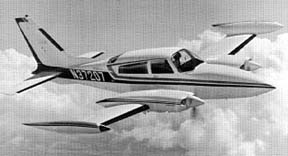
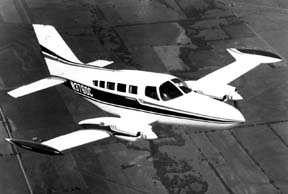
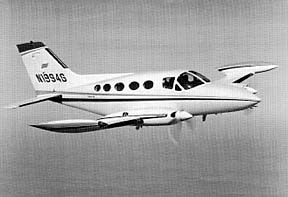
Cessna 340

[IMGCAP(1)]

One thing above all else makes an airplane work we’ll as a business transport: High altitude capability. It means that much of the weather can be flown over, which can make all the difference between getting there and staying on the ground. While turbocharging will get the airplane up to altitude, its pressurization that makes the experience attractive to the executives occupying the cabin.

Enter the 340. Its a relatively economical way to go for a company with a need for a pressurized twin. Though not without its shortcomings-most notably certain loading limitations and an overly complex fuel system-the 340 is nevertheless a fine airplane, one that fits its mission well….
Read More »
Uncategorized

American Champion Citabria/Decathlon

[IMGCAP(1)]For many of us, flying means getting from Point A to Point B as quickly as possible without breaking the bank. Thoughts of the owners next airplane typically involve such things as bigger engines, retractable gear, turbocharging and the like.

But there’s a whole different flying experience, one where its enough just to get aloft and enjoy a fine day, perhaps throwing in a few lazy loops and rolls along the way – true recreational flying. The explosion of the homebuilt and ultralight industry in recent years is testament to the demand for simple, inexpensive airplanes suited to this relaxed mode of flight. But for those who don’t fancy experimentals, choices are few and far…

Read More »
Uncategorized

AGAC AA-1

[IMGCAP(1)]For those who want to fly on a tight budget, the diminutive Grumman AA-1 certainly seems an appealing choice. Priced consistently below other two-seaters (and down in the territory of an average automobile), its a relative bargain. Plus, its faster, more modern, structurally simpler and is, well, sexier than airplanes like the Cessna 150/152. It appears to be an ideal choice for pilots who simply want to get aloft for as little money as possible.

But there’s a raft of caveats facing anyone considering the purchase of an AA-1. This is an airplane that, though marketed as a primary trainer, is not we’ll suited for the task when compared to more docile designs like the 152 or To…

Read More »
Aircraft

Cessna 402 Businessliner

[IMGCAP(1)]

Big, cabin-class turbocharged piston twins are a bit of a niche item these days. Too large and costly for personal transport, yet lacking sufficient performance to satisfy high-rolling corporate clients yearning for the whine of turbines and the comfort of pressurization, theyre used mostly for air taxi and specialty cargo operations. The businesses that once bought this class of airplane are in many cases now looking to more cost-effective alternatives, including time-sharing of the new crop of efficient jets and even airline travel to get executives to their destinations.

But when the mission matches the capabilities of a large piston twin through accidents of geography…

Read More »
Aircraft

Cessna 414 Chancellor

[IMGCAP(1)]

Parts-bin hybrids with spacious cabins and relatively small, efficient engines, 414-series airplanes can carry lots of fuel or a small crowd with their belongings-but not both. Also, the big Cessnas have safety records that are unmatched by any other light twin.

All told, Cessna Aircraft Corp. built nearly 1000 of the airplanes-roughly a 50/50 split between early tip-tanked 414s and wet-wing 414A Chancellors-during 15 years of production. The original intent was for the 414 to be an easy step up to pressurization, and over the years the airplanes have become popular as workhorses for small charter and corporate flight departments, as we’ll as comfortable transports for pri…

Read More »
Aircraft

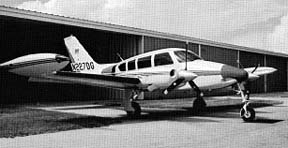
Cessna 310

[IMGCAP(1)]

The Cessna 310 is one of the classics of general aviation, enjoying a 27-year production run during which it served as Cessnas answer to the Beech Baron, Piper Aztec, Commander 500, and Aerostar. More than 5,400 were built, and there are several major variations.

With so much to choose from, any serious buyer should be able to find an airplane that fits the bill.

But there are things to be careful of when considering a 310. First and foremost is the gear, which is relatively delicate and sensitive to proper rigging and maintenance. The airplane can also be a handful to fly, though pilots note that with proper training and due diligence, it can make a good IFR platform….

Read More »
Aircraft

Cessna 320 Skyknight

[IMGCAP(1)]

The Cessna 310 was a radical departure and a solid advance in general aviation products when it was introduced late in 1954. The second airplane in the 300 series was the 320 Skyknight. Introduced in 1961 as a 62 model year product, the 320 was a big step up in performance. Featuring a larger cabin, it also represented one of many areas in which Cessna pioneered or at least persevered: turbocharging.

Turbocharging was not new, even to general aviation. But it was tricky, temperamental and not very reliable. Other manufacturers tried and gave up. Cessna and its vendors stuck with it, deciding that the performance gain was worth the difficulties.

For its time, the 320 was…

Read More »
Aircraft

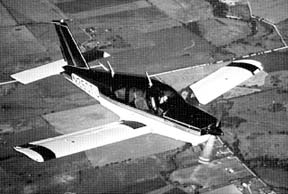
Aerospatiale TB-20, 21TC Trinidad

[IMGCAP(1)]The French have always had a way of going about engineering that is rather different from what Americans are used to, and the line of Aerospatiale singles is no exception. They have gull-wing doors, unusual instrument panels, and ergonomics that are far superior to some of the competition. Perhaps their most important difference, though, is that they were first introduced in the U.S. at about the same time our factories were shutting down production. And unlike other product introductions (or reintroductions) such as the Tiger or the mid-80s Pipers, they managed to hang on through several lean years.

History
The Trinidad is the top of the line of a small family (fo…

Read More »
Aircraft

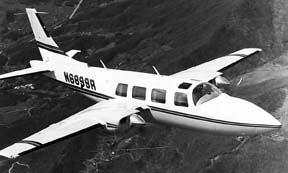
Aerostar 600, 700 series

[IMGCAP(1)]Aerostars carry the dual distinction of being the fastest production piston twins and of having one of the worst safety records in their class. The consensus among Aerostar pilots is that, indeed, its necessary to stay we’ll ahead of the airplane, and that proper training is the answer.

The airplanes are not inherently dangerous. But they are not forgiving, either. Theyre difficult to get to know, and they require a great deal of routine and preventive maintenance. As one owner put it, An Aerostar is not a conveyance for anyone with tight financial constraints.

History
Ted Smith, designer of the Twin Commander, Jet Commander and Douglas A-20 bomber, formed hi…

Read More »
Industry News

Rates on the Rise

If the party is all but over on Wall Street, the crowd may soon be thinning noticeably in the aviation insurance biz.

After more than a decade of competitive rates for aircraft owners, nearly everyone in the insurance business is talking about the latest hard market. What that means, simply, is that premiums are rising and you’ll have to jump through more hoops to get the coverage you want.

Why? Complex reasons, really, but a leading factor is that underwriters have been suffering significant losses and many havent seen much if any profits. Further, the big underwriters are consolidating into fewer yet bigger companies, something that doesnt bode we’ll for competition.

Its no…

Read More »
Uncategorized

Letters 06/98

Pilot Watches
I found the article on watches somewhat helpful, presenting a point of view much different from how I have always viewed this subject. Was the author clever or mistaken? Im not sure.

First of all, the things I use a watch for are the things he says you shouldnt or that are not important. Keeping the Zulu time and local time straight has often been a challenge for me, so I have used the second time zone feature of inexpensive watches to keep Zulu time always stored.

I think thats important-there’s nothing more embarrassing than talking to FSS and trying to explain that you wanted to take off at 1400 local…what Zulu was that again? Is it daylight savi…

Read More »
Commentary

Letters: September 1998

Yo Cessna Yourself
Heres my view on your Yo, Cessna commentary in the May issue of Aviation Consumer: The main reason Cessna wont build the WhizBang you propose is that there is no reason to. Why take a chance on something really new, incurring the expense, the liability, the logistics, etc?

They just don’t need to. Cessna learned we’ll from the Cardinal. There is no need for the WhizBang. Theyre selling bunches of 172s. There is minimal development cost in the redo of the old standby. The insurance liability is a known factor with which the insurers are comfortable. Production should be most efficient by now. The only real expense is the new production facility.

A…

Read More »