










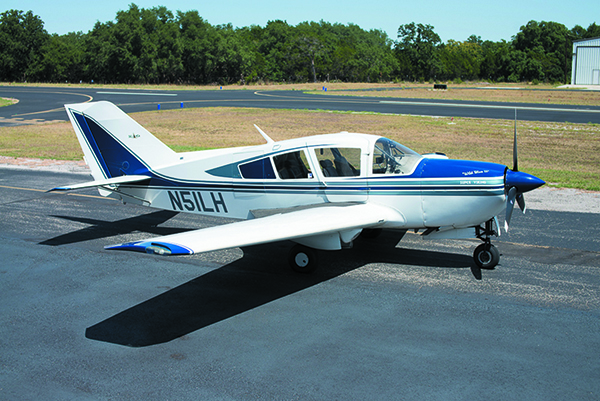
Used Aircraft Guide: Bellanca Viking – Quirky But Cool

In an era when the state-of-the-art aircraft have to be baked in an oven after being laid up in plastic sheets squished together in vacuum bags, its hard to imagine that a wood and fabric wonder like the Bellanca Viking still exists. But it does. And although there arent great squadrons of them around, the Viking retains a loyal, almost cultish following. Why? Because there's nothing quite like it, thats why. The Vikings performance isn't stellar, but its credible with most of its contemporaries, the aircraft handles we'll with few gotchas and its so strongly built that owners still delight in showing the famous factory picture of a dozen cheerleaders standing on the wings. "Try that with an aluminum airplane," goes the advertising tag line.

In an era when the state-of-the-art aircraft have to be baked in an oven after being laid up in plastic sheets squished together in vacuum bags, its hard to imagine that a wood and fabric wonder like the Bellanca Viking still exists. But it does. And although there arent great squadrons of them around, the Viking retains a loyal, almost cultish following.

Frank Holbert

Why? Because there’s nothing quite like it, thats why. The Vikings performance isn’t stellar, but its credible with most of its contemporaries, the aircraft handles we’ll with few gotchas and its so strongly built that owners still delight in showing the famous factory picture of a dozen cheerleaders standing on the wings. “Try that with an aluminum airplane,” goes the advertising tag line.

The Viking is nothing if not sturdy. Inside the wing are two laminated wood spars running the length of the wing, connected by a system of ribs. Inside the fuselage is a lattice work of stout steel tubes that form the engine mount, then carry through the fuselage to form the tail. Add laminated spruce forming one axis and a steel roll cage forming the other and youve got a very sturdy airframe with better occupant protection than many modern designs can claim.

Model History

The Vikings family tree (sorry) traces its roots back to the Bellanca Cruisaire, a triple-tailed retractable taildragger design reminiscent of aviation pioneer Giuseppe Bellancas early designs. The first Model 17 Viking appeared in 1967, powered by a 300-HP Continental IO-520-D.

The model evolved gradually, but other than the engine, there were few major changes. The Continental-powered Viking was called the 17-30, while the 17-31, introduced in 1969, was powered by a 290-HP (later 300-HP) Lycoming IO-540, either normally aspirated or turbocharged. Either engine was available for much of the early production run; the 17-31 was discontinued after 1979 and in 1996, the Continental IO-550 was made available as an option. Some earlier airplanes have been retrofitted. The original hydraulic gear and flap actuation system was redesigned midway through the 1968 model year with the introduction of electric flaps.

The original fuel system-five tanks, two fuel selectors, eight possible combinations of selector settings and several sometimes incomprehensible gauges-was simplified to a left, right and aux system in 1974. After that mod, the fuel mismanagement accident rate for Vikings dropped dramatically. Production continued at a modest rate-in the

peak production year, 1973, just under 200 were built-significant volume by modern standards, but a trickle for that era.

Bellanca Aircraft Corp. went bankrupt in 1980, the year things turned sour for the entire industry. In 1984, the company got back on its feet and started building Vikings again on a limited, custom-order basis. Only nine were built in 1984 and 1985 and none in 1986. About 38 were produced between 1984 and 2005.

In 2001, Bellanca went bankrupt again. In 2002, a group of six Bellanca enthusiasts bought the company from the state of Minnesota and established Alexandria Aircraft Co. LLC. Their immediate goals were to provide technical support and parts to owners and A&Ps in the field. The owners of AALLC also reduced parts prices substantially and rewrote the type certificate for Continental-powered Vikings, which helped prospective buyers looking to replace a run-out 520 with a 550. By early 2010, however, market conditions no longer supported this enterprise and the assets of the factory were put up for auction. There are about 1360 or so Vikings in the fleet, most of which are Continental-powered.

Market Scan

And there are enough Vikings on the market to offer buyers a good choice at remarkably good prices. According to the Aircraft Bluebook Digest, early Continental-powered 17-30s hover around $30,000 while mid-1970s Vikings are in the high $40s. The latest models, which the Bluebook shows as 2001, are valued at $218,000. We found at least 17 for sale in Trade-A-Plane online. All things considered, these prices represent a good value, but one owner told prices have dropped recently.

Look for one that has flown regularly and, above all, been hangared or at least sheltered. Moisture in the wings is the biggest threat to the value and the airworthiness of the airplane and drying them out at 160 knots is the best thing for them, owners tell us.

Performance, Payload

By modern standards, the Viking is a credible but not exceptional performer. Normally aspirated models cruise at around 160 knots, 10 knots slower than heavy singles like the Cessna 210 and A36 Bonanza. The turbo helps, of course. Haul the airplane up to FL200 and you’ll see 190 knots. On the other hand, a Viking will outclimb a 210 or an A36.

The book claims 1210 FPM and owners report similar numbers. For all its power, the Vikings useful load is typically 1000 pounds or so and even less with a lot of equipment on board. Thats in the range of an average 200-HP retractable, such as a Mooney or Arrow. On top of this, the big engine requires a lot of fuel, which further limits the cabin load.

Fuel capacity is either 60 or 75 gallons, but owners say there don’t appear to be many 60-gallon versions. In fact, aux tanks in early models bring the total to 90 gallons. “With full fuel, my 1973 Viking will carry three passengers, or two passengers and baggage,” one owner told us. This payload is typical of all aircraft of this era. Commented another about his turbo: “Lycoming engine, heavier than the Continental, plus two turbos, equals a pathetic full-fuel legal load of two adults plus bags.” Compare that to a Cessna 210, which has a useful load pushing 1400 pounds in some cases and can typically haul 90 gallons and four people plus baggage.

But the Viking has always been more sports car than pick-up truck. With all four seats occupied by FAA-standard humans and 100 pounds of baggage, the airplane can ship maybe 40 gallons of avgas-enough to fly 250 miles with IFR reserves. However, most owners of post-1973 Vikings comment that theyre content with a choice of full seats or full tanks and insist that their bladders usually give out before the fuel does.

Handling

The Viking is almost universally praised for its light, smooth aileron control. “The Viking is a very stable aircraft in turbulence and IMC conditions with no Dutch roll due to the very ample vertical stabilizer. It rolls and handles like a sports car-not like a station wagon,” reports owner David Alger. “My Viking has the same empty weight as the Lance I used to fly, about 2225 pounds. But the control feel and harmony are just wonderful. Low speed control on the Viking is excellent and makes short field operations easy, and the stall is very mild. Its is also a very good IFR platform, not twitchy and pleasantly light on the controls,” says Mark Sellers.

Landing can be tricky, however. Power off, with gear and flaps out, the Viking has an awesome sink rate that owners liken to Steinway pianos. The steep descent angle, however, does allow a skilled Viking pilot to make short landings and the excellent climb rate enables the airplane to depart from short fields just as well.

The Vikings cabin dimensions are modest at best, a reflection of its 1930s design heritage. “The cabin is small for two guys my size,” reports a 210-pound Viking pilot. Even a rabid pro-Viking zealot admitted that the cabin is “not roomy.” Not as tight as a Mooney, maybe, but no 210, either.

Interior appointments draw raves. Many Vikings have a leather or crushed-velour upholstery that puts the chintzy interiors of Pipers and Cessnas to shame. Cabin noise, on the other hand, is high, although some owners tell us its no worse than other aircraft. “A Viking is certainly no louder than any other single engine GA aircraft of similar vintage. Anyone flying any single-engine GA airplane without ANR wont be able to hear much after a while anyway,” says Craig Gifford.

We don’t think there’s much to differentiate the two normally aspirated engines from an ownership point of view. The turbo is another matter. Prospective buyers should carefully consider whether the extra acquisition cost, complexity, fuel consumption and potential overheating problems are worth the benefits of turbocharging. Since its a turbo normalized system-you get full power all the way to the flight levels rather than an extra boost on the ground-in most cases (outside the Rockies, at least) the answer is probably not.

One reader who owned both advised against the turbo version. The gear system is robust, but there’s apparently some confusion in the field about exactly how to adjust the limit microswitches to make the system work well. The emergency gear extension in a Viking is two-thirds foolproof and one-third tricky. When the mains retract, they fold forward and are held there under pressure, so dumping pressure causes them to fall into the slipstream and lock.

Step one of the emergency extension procedure is to slow the airplane to 90 knots, so the over-center spring can push the nosegear through the slipstream and let it lock. No cranking or huffing and puffing necessary-just slow the airplane down.

Hangar It

Owners were all but unanimous in emphasizing the need to hangar a Viking. “Absolutely imperative!” said one. “A crucial necessity,” echoed another, although one reader insisted a shade hangar in a dry climate is good enough. “I keep my Viking inside. But I would keep any airplane I fly IFR inside. Wood deterioration is a function of moisture content. Keep your wood dry and rot cant happen. Simple as that. That said, I often fly in rain and leave the plane outside on trips,” reports Mark Sellers.

The primary reason is to prevent the accumulation of moisture that can trigger wood rot in the wing, but its also a good idea to protect the fuselage fabric from ultraviolet radiation and moisture. The “lifetime” Dacron covering will last a long time in a hangar, but owners report the need to recover in as little as six years if the airplane is left outside.

Factory support for the model is, well, iffy. Still, owners say parts are generally available from Alexandria Aircraft LLC and the Web site is still up at www.bellanca-aircraft.com. Furthermore, the airplanes rag, tube and wood construction mean that experienced mechanics can fix about anything on the airplane.

“I personally don’t worry about AALLC because its really the shops at Rocket, Weber, Witmer and MARS (nicely covering all parts of the U.S.) that keep these airplanes flying. The future of 100LL poses a far greater risk to the Viking future than the status of the factory being for sale,” says Craig Gifford.

Owner Comments

I bought my first Viking in 1969. Since then I have had a total of five Vikings and have over 6000 hours in them. I suppose this in itself would be a good testimonial. My current model is a 1998 Viking with an IO-550 engine and one of the last ones built.

The Viking is a pleasure to fly. Its systems are very simple, making repairs much less expensive than the “iron” aircraft. I often fly with very heavy loads finding that the performance is not diminished significantly. I have inadvertently gotten into icing situations several times in the past 40 years and on one occasion accumulated a large amount of rime ice at 12,000 feet. I knew I could get down to an altitude where the temperature was above freezing, so I just kept going to see what the airplane would do. Of course, the airspeed dropped significantly, but I was able to maintain altitude with no

problem. I think the relatively “thick” wing has a significant advantage in that respect.

With the IO-550, I run lean of peak all the time and true 170 knots, saving 2 GPH. Running ROP adds about 7 knots. I find the IO-550 about 10 knots faster than the IO-520 and I think most people have experienced the same. Annuals run about $3000 depending on how much extra stuff I want to have done. Rocket Aviation in Plainview, Texas, does all the major repairs and they are never more than a phone call away.

I keep the airplane hangared all the time (except when traveling) and have never had a problem with the wood. Think about it. There are 200-year-old homes made of wood and amazingly they are still standing. I plan to fly the Viking until I quit flying.

David Alger
Lago Vista, Texas

I began my “affair” with Vikings when I was in high school in Plainview, Texas, back in the early 1990s. At Millers Flying Service (a legend among Bellanca drivers), I learned to fly in a Cherokee 140 and with 54 hours in my logbook, less than a week after my private checkride, I began my checkout in the Viking at the ripe age of 17.

In my flying career, I have flown many types of Piper, Cessna, Mooney, Beech, Cirrus and Diamond aircraft. However, I found myself coming back to the Viking as I shopped. I found a 1989 model that had been meticulously maintained and I bought it in August of 2007.

I could not find another airplane that I could purchase in the mid-$150,000 range that had this performance. Bonanzas are twice as expensive in the same vintage and they are slower, but larger inside. Operating costs are about the same as any other airplane in the category.

I generally let Rocket Aviation (formerly Millers) do my annuals. This is simply because they know the airplane inside and out and are experts on how to detect issues early and fix them efficiently. All my other maintenance is at a local shop. There’s nothing really tricky to maintaining a Viking other than keeping it relatively dry.

An annual generally runs me $2000 to $3000 out the door and I always fix everything that even remotely looks like trouble. Insurance runs me around $2300 annually for a $160,000 value.

I can only knock the Viking on two things. One, the baggage area is small. We have to pack in duffle bags and think about everything we take. My wife misses the space our 182 had, but the extra 30 knots in speed is worth it to me! Thats the other knock. The gear speed is pretty slow and this slick airplane can be a challenge to slow down. A speed brake mod would be nice.

Overall, I could not be any happier with my Viking. Everywhere I go, I get comments on it. It has ramp appeal that a 182 or even a Cirrus just cannot have. It is in the same category of efficiency with a Mooney, but has slightly more interior space. It costs half as much as a Bonanza to purchase. Its a simple airplane to fly. Everything feels natural. Its one of those airplanes that you sort of feel guilty for turning on the autopilot.

Ty Flippin
Via e-mail

I have owned a 1985 Viking for six years and let me say at the outset I like my airplane a lot. For the money spent, it is an outstanding value. Other four-seat aircraft may outperform the Viking in some parameters, but when you add it all up and divide by the dollars spent, the Viking is an extraordinary deal. Here are a few data points:

I outran a friend in his SR22 on identical IFR flight plans from Chatham, Massachusetts, to Philadelphia. Same power settings and altitudes, same routing. I departed seven minutes before he did and arrived 11 minutes before he did. I routinely cruise in the low 170-knot range. My airplane is one of about a dozen Vikings that either came from the factory with the IO-550 or has been retrofitted in the field.

I had six square feet of sheet metal on the belly of a Piper Lance replaced for about $6000. I had twice that much fabric on the belly of my Viking replaced and a flap re-taped and painted as well, for under $2000. Fabric is easy to patch and repair.

My friend with the SR22 would never consider taking his plane into a grass field. Hed trash the wheel pants. I routinely land at unimproved fields. The Vikings wood wing delivers excellent short field performance without cuffs, VGs or sheet metal pyramids riveted to the leading edge.

Fabric covering: Every technology has its limitations and life span. After 25 years of being kept inside, my Viking looks great and has good gloss retention on the original paint. But the paint has begun to embrittle and I am starting to see a little surface cracking. Im planning on recovering in a few

years, and Ill spend a lot of money doing it.

Wood wings: Flying the airplane regularly and circulating air through the wings should prevent any issues. Wood deterioration happens over time, just like corrosion in a metal airplane. A good pre-purchase inspection is the best way to avoid the problem. The guy in the hangar next to me flies aerobatics in a Stearman with many thousands of hours total time and wooden spars. This is completely unremarkable. Would you do the same thing in a sheet metal airplane from 1942? Doubt it.

Maintenance: I am fortunate to live 15 minutes from the top Viking shop on the East Coast, Witmers Aircraft Service in Pottstown, Pennsylvania. Tom Witmer is easy to deal with and his product knowledge is unsurpassed. Vikings seems to be afflicted with a lot of shade-tree maintenance, perhaps because the systems on the airplane are so simple owners and mechanics don’t look at the manual.

When I got my airplane, it was out of rig and a couple of systems had been buggered up. After getting over that initial hump, my maintenance expenditures have been tolerable dispatch reliability has been excellent. The gear, which is the most complicated system in the airplane, uses the same power pack as the Piper Arrow.

The negatives: The airplane is not big inside. Getting in and out, especially for the copilot, is not graceful. On the other hand, I am 6-feet 2 inches and once Im in and settled down, its quite comfortable.

I have good headroom and the lack of a center console below the panel permits me to spread my legs all the way across the airplane if Im by myself. The back seats actually have more room than the front.

In the later model Vikings, the cockpit lighting, fuel controls, environmental controls and flap settings are, in my opinion, just right. Vikings came with a ski tube that easily accommodates a golf bag. Little things like that can make a real contribution to the experience of flying a plane. I wish the airplane held more fuel. I have 75 gallons usable, which is merely adequate. But 15 gallons of that is in an aux tank behind the rear seat and this permits significant CG

adjustment when flying fatties or carrying a lot of baggage. Like I said, for the money spent, my airplane is a great value.

Mark Sellers
Philadelphia, Pennsylvania

I first flew the Bellanca Super Viking in the late 1970s when I worked as a rent-a-pilot. On my first flight, before the gear was even up, I knew I was flying something special. I logged about 100 hours in the BSV in the 1970s and enjoyed every one of them. The Super Viking is like an American muscle car compared to the European imports; it does with horsepower what the others try to do with finesse.

In 2004 I was looking to buy a fast plane for cross-country flights and the BSV made the list with some more common aluminum models. I researched speed, features and prices for a month and the BSV rose to the top of my list. Since owning N4201B I average about 125 hours a year. I typically fly it on trips exceeding 200 miles primarily for pleasure. Here are some comments:

Pro:

The BSV is cheap to purchase. I saved about $75,000 over similar performance aircraft.

Most parts are readily accessible since very few are proprietary. I had to replace a rudder (metal corrosion) and found one at salvage for $250.

Very smooth in turbulence. The wing gives much like the 787.

High rate of climb gets one to cruise speed much sooner.

Very few ADs to comply with.

Little if any repairs between annuals.

Very strong airplane in an accident. The cockpit is enclosed in a steel roll cage. An accident in Mexico destroyed two trucks but the pilot and pax walked away.

Overall, a very fun aircraft to fly. Quick on the controls and very solid in an IMC environment. Some say the elevator is heavy but I would call that a stable IFR platform. Trim for 100 knots on a radar base and there it stays.

Con:

Tricky for the novice pilot to land. A BSV can be ground looped and one needs to hold the nosewheel off as long as possible.

Snug cockpit. Not as tight as a Mooney, but its not made for four large men, either. I rarely fly with anyone in back, so this

Needs to be stored in a hangar. No issues with leaving it out on trips but it should be hangared at home. The sun degrades fabric faster than aluminum.

Pre-buy and maintenance needs to be done by someone who knows the BSV. You can spend a lot of money teaching a Cessna mechanic the quirks of the BSV.

Frank Holbert
Via e-mail