









When Cirrus went its own way and offered the Tornado Alley Turbo as an STC in the SR22, the market practically planted a wet kiss on the project. Now, with a new model called the SR22T, Cirrus is following up with a groundboosted rather than a turbonormalized system. This time, it did the engineering in-house rather than relying on Tornado Alley, although its clear that Cirrus took a page from the TAT book in terms of overall design, especially intercooling and leaning strategy. And how about performance? From a brief test flight in May, we conclude that the SR22T approaches par with the TN model but appears to be bit slower. we’ll give our data below, but without doing a side-by-side flyoff, we cant make a definitive judgment on performance. Although designed to run lean of peak, it burns a little more fuel, which we would expect, given the low-compression pistons. Otherwise the airplanes are so similar that we have to ask: Why do this?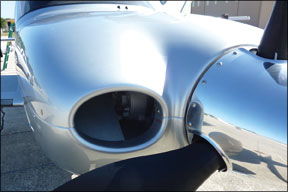
Market Talk
In its marketing summary, Cirrus listed changes in the airplane and their benefits. These include full-time 2500 RPM operation for smoother running and power changes, a dynamic leaning bug on the Garmin Perspective system, a 15-pound lower empty weight and a new oleo strut on the nosegear.
The claim that may catch the attention of many buyers is this: “This lower compression ratio engine is more tolerant of lower octane fuels and reduces the risk for customers with the future of…fuel in question.” We take this to mean that Cirrus sees the SR22T as being capable of operating on less than 100-octane fuel.
Were not sure if that will be a hard sales point, but if it is, customers will need to ask Cirrus to clarify the claim. Some may also be thinking twice about buying the normally aspirated SR22, whose IO-550-N sports the same 8.5 to 1 pistons as the TN. Heres what Cirruss Todd Simmons said when we asked about this: