









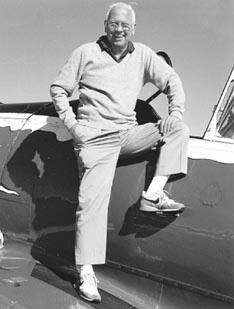
Lear Jr. on Eclipse
Eclipse may be the newest personal jet, but William Lear pioneered the idea. Heres what Lear Jr. thinks of the new breed.


Eclipse may be the newest personal jet, but William Lear pioneered the idea. Heres what Lear Jr. thinks of the new breed.
More Notes on Relief
Heres a comment on your recent article on personal relief devices. Unless we own the miraculous airplane of hangar talk, we all generate a lot of waste containers: Oil bottles.
Purchase a pack of purse-size Kleenex and a plastic automatic transmission filler funnel. Those will make a cheap and handy disposal system, at least as handy as the others and easier to find than the large mouth soda bottles.Get an ATF funnel that will fit into the oil bottle and trim the bottom so that the funnel fits tightly into the bottle neck, that is, it wont bottom out.Trim the top of the funnel to the height and angle that best fits the plumbing with the bottle…
Sweet Relief
Ref your article on personal relief devices in the January issue, great review of perhaps the least-covered aviation products.
My experience with waste handling started in cross country soaring.Fuel stops were definitely not an option and in the early 1980s, I was surprised to find out how many competition sailplane pilots used various dehydration strategies to deal with the problem.
Part of the challenge was probably related to the difficulty of getting water to flow uphill while lying in a prone position.Some lessons learned:Never play with dehydration. It will diminish your skills and will catch up with you sooner or later.Drink normally.
Baggie…
How bout a Maule?
Concerning Ken Ibolds article on buying a new Decathlon (Aviation Consumer, October 2001), for that much money he could have had an exciting-to-fly-and-land Maule. I fly mine about 200 hours a year and thanks to business, most days I fly to work.
Its a joy to fly and own and I have Cessna 182 performance with my 235 HP and so I can take four people and bags for the weekend.
-Steve Preas
Lilburn, Georgia
Yeah, but hows it do with hammerheads and Cuban Eights?
———-
Avidyne vs. Bendix/King
Larry Anglisano dida credible job evaluating Honeywell/Bendix/Kings KMD 550/850 in your November 2001 issue. I would…
Pump Pros and Cons
I want to encourage the FAA and/or the NTSB to institute a change in the instrumentation of small-airplane vacuum systems so that a vacuum failure is more survivable in heavy instrument conditions.
Having watched the ABC Prime Time Thursday report on 9/3/01 and having had two vacuum pump failures myself, I understand the problem. I think that the solution could be very inexpensive.
There should be no need for a potentially failure-prone back-up pump but a warning to the pilot that there has been a failure. Currently, the vacuum pump pressure gauge is the smallest indicator on the panel and is we’ll out of the scan pattern.
If an additional indicator…
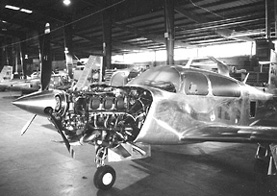
New production may end for awhile, but long-term parts support is too big a business to pass up.
While most aviation insurers will survive the largest claims in history, expect rising premiums to cover the losses.
Pulse Oximeters
I am a long-time subscriber to Aviation Consumer and have been a pilot for more than 26 years. Your two recent articles on pulse oximeters were excellent.
However, there’s a critical misunderstanding about pulse oximeters which needs to be explained. As a practicing anesthesiologist, I use oximeters every day. The oximeter indirectly measures the oxygen available to the tissues by calculating the percentage of hemoglobin molecules saturated with oxygen.
However, the relationship between the oxygen available to the tissues and the oxygen saturation percentage recorded by the pulse oximeter is not a linear relationship.
Pilots should not be fooled…
Safety Priorities
By and large, I agree with your order of setting priorities, as noted in the August issue. I have a fewexceptions.
The first is de-icing gear. Most of my flying is in the Northeast and evenly distributed throughout the calendar year. As an instrument-rated pilot, I fly in IMC often. At least six months of the year, there are airmets calling for icing in clouds.
If one wants to have a reasonable dispatch rate and adhere to the letter of FAR Part 91 regs, deicing gear takes on much higher priority especially when flying over the mountainous areas of New Hampshire, Vermont and New York, where MEAs can be 7000 to 8000 feet. Even with it, I will not launc…
Bendix Dual Mags
Reference your report in the August issue on Bendix dual magnetos: Another reason to be wary of these mags wasnt mentioned in your article, possibly because this isn’t a problem in Mooneys.
In the Cardinal installation, both fixed gear and retractable, the prop governor on dual-mag equipped engines comes with a metal plate that goes between the engine and the governor, sandwiched between two gaskets.
This plate blocks some oil passages which arent needed for that application. About two or three times a year, someone will R&R a Cardinals prop governor, toss the metal plate in the trash with the old gaskets, install the new governor without the met…
Cirrus Comments
I liked your article on the SR22 in the June issue of Aviation Consumer. I thought you did a very fair piece and accurately addressed a lot of the issues, both pro and con. However, your analysis of the speed does not correlate we’ll with my experiences.
While I have gotten used to manufacturers overstating specs on speed, in my opinion, Cirrus has been fair on this one. In fact, I seem to consistently be within a knot of book claims, plus or minus, and use less fuel in the process. At 75 percent power, I have consistently seen TASs in the 178 to 182 knot range. Fuel flows were around 17 GPH.
The primary reason for this response is that you used 170…

Cessna has overhauled its inspection methods. Field experience will tell if the trickle of new-airplane ADs will end.