









Used Aircraft Guide

Six Place Survey

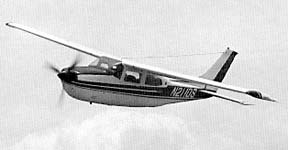
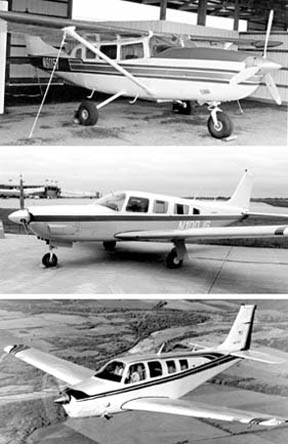
[IMGCAP(1)]At some point, most people who own airplanes feel the need to pull more seats through the air. And that leads logically to this question: Twin or single?

You can buy into either market for about the same amount of money. But as we reported in the December issue, you can count on a twin costing not twice but three times as much to operate as a single.

Ignoring the gnarly issue of safety for a moment, operating cost alone rules out a twin for many owners. Why shell out $20,000 a year to pay for 100 hours or less of six-place twin time?

So full circle, back to a six-place single. There’s wide range of choice, particularly if you consider off beat foreign makes and antiq…
Read More »

Piper PA-31 Navajo

[IMGCAP(1)]

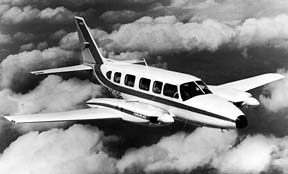
In the mid-1960s Piper, flush with success, decided it was time to enter the burgeoning commuter airline/cabin-class twin market with a brand-new airplane. The result was the PA-31 Navajo, Pipers answer to the ubiquitous Cessna 400 series twins.

It was to be based on and all-new airframe, one that was markedly different from anything the company had ever produced: much bigger, with an airstair door to keep passengers happy, and with significantly more powerful engines.

Piper stuck with the formula begun with the PA-28s: Take the same basic airframe and re-swizzle it into as many variations as possible, thus allowing one design to fit many market niches. In all, the PA-3…

Read More »

Piper PA-31T Cheyenne

[IMGCAP(1)]

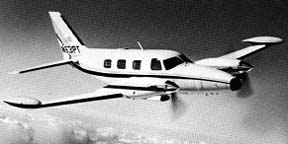
Designed to provide a lot of performance for a comparably low price, the much-maligned Cheyenne still is a relative bargain for the kerosene crowd.

There are five basic Piper Cheyenne models. All share a common heritage: the basic PA-31 design originally introduced as the Navajo. There are two major branches to the design family. These are the PA-31T series, or Cheyenne/II, Cheyenne I/IA and Cheyenne IIXL (plus an unpressurized hybrid developed for the air taxi and commuter markets, the PA-31T3 or T-1040) and the PA-42 series, which consists of the T-tailed and longer-fuselage Cheyenne III/IIIA and Cheyenne IV/400LS.

Pratt & Whitney of Canada PT6 engines power all but th…

Read More »

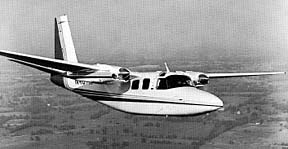
Twin Commander 500 Shrike

[IMGCAP(1)]

It takes a crowbar to separate image from reality with the big Commander twins-the image pitched by Rockwell Intl. in a blaze of promotional glory-and the one left by Bob Hoover in his airshow demo, hanging a Shrike on a prop and deadsticking it out of a loop.

When the image is pried away, what actually remains? Well, something not too far away from the Tough Bird notion of all the hype and promo. Time and again, Commander 500 series owners, in their letters and phone calls to us, talked about reliability and freedom from breakdowns as among the outstanding qualities of the airplane.

But potential buyers might figure its more appropriate to ask: How tough do owners…

Read More »

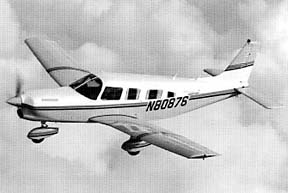
Piper PA-32 Cherokee Six/Saratoga

[IMGCAP(1)]

The Piper PA-32 Cherokee Six/Saratoga comes close to being the epitome of a utility airplane. In the payload/capacity/cost equation, its hard to find another airplane that can carry so much for so little. As such, its popular with charter and cargo operations, and fills the need well. With six seats and fixed gear, its only counterparts in the marketplace are the Cessna 206 and 207.

As a fixed-gear single, the PA-32 offers simplicity, relatively low maintenance costs (especially when compared to a twin) and low fuel consumption (again compared to a twin). Of course, something must be sacrificed-in this case speed-and the possible safety benefits of a second engine. (The s…

Read More »

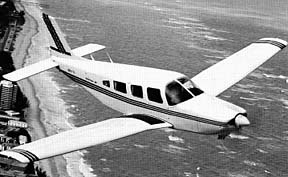
Piper PA-32R Lance/Saratoga SP

[IMGCAP(1)]

There’s a lot to be said for airplanes that have a whole lot of room inside. Theyre comfortable and flexible, and usually have the power needed to provide good takeoff and climb performance when lightly loaded. These advantages come with a price, however. A big airframe means a big engine, and that means a big appetite for fuel. Often, it also means less-than-stellar cruise speeds.

Still, if the owners needs lean more towards hauling ability and roominess than getting to point B in a real hurry, a big airplane might be just the ticket. The aerial equivalent of a minivan, if you will.

This is the mission of the Piper PA-32 series. Like the PA-28 series, the PA-32s come…

Read More »

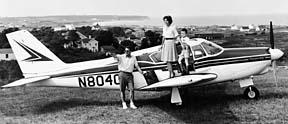
Piper PA-24 Comanche

[IMGCAP(1)]

In the mid and late 1950s, Piper was rapidly transforming itself. Up until then, it had built airplanes like the PA-22 Tri-Pacer, the woefully underpowered Apache, the Super Cub and the like.

General aviation was progressing fast, and tube-and-fabric airplanes were giving way to shiny new all-metal monocoque creations. For Piper, it meant moving to more capable airplanes like the Comanche.

The Comanche, being a thoroughly modern design, was a real departure for the company. With the exception of the Apache, everything Piper had produced up until that time was fabric covered, and all save the Tri-Pacer were taildraggers. The Comanche boasted a roomy oval-section fuselage,…

Read More »

Piper PA-46 Malibu/Mirage

[IMGCAP(1)]

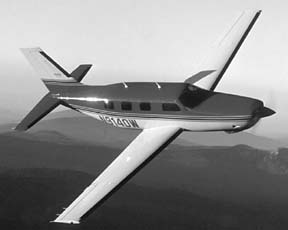
The Malibu and its near-clone, the Mirage, are airplanes that fall into a class all their own. The PA-46 is pressurized and has an air-stair door, so in terms of accommodation it ranks up with cabin-class twins. In terms of performance, too, it rivals many airplanes having the benefit of an extra engine. However, its single engine offers (at least theoretically) lower operating and maintenance costs.

There are some airplanes configured similarly to the PA-46, but theyre in a different league, with turboprop engines; specifically, the SOCATA TBM 700. The closest piston-powered counterpart is the Cessna P210, which is of similar size but which has a more conventional cabin l…

Read More »

Piper PA-23 Apache/Aztec

[IMGCAP(1)]

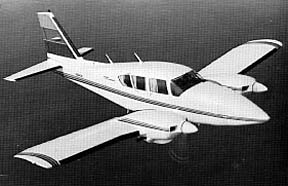
The PA-23 is one of those airplane designs that stayed in production so long that the final versions were almost unrecognizable derivations of the original. In this case, the original was small, all-metal, and underpowered to the point that single-engine operations can be extremely hazardous…just like other twins with small powerplants. The last versions, by contrast, are capable load-haulers with very good short-field performance.

History
The precursor of the PA-23 was the Twin Stinson, which not only had two engines (125-HP Lycomings) but two vertical tails, as well. The design originated at Consolidated Vultees Stinson Division, which was acquired by Piper…

Read More »

Piper PA-30/39 Twin Comanche

[IMGCAP(1)]

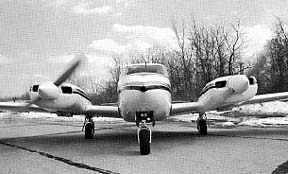
If youre in the market for a light twin, the Twin Comanche has two appealing traits: A top speed of 170 knots or more and two fans that operate almost as cheaply as one. But the real charmer is its price-$88,000 to $122,000 average equipped price, according to the Aircraft Bluebook.

you’ll pay that much for many good, used singles-ones with less impressive performance and lacking the security (at least in cruise) of an extra engine. And, while the oldest Comanche is 35 years old, you’ll have the benefit of a fairly decent parts supply, reliable IO-320 engines and an owners association filled with satisfied members.

History
Between 1963 and 1972, Piper produce…

Read More »

Piper PA-28 Cherokee 235/Dakota

[IMGCAP(1)]

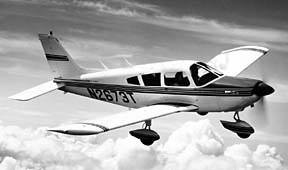
Big-engined four-place tricycle singles are an interesting – and small – class of airplane. Its almost always possible to go faster for less money and fuel, and often possible to get more utility than is afforded by sticking a bigger engine on a relatively small airframe. Nevertheless, muscular four-place singles have proven reasonably popular in the marketplace over the years; popular enough, at least, to support two significant entries. These are the Cessna 182 and Piper PA-28-235/236.

There’s another class of big-engined singles, exemplified by the Cessna 185 and Maule. They are more in the line of working bushplanes, however. The 182 and the Piper entry are more mains…

Read More »

Cessna 210 Centurion

[IMGCAP(1)]The upper end of the nonpressurized, single-engine retractable market is sparsely populated. If you need one of these big, fast, six-place load haulers, your choice is essentially limited to the 36-series Bonanzas, the Piper PA-32R Lance/Saratoga, and the non-pressurized Cessna 210 Centurion.

The Bonanza is widely regarded as the king of this particular hill, but the 210 can offer quite respectable performance and load-lifting capability for a lot less. The Piper is closer in price, but is both slower and slightly short on load carrying. There is a catch, however: 210s have a reputation for gear problems and poor quality of construction.

The 210 in many ways is a truly rema…

Read More »