









Register

Search Results for: insurance

Aircraft

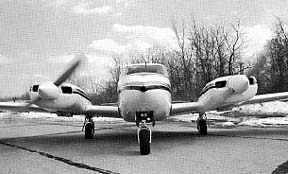
Piper PA-30/39 Twin Comanche

[IMGCAP(1)]

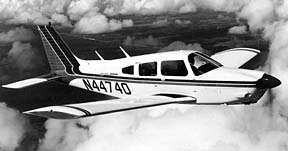
If youre in the market for a light twin, the Twin Comanche has two appealing traits: A top speed of 170 knots or more and two fans that operate almost as cheaply as one. But the real charmer is its price-$88,000 to $122,000 average equipped price, according to the Aircraft Bluebook.

you’ll pay that much for many good, used singles-ones with less impressive performance and lacking the security (at least in cruise) of an extra engine. And, while the oldest Comanche is 35 years old, you’ll have the benefit of a fairly decent parts supply, reliable IO-320 engines and an owners association filled with satisfied members.

History
Between 1963 and 1972, Piper produce…
Read More »
Aircraft

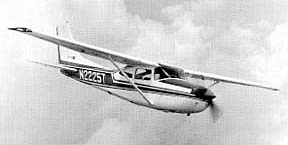
Cessna 210 Centurion

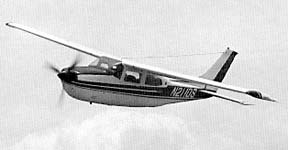
[IMGCAP(1)]The upper end of the nonpressurized, single-engine retractable market is sparsely populated. If you need one of these big, fast, six-place load haulers, your choice is essentially limited to the 36-series Bonanzas, the Piper PA-32R Lance/Saratoga, and the non-pressurized Cessna 210 Centurion.

The Bonanza is widely regarded as the king of this particular hill, but the 210 can offer quite respectable performance and load-lifting capability for a lot less. The Piper is closer in price, but is both slower and slightly short on load carrying. There is a catch, however: 210s have a reputation for gear problems and poor quality of construction.

The 210 in many ways is a truly rema…

Read More »
Aircraft

Piper PA-28R Arrow

[IMGCAP(1)]

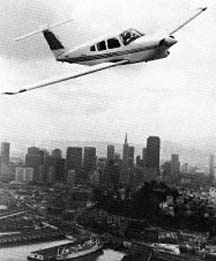
The Piper Arrow is, in a way, like a Ford Taurus. Not the fastest, not the roomiest, not the most stylish… but it has enough of all of those qualities to give it enduring popularity. For those unable to afford a Mooney or Bonanza, it offers a less expensive, though still reasonably capable, cross-country machine. It also has the advantage of not being an orphan – the Arrow is still being made.

The Arrow, since its really just a retractable Cherokee (or Archer), is a logical step-up airplane for pilots who now fly fixed-gear Pipers. Everything will be familiar, from gauge placement to handling and procedures. And that, of course, was the basic marketing model for all of t…

Read More »
Aircraft

Piper PA-28RT Turbo Arrow

[IMGCAP(1)]

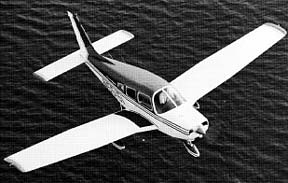
Saddled with a battered image, handicapped by a powerplant with a nasty reputation, the Turbo Arrow should be approached with caution. But various upgrades and a kind of Darwin effect may have weeded out many of the real clunkers by now.

When Piper hung a 200-HP turbocharged Continental onto the basic Arrow airframe in 1977, the combination looked like one made in heaven, rather than Vero Beach.

It was a perfect match: the worlds premier economy retractable single and a K-Mart kind of powerplant that promised high-tech performance at low-tech prices.

Alas, the engine was finicky, tricky to operate and prone to self destruction. Things got so bad that the National Tr…

Read More »
Uncategorized

Cessna 182 Skylane

[IMGCAP(1)]Cessna really got the basic four-place, fixed-gear single formula right with the two mainstays of its line, the 172 and 182. Both designed more than 40 years ago, both are now back in production and selling remarkably well, albeit not as we’ll as Cessna had hoped (in 1999 Cessna delivered 452 Skyhawks and 248 Skylanes). Without doubt, these airplanes are classics, and are some of the all-time most popular light aircraft ever built. Production of the 182, by the time the line closed down in 1986, had topped an astonishing 22,000, a mark beaten only by… you guessed it: the Skyhawk, and the 150/152.

Both 172 and 182 share a trait that has guaranteed their success over the years:…

Read More »
Uncategorized

Piper PA-22 Tri-Pacer

[IMGCAP(1)]

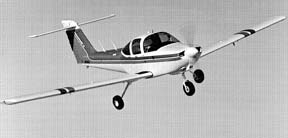
The Piper Tri-Pacer is not what one would call a modern-looking airplane. Short-coupled, with stubby, strut-braced wings and thick-looking tricycle landing gear, the tube-and-fabric four-seater seems a bit dowdy.

It certainly has come in for more than its share of abuse, giving rise to charming appellations like Flying Milk Stool, Slow-Pacer, Flying Brick and Three-Legged Hog.

But owners delight in the airplanes pleasing mix of reasonable performance and load-carrying capability combined with low purchase prices and rock-bottom operational costs.

And theyve got a point. The Tri-Pacer can cruise faster than a vintage Cessna 172 while using from seven to nine GPH. It…

Read More »
Aircraft

Piper PA-38 Tomahawk

[IMGCAP(1)]

The Tomahawk, one of the last all-new designs introduced by Piper before the great general aviation slump of the 1980s, was supposed to be the ultimate primary trainer. It was billed as a design that answered the wishes of flight instructors and students everywhere.

It certainly had a few things going for it. Definitely sportier-looking than its main competition, the Cessna 152, the Tomahawk offered a reliable engine, good visibility, a hefty 30-gallon fuel capacity and we’ll thought out systems. But it was hit with a series of troubles early on; these, of course, were rectified through ADs and service bulletins, but before the PA-38s reputation could be restored production…

Read More »
Aircraft

Piper PA-28 Warrior

[IMGCAP(1)]

The basic 150-HP four-place, fixed-gear single is about as close to an everyman airplane as you can get. Its the market segment where airplanes become just capable enough to be practical transportation tools. They wont haul a lot of people or cargo, but they will lift enough. They wont go all that far or all that fast, but they will perform adequately. Airplanes in this class are sort of like Toyotas: Not terribly exciting or fancy, perhaps, but they do what you need them to without costing an arm and a leg.

The Cessna Skyhawk still owns this market, and the prices of used airplanes reflect that dominance. However, at least two of its mainstream competitors, the Piper Wa…

Read More »
Aircraft

Cessna 182 RG Skylane RG

[IMGCAP(1)]Pilots shopping the field for a high-performance retractable sometimes have one of those forehead-slapping moments when the Cessna 182 RG is mentioned.

For reasons probably related to the Skylanes rep as a stodgy family sedan, its not often considered in league with the likes of Bonanzas, Mooneys and even Cessna 210s.

Yet there it is. The Skylane RG has good performance, hauls a load and is a reasonable buy, although in recent years, thanks to demand, its value has spiked compared to Mooneys and Bonanzas.

Mechanically, the 182RG is somewhat of a mixed bag. The landing gear has a troublesome history and although it performs we’ll if maintained, its simply not the equa…

Read More »
Aircraft

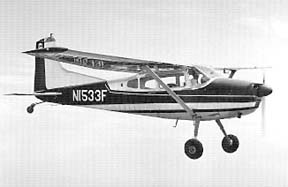
Cessna 185 Skywagon

[IMGCAP(1)]This big, burly single is Cessnas equivalent of a mid-sized pickup truck, able to tote a load into (and out of) a variety of out-of-the-way places. The 185 is in many ways the epitome of the working airplane, designed specifically to haul big loads and operate from unimproved strips. Over the years, its proven very capable and popular.

History
The Cessna 185 was introduced in 1961 as a more powerful sibling to the popular 180, which had already been in production for eight years. The 185 outlasted the 180 by four years: the 180s last year of production was 1981, the 185s was 1985.

Physically, the two airplanes are quite similar with comparable dimensions. The…

Read More »
Aircraft

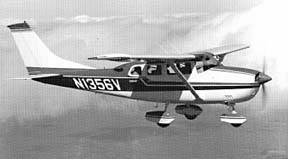
Cessna 206 Stationair

[IMGCAP(1)]A long-standing axiom is that speed sells. Thats true, but only half way: The other side of the coin is load carrying, a trait that for some is more important than getting there fast.

Periodically, the public decides that big, heavy load-haulers are desirable (usually when fuel is relatively cheap). That accounts for the current popularity of enormous truck-like vehicles on the roads, and the skyrocketing prices of airplanes like the Cessna 206.

This aerial sport/ute is not fast, but its stable, rugged, reliable, has six real seats and is remarkable for being able to carry a half-ton or so after the tanks are filled.

So popular is the combination of simplicity and loa…

Read More »
Aircraft

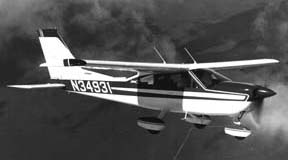
Cessna 177 Cardinal

[IMGCAP(1)]No doubt about it, the original Cardinal was a flop. Suffering from poor performance and troubling aerodynamic qualities, the 177 quickly acquired a bad reputation that haunted the design for years. It could be said that it never really recovered; Cessna ended up discontinuing the Cardinal after 10 years, replacing it with the Hawk XP. Too bad, because the later Cardinals were much better than the originals, and superior to the Hawk XP, to boot.

History
The first Cardinals appeared in 1968. It was markedly different from other Cessna singles (and still is-none of the Cardinals unique features made their way into other designs). It had a stabilator, and a cabin that…

Read More »