








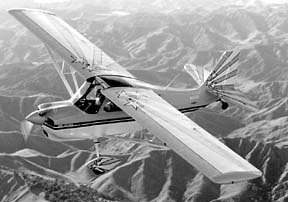
Citabria and Decathlon
A canny hybrid of rag-and-tube and modern systems, these airplanes are relatively cheap fun flyers and aerobats.


A canny hybrid of rag-and-tube and modern systems, these airplanes are relatively cheap fun flyers and aerobats.
Putting your airplane into corporate ownership still protects your personal assets. Its worth the effort and expense.
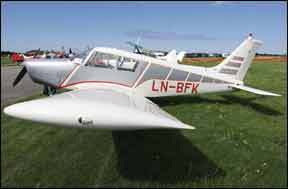
The smallest Cherokee is a good value and a surprising little go-fast machine, thanks to a range of available mods.
Lightweight Starters
Id like to comment on two articles in the January issue of The Aviation Consumer. First, the article on lightweight starters. I installed a pair of Sky-Tec starters in my Duke about four years ago. They work as advertised. Theyre light and spin the prop so fast I think I could taxi with them.
One of the starters, however, died after two years and had to be replaced. Regardless, I am still happy with them and would recommend them to anyone.
Second, your article on LASIK surgery. I had mine done 3 years ago and couldnt be happier. I had 20/20 vision when I started college but needed glasses by the time I graduated because I became nearsighted. …
[IMGCAP(1)]
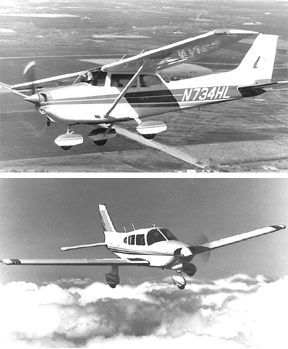
If there’s such a thing as the family sedan of airplanes, it surely must be the Cessna 172. And if its not the Skyhawk, then Pipers venerable and popular Archer must, by most accounts, share first or second place.
Although the Skyhawk predates the Archer-even its earliest variants-by nearly a decade, these two aircraft have endured, serving as both entry-level trainers and family transportation for two generations of aircraft owners.Faced with buying one or the other, how do they compare across the board, in terms of performance, cost of ownership and ever elusive ramp appeal?
We recently dusted off the performance manuals, probed the logbooks, took a couple of test f…
Twin Costs
Rick Durdens article on owning a twin is a confirmation of my own experience. I operated a 1985 Saratoga SP for five years and my costs averaged $70 per hour. I was told that a twin would cost three times as much to operate. But, of course, I thought that was impossible.
I purchased a 1985 Seneca III two years ago and guess what? The average cost has been $195 per hour. Gas and oil cost is double and insurance and maintenance eat up the rest. I have had better luck than Durden in that my Seneca is an extremely reliable airplane. During the last 600 hours, I have only been delayed twice for mechanical problems.
Aside from the operating cost, I agree…
[IMGCAP(1)]
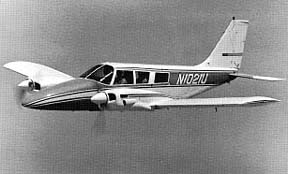
Over the years, few light aircraft manufacturers have managed to get as much mileage out of existing airframes as Piper. Vero Beach produced seemingly endless variants of the basic PA-28 Cherokee-everything from simple trainers to T-tailed turbocharged retractables to light twins, all of which were recognizably based on the same airframe. Pipers larger single, the PA-32 Cherokee Six, was also transformed into several different airplanes over the years.
History
The PA-34 Seneca is, basically, what you get when you turn a Cherokee Six into a twin, sharing the trademark Hershey-bar wing, stabilator empennage and fuselage of the Cherokee Six. The Seneca had counter-…
The first question that came to mind when Jack Riley, Jr., president of RAM Aircraft Corporation, told us about his latest product was this: Does the aviation world really need a $48 throw-away oil filter?
Perhaps a better question would be do we need a better oil filter that costs $48? Anyway you look at it, the high price will be the stumbling block for many, no matter how big an improvement this new filter provides, if indeed better filtration matters.
But make no mistake, by all appearances and laboratory tests, the new RAM replacement for the ubiquitous Champion CH48108 through CH48111 spin-on oil filters (available for only about $12 each from discount suppliers) does provide…
[IMGCAP(1)]
Designed to provide a lot of performance for a comparably low price, the much-maligned Cheyenne still is a relative bargain for the kerosene crowd.
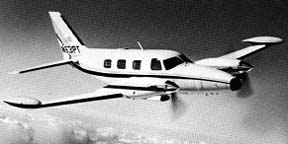
There are five basic Piper Cheyenne models. All share a common heritage: the basic PA-31 design originally introduced as the Navajo. There are two major branches to the design family. These are the PA-31T series, or Cheyenne/II, Cheyenne I/IA and Cheyenne IIXL (plus an unpressurized hybrid developed for the air taxi and commuter markets, the PA-31T3 or T-1040) and the PA-42 series, which consists of the T-tailed and longer-fuselage Cheyenne III/IIIA and Cheyenne IV/400LS.
Pratt & Whitney of Canada PT6 engines power all but th…
[IMGCAP(1)]
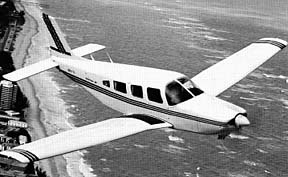
There’s a lot to be said for airplanes that have a whole lot of room inside. Theyre comfortable and flexible, and usually have the power needed to provide good takeoff and climb performance when lightly loaded. These advantages come with a price, however. A big airframe means a big engine, and that means a big appetite for fuel. Often, it also means less-than-stellar cruise speeds.
Still, if the owners needs lean more towards hauling ability and roominess than getting to point B in a real hurry, a big airplane might be just the ticket. The aerial equivalent of a minivan, if you will.
This is the mission of the Piper PA-32 series. Like the PA-28 series, the PA-32s come…
[IMGCAP(1)]
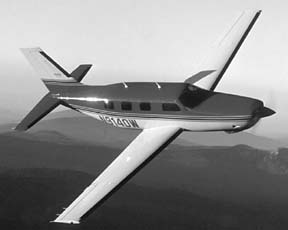
The Malibu and its near-clone, the Mirage, are airplanes that fall into a class all their own. The PA-46 is pressurized and has an air-stair door, so in terms of accommodation it ranks up with cabin-class twins. In terms of performance, too, it rivals many airplanes having the benefit of an extra engine. However, its single engine offers (at least theoretically) lower operating and maintenance costs.
There are some airplanes configured similarly to the PA-46, but theyre in a different league, with turboprop engines; specifically, the SOCATA TBM 700. The closest piston-powered counterpart is the Cessna P210, which is of similar size but which has a more conventional cabin l…
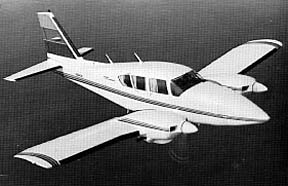
[IMGCAP(1)]
The PA-23 is one of those airplane designs that stayed in production so long that the final versions were almost unrecognizable derivations of the original. In this case, the original was small, all-metal, and underpowered to the point that single-engine operations can be extremely hazardous…just like other twins with small powerplants. The last versions, by contrast, are capable load-haulers with very good short-field performance.
History
The precursor of the PA-23 was the Twin Stinson, which not only had two engines (125-HP Lycomings) but two vertical tails, as well. The design originated at Consolidated Vultees Stinson Division, which was acquired by Piper…