Register

Search Results for: insurance

Uncategorized

Homebuilt Safety Survey

Homebuilt airplanes have found fans among pilots seeking the speed, utility and rakish good looks that, until recently, the average spam can couldnt provide. (Okay, so the Lancair Columbia still isn’t a spam can and certainly isn’t average.)

With most new aircraft production limited to mere refinements of old designs, sporty new styles have an undeniable appeal. Many buyers-notably those with more money than time-are turning to completed homebuilts instead of new or used certified aircraft when putting their offers on the table.

But homebuilt airplanes are licensed as experimental by the FAA for a reason. The only scrutiny the designs face is from the marketplace. A design that bu…
Read More »
Aircraft

Twin Commander 500 Series

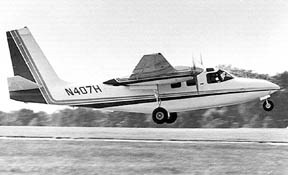
[IMGCAP(1)]By dint of good engineering, good construction methods or just good luck, some airframes clearly stand far above others when it comes to reliability and robustness.

Only a handful of airplanes meet this description but among them is certainly the big Commander twins, including the 500 series. When first introduced, Rockwell International touted this design as being among the stoutest most reliable airframes ever conceived by man.

The reality turns out to be not too far from the truth. Indeed, Commanders do have a reputation of mechanical excellence, although theyre not without their quirks.

And everyone knows the airframes are tough as nails, as evidenced by Bob…

Read More »
Uncategorized

Letters 08/99

Why No 210?
Im writing to ask why the first two model years of the Cessna 210 were not included in the June 1999 Retract Step Ups article. Many of the 1960 and 1961 210s out there can be had for under $50,000 in very good condition.

The airplanes have the IO-470E producing 260 HP (1500-hour TBO) and will routinely cruise at 160 knots while burning between 12 and 14 GPH. Or you can go economically and do 140 knots on 9 to 11 GPH. The 1960 model had only 55 gallons usable, but in 1961 they upped it to 74 gallons.

The only ugly part of the 1960-1 models is the need to replace the gear saddles every 1000 hours, but the gear works flawlessly if looked after well. The powe…

Read More »
Maintenance

Hangar Envy

As any seasoned broker will tell you, the phrase always hangared is likely the most popular fantasy spun by owners with an airplane to sell. Of course, no one really believes it. But the notion of an airplane thats never suffered the rigors of a New England winter or the harsh Florida summer sun has undeniable appeal.

Make no mistake, it usually is a fantasy. Only a tiny portion of the general aviation fleet is hangared and given how often airplanes change hands, always hangared is as improbable as no damage history.

But the fact that hangaring adds perceived value tells you something about its desirability. In our experience, most owners do seek shelter for their aircraft, b…

Read More »
Aircraft

Retract Step-Ups: Pre-201 Mooneys and Cessna 182RG

[IMGCAP(1)]While unloading the family Archer, you watch the hangar neighbor casually lift his gear legs before turning out of the pattern. Turning back to your fixed landing gear, you feel something inside tell you its time to step up to retracts. Its okay; your Archer will understand.

The step-up doesnt have to be traumatic but plan on at least $35,000 to get anything serviceable and $50,000 and up for an airframe with decent numbers and good equipment.

For this survey, our goal is a modest, first-time step up; non-turbocharged and cheaper than $100,000. Our sampler includes: The Piper Arrow, Beechcraft Sierra, Cessna RGs and the pre-201 Mooneys. All have good factory suppor…

Read More »
Maintenance

Good Jugs, Bad Jugs

As engine parts go, cylinder assemblies are a commodity item that most owners will have to buy sooner or later, as part of a major overhaul or perhaps for a mid-time top overhaul.

For the past decade, at least, the new cylinder market has become fiercely competitive but many shops recommend and owners buy reconditioned, yellow-tagged cylinders anyway, to save a few bucks.

Naturally, these are cheaper than new and if bought from a reputable shop, theyre usually a good value. But not always. Quality varies widely and the only protection you have against buying junk is a pre-installation inspection of the cylinder that your mechanic may or may not be doing. And that advice applies eve…

Read More »
Accessories

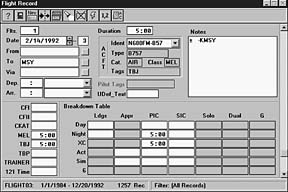
Computer Logbooks

[IMGCAP(1)]

During those first few hours of flight training, when it was still iffy whether youd be better off to forget flying and buy golf clubs, you probably got some gruff advice on logbooks. From an FBO counter selection of exactly one, your CFI probably grunted, Here, buy this.

Each page completed and carefully totaled thereafter was its own little milestone and its great fun to flip back through those pages, no matter how far down the airway youve traveled since.

Paper logbooks arent treasured, however, when youre filling out the application for the private or instrument checkride and you just cant get the subcategories to add up to the totals. The odd misplaced dec…

Read More »
Misc

Cheap Money

[IMGCAP(1)]

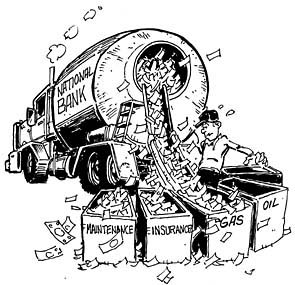
Whats the biggest fixed cost associated with owning an airplane? Insurance, you guess? Not!

For most of us who have leveraged ourselves to the hilt to slip Earths surly bonds, the interest that we pay the bank is our biggest cost, although we hardly notice it.

If you borrow $3,000,000 to finance one of Cessnas nifty CitationJets, your interest cost will run you around $700 per day. So who cares how much fuel the airplane uses? But even if youre only borrowing enough to cover the last $100,000 of your used Beech Bonanza, your note will probably cost you around $1200 per month.

The good news is that interest rates are the lowest theyve been in many years and…

Read More »
Industry News

Safely Strapped In

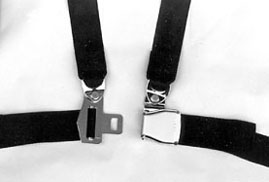
[IMGCAP(1)]Try this: Call up a close friend and ask him to put down his Millers and come out to the airport to have a look at the latest installation in your beloved Skylane. Ten to one hell ask you which GPS you bought.

Tell him youve just installed a shoulder harness. There are no odds here. Your friends going to tell you that hes in the middle of a hot cribbage game with his mother-in-law and he cant get away.

Such is the glamour of seatbelts and shoulder harnesses. In the aircraft classifieds, you’ll find proud owners still pimping Mark 12s, Cessna 300 radios and wing levelers. But seatbelts? Not a chance. As one grizzled old FAA bureaucrat told us: Flying airplanes is no…

Read More »
Avionics

Transponder Flyoff

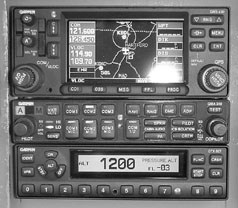
[IMGCAP(1)]Ya gotta hate transponders.

Although theyre among the least expensive avionics to buy, they arent exactly cheap. A complete installation will cost about $2000 and when youre done, all youve got is a…transponder. No fancy map, no color, no stereo. Just some boring digits and a display on a distant ATC radar screen that you’ll never see. Nonetheless, these mundane boxes are a necessity and if you need a replacement, there are some new ones on the market. Herewith is a survey.

Garmin GTX327
Continuing on its path toward World Domination, Garmin recently added a new digital transponder to its growing line of light aircraft avionics. The 200-watt, solid state des…

Read More »
Insurance

Keep Me Covered

Even if youre not one of those dotcom zillionaires, if you own a moderately expensive airplane, youve probably accumulated a nice tidy cache of wealth youd like to retain for your retirement years.

Owning an airplane, however, puts that wealth at risk. One of the biggest problems to face aircraft owners in recent years is the lack of higher limits of liability coverage beyond the run-of-the-mill million bucks, a sum thats chump change by modern insurance standards.

This is an expensive problem for pilots transitioning into bigger airplanes, but it plagues everyone who needs significant limits of liability, including people who have owned the same airplane for years.

Why It H…

Read More »
Insurance

Keep Me Covered

[IMGCAP(1)]

The concept of learning to fly instruments is more appealing than the reality. Earning an IFR rating is hard work and, ultimately, tedious.

But forget concepts. Lets talk money.

Everyone knows that having an instrument rating lowers your insurance premium. Well put some numbers on that in a moment but consider something else.

If you want to buy kinds of high-performance airplanes or high limits on something more modest, its getting to the point where some insurance companies wont even look at you unless your certificate is stamped: Instrument Airplane. So whats it cost to earn an instrument rating these days? It varies according to how much experience youve go…

Read More »