










Register

Search Results for: piper

Aircraft

Commander 112/114

[IMGCAP(1)]

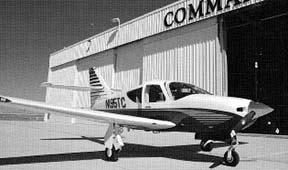
Much is made of the resurgence of Cessna and Piper in recent years. Less-often acknowledged, however, is the fact that a number of airplanes either weathered the storm or returned to production several years ago. One of the latter is the Commander 114. With a small but steady level of production, Commander is evidently here to stay for the immediate future. Thats due at least in part to the deep-pocket backing enjoyed by Commander Aircraft. Much of the company is owned by interests in Kuwait, and a fair number of the new airplanes have been sold there.

The new Commander is several notches above the older version in terms of price, and to date about 120 have been built. Thu…
Read More »
Aircraft

Commander 114TC

[IMGCAP(1)]

Despite the best efforts of the marketing department some airplanes suffer the scourge of being known for their weakest traits. Cessnas Cardinal, for example, is underpowered; Mooney 231s have gimpy engines; Aerostars are widowmakers and maintenance nightmares.

Never mind that the sins of the rollout models are often atoned by post-production fixes, potential buyers remember the worst and move on. The Commander 112/114 series cross to bear has always been speed, or lack thereof. When Rockwell got into the light airplane business in 1972, its aim was to produce a new airplane that would fly faster and haul more than any other single in the market.

What emerged was a st…

Read More »
Aircraft

Maule Taildraggers

[IMGCAP(1)]

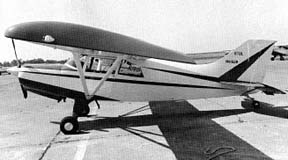
Though not exactly a household name, Maules have been around seemingly forever, having found a niche that they fill pretty well: if you want a new four-place taildragger, there arent too many choices any more. While the big manufacturers were dropping like flies in the 1980s, Maule stuck with it, chugging along and producing airplanes at relative bargain prices.

First and foremost, the Maule is a busHPlane, meant to be operated out of extreme airfields while requiring little maintenance. Maules as a group fulfill that mission well. History shows a high accident rate, but given the environment in which these airplanes are typically used, that shouldnt be too much of a surp…

Read More »
Aircraft

Maule MXT-7-180

[IMGCAP(1)]

It may not be sleek, sexy or fast, but the relatively new Maule MXT-7-180 does deliver typically good Maule short-field performance for a relatively low price, while leaving the bugaboo of taildragger ground handling behind.

The tri-gear Maule is the companys first attempt at direct competition with mainstream four-place, fixed-gear singles. Introduced in 1991, at about the same time as the AGAC Tiger, the airplane didnt exactly turn the industry around…but then, no design has done all that well; the days of producing hundreds of airplanes a year are long gone. It bears noting that Maule is still in business, and still producing MXT-7-180s, while AGAC is history.

…

Read More »
Aircraft

Meyers 200

[IMGCAP(1)]

There’s something about the Meyers 200 that is hauntingly familiar. It doesnt look like a 40-year-old factory airplane; rather, its more like a current homebuilt with that sleek bubble cabin… kind of like a Lancair IV. Thats not surprising, given the following bit of aviation trivia that one of our readers sent in: Lance Neibauer, designer of the Lancairs, is evidently the nephew of the late Ray Betzold, who along with Al Meyers and Pard Diver brought the Meyers 200 into existence. Neibauer was exposed to that sleek shape early on.

While it may resemble a modern composite homebuilt in its looks, the Meyers is definitely a product of the late 1950s. Construction consist…

Read More »
Uncategorized

Cessna 340

[IMGCAP(1)]

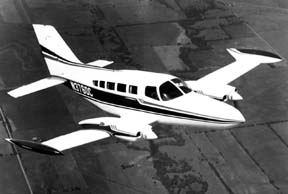
One thing above all else makes an airplane work we’ll as a business transport: High altitude capability. It means that much of the weather can be flown over, which can make all the difference between getting there and staying on the ground. While turbocharging will get the airplane up to altitude, its pressurization that makes the experience attractive to the executives occupying the cabin.

Enter the 340. Its a relatively economical way to go for a company with a need for a pressurized twin. Though not without its shortcomings-most notably certain loading limitations and an overly complex fuel system-the 340 is nevertheless a fine airplane, one that fits its mission well….

Read More »
Uncategorized

American Champion 8GCBC Scout

[IMGCAP(1)]The Champion Scout, introduced in 1974 when Champion was part of the Bellanca Aircraft Corp., was designed to compete with Pipers popular PA-18 Super Cub for laurels in the light utility marketplace.

The Scout and the Cub, joined later by the Christen (now Aviat) A-1 Husky, exist primarily to serve as aerial jeeps or compact pickup trucks. But they also appeal to a number of sporting pilots for use on the back forty or to transport fishing or hunting gear to remote islands in the North.

History
The 8GCBC Scout was introduced as the newest member of the Bellanca Champion line in 1974. Initially a dirt-simple airplane aimed at the bush and light aerial application…

Read More »
Uncategorized

American Champion Citabria/Decathlon

[IMGCAP(1)]For many of us, flying means getting from Point A to Point B as quickly as possible without breaking the bank. Thoughts of the owners next airplane typically involve such things as bigger engines, retractable gear, turbocharging and the like.

But there’s a whole different flying experience, one where its enough just to get aloft and enjoy a fine day, perhaps throwing in a few lazy loops and rolls along the way – true recreational flying. The explosion of the homebuilt and ultralight industry in recent years is testament to the demand for simple, inexpensive airplanes suited to this relaxed mode of flight. But for those who don’t fancy experimentals, choices are few and far…

Read More »
Uncategorized

AGAC AA-1

[IMGCAP(1)]For those who want to fly on a tight budget, the diminutive Grumman AA-1 certainly seems an appealing choice. Priced consistently below other two-seaters (and down in the territory of an average automobile), its a relative bargain. Plus, its faster, more modern, structurally simpler and is, well, sexier than airplanes like the Cessna 150/152. It appears to be an ideal choice for pilots who simply want to get aloft for as little money as possible.

But there’s a raft of caveats facing anyone considering the purchase of an AA-1. This is an airplane that, though marketed as a primary trainer, is not we’ll suited for the task when compared to more docile designs like the 152 or To…

Read More »
Aircraft

Cessna 402 Businessliner

[IMGCAP(1)]

Big, cabin-class turbocharged piston twins are a bit of a niche item these days. Too large and costly for personal transport, yet lacking sufficient performance to satisfy high-rolling corporate clients yearning for the whine of turbines and the comfort of pressurization, theyre used mostly for air taxi and specialty cargo operations. The businesses that once bought this class of airplane are in many cases now looking to more cost-effective alternatives, including time-sharing of the new crop of efficient jets and even airline travel to get executives to their destinations.

But when the mission matches the capabilities of a large piston twin through accidents of geography…

Read More »
Aircraft

Cessna 414 Chancellor

[IMGCAP(1)]

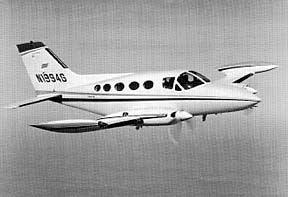
Parts-bin hybrids with spacious cabins and relatively small, efficient engines, 414-series airplanes can carry lots of fuel or a small crowd with their belongings-but not both. Also, the big Cessnas have safety records that are unmatched by any other light twin.

All told, Cessna Aircraft Corp. built nearly 1000 of the airplanes-roughly a 50/50 split between early tip-tanked 414s and wet-wing 414A Chancellors-during 15 years of production. The original intent was for the 414 to be an easy step up to pressurization, and over the years the airplanes have become popular as workhorses for small charter and corporate flight departments, as we’ll as comfortable transports for pri…

Read More »
Aircraft

Aerospatiale TB-9 Tampico Club

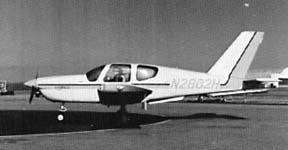
[IMGCAP(1)]As the final entry in the Caribbean series, the Tampico Club filled the bottom niche in SOCATAs line of new-wave piston singles. Boasting innovative design features, it was hoped that the Tampico would coax US flight schools into the purchase of some new aircraft to replace their fleets of aging trainers.

The way in which the airplanes were built was also innovative. Airframe parts were produced in France and shipped to the US to be assembled and fitted with American components.

The idea met with some limited success, but the company didnt sell enough airplanes to keep the venture going. In 1995, SOCATA teamed with Morane Saulnier and Renault to begin work on a new line o…

Read More »