











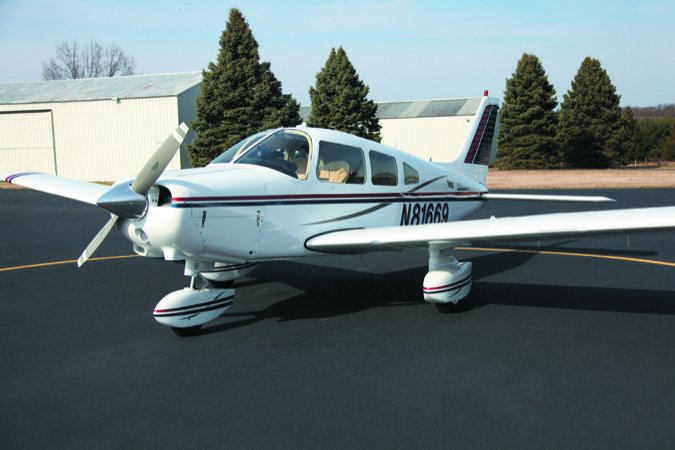
For a history lesson on the eventual success of Piper’s Warrior, look back to the alluring post-World War II boom, where major airplane manufacturers, to include Aeronca, Luscombe, ERCO, Piper and Cessna, among others, all eventually came to the conclusion that the future for mass-marketing airplanes was wrapped up in something that had four seats and on the order of 150 HP. Some manufacturers gave up after limited success, while Cessna and Piper went on to fight it out for decades, as Beech and Grumman-American tried to make inroads.
That four-seat, 150-HP niche proved to be the beginning rung of a market ladder where airplanes can excel as trainers, but can also be practical traveling tools. As a Warrior proves, the tradeoff is they won’t haul a lot of people or cargo, nor will they do it quickly, but they offer economical travel. They often serve as a pilot’s first “real” airplane after primary training. The market demands that they be reliable, inexpensive to operate and relatively easy to fly. They must excel as rental airplanes-thus be designed to be flown by any pilot, and withstand the consequent beating, while providing a reasonable income to the FBO.