Aviation Consumer
RSS / XML

Home
Get Web Access Now
Get Web Access Now
Start a Subscription
Letters to the Editor
Purchase Back Articles
Year's 10 Best
Airplane Reviews
Sample Plane Reviews
Aviation Books
In Future Issues
Search
Links
Customer Service
Government
Weather
Flight Planning Tools
General
Aircraft
Magazines
Books & Tapes
Organizations

Make Aviation Consumer Your Home Page

Shopping Cart

AVweb RSS

Many of the charts & tables found on this site are PDFs.
Download Acrobat Reader

Publishing Systems Powered by iProduction

AVweb.com |FAA NOTAM's page | FAA AD's page | NOAA Aviation Weather page |

Survival Systems: Unforgettable Training
Denial can be a useful thing when it comes to getting the job done. I’ve done my fair share of flying overwater and out of gliding distance to land, and just rationalized that the odds were slim of ditching and I’d figure it out when it happened. The reality was that I didn’t have a clue what being immersed in an aircraft would be like. I had no plan, and that meant that if the aircraft did anything other than stop upright and floating, I probably was going to the bottom wearing a 3000-pound aluminum suit. The point of egress training like we sampled at Survival Systems Inc. is to give you that plan.

Aircraft Diesels: Still No Slam Dunk
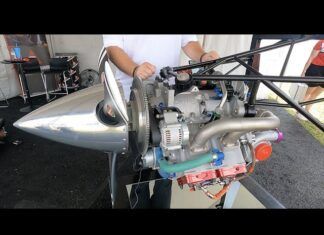
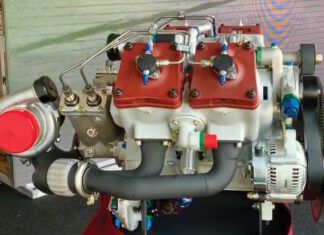
When Continental announced in May that it planned to develop a diesel engine for the light aircraft market, it was boldly going where many have gone before. Unfortunately, the many have had their diesel entries ground to a bloody pulp by a fickle market more interested in speed than economy and unconvinced that diesel’s supposed longevity is worth the higher purchase price. A historical fact: Depending on how you define commercial success, there has never been a commercially successful diesel engine for aircraft. The Thielert/Centurion line launched in 2005 comes closest, but the company went belly-up and although it’s building engines again, it remains insolvent

GPSS Retrofits: Automation to the Max
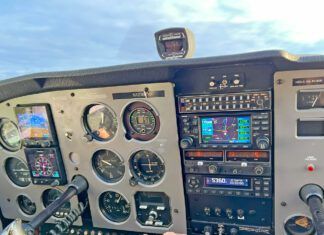
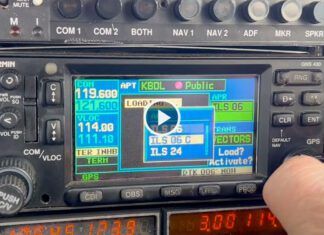
Nearly every proposal for a new autopilot installations—which these days means S-TEC upgrades—should include a GPSS option. And optional is the key word because unless you buy a flagship S-TEC 55X autopilot, GPSS won’t be included with the base system. For most customers looking to upgrade GPS and autopilot equipment, GPSS hardware is grossly misunderstood. Although hardly a major system, GPSS is considered an accessory that plays a huge part in total autopilot automation. Impressively, it emulates the tight performance found with big-airplane inertial navigational systems.

Avidyne’s DFC90: One Smart Autopilot
Cirrus Aircraft’s installation of the Avidyne Entegra PFD in 2003 was really the turning point for glass cockpits in GA. But at the time, there was no attitude-based autopilot on the market capable of using the digital gyros (AHRS) from the PFD to fly the aircraft. That meant that Cirrus (as well as Columbia, Piper and anyone else who used the Avidyne system) hid an electric turn coordinator behind the panel and used it to drive the S-Tec 55X rate-based autopilot. We’ve always seen the S-Tec 55X as an acceptable, but not stellar performer. Its weaknesses are most pronounced on coupled ILS approaches in strong, gusty winds where it will often hunt left and right to try and find a heading that keeps the needles centered.

New Premium Headsets: Bose Comes Back Strong
Bose has always held a place at the top end of noise-canceling headsets, with a history dating back to 1989. The company has been virtually silent in the aviation arena for the past 12 years, resting on the continuing strong sales of their Headset X. But even the Bose devotees have been getting restless due to the lack of auxiliary music input and a Bluetooth connectivity for phones (to be used, uh, on the ground only, of course). All the while, Lightspeed Aviation’s Zulu has been steadily increasing its dominance in the premium headset market by offering active noise reduction (ANR) on par or exceeding that of the Bose, along with music and phone connectivity.

Silver Eagle P210: A Turbine That Works
The turbine engine is impossibly alluring. No thrashing pistons, grinding cams, clicking valves—just far fewer exquisitely balanced parts all whirring in the same direction. But turbines are expensive and they guzzle fuel, which means that with very few exceptions, they don’t work well in small airplanes. One of those exceptions is O&N Aircraft’s re-engining of the Cessna P210 and 210 with the Rolls Royce (formerly Allison) 250-B17F/2 turbine engine, a powerplant that’s been around awhile and one that Rolls is trying to evolve into more GA applications with the advent of a new version, the RR500. Mooney expressed interest in that engine, but thus far, the project hasn’t materialized and it may not for the same reasons that turbines have stumbled before: difficult-to-manage fuel specifics and small airframes with no place to put the fuel.

Used Aircraft Guide: Grumman Tiger
The Grumman Tiger owner culture is as unique as the airplane. To say these folks are enthusiastic about these airplanes is to understate the case. Most owners will energetically attest to the Grumman’s sports car-like handling, healthy climb and slide-back canopy that slides back for open-air flight. There’s arguably lots of appeal to these little cruisers. Non-Grumman enthusiasts just won’t understand. Some call them silly little airplanes. The population of Tiger airplanes is an aged batch—born in 1975, so owners were enthusiastic when the airplane went back into production in 2000 as Tiger Aircraft, LLC. It was a rejuvenated remake with some later copies sporting G1000 glass cockpits.


Subscribe Today!

Get FREE Online Access to our complete online library including our airplane reviews!

Email:
First Name:
Last Name:
Address 1:
Address 2:
City:
State       Zip:

 
  Contact Us / Privacy Policy / Site Map
Copyright Belvoir Media Group, LLC. All rights reserved.