









Used Aircraft Guide

Used Aircraft Guide: Cessna 185 Skywagon

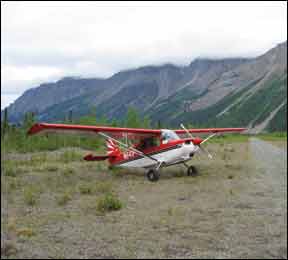
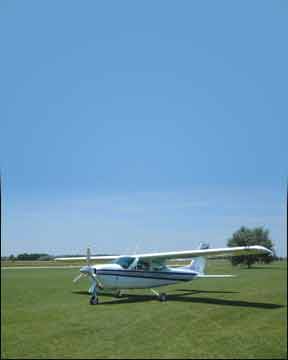
In an age when the majority of new airplanes are made of plastic and equipped with glass panels and envelope-protected autopilots, it’s hard to imagine that as recently as 1985, at least one company was still making a popular taildragger. But it was. That company was Cessna and the airplane was the 185. It’s no stretch to say that if the Skywagon was popular then, it may be even more in demand now, given the prices the latest models fetch on the used market. Cessna 185 owners don’t just like these airplanes, they rave about them. It’s not hard to understand why, either. No newer airplanes will do what Skywagon can, in terms of load hauling and taildragger ruggedness. You’ll see Cherokee Sixes plying gravel strips in Alaska, but you’ll see many more 185s. There are lots of other working airplanes, but the Cessna 185 is perhaps unique for its reputation as the airborne version of a four-wheel-drive, three-quarter-ton pick-up truck, easily able to haul heavy loads into and out of short, unimproved strips. With plenty of power and two front cabin doors, it’s also a prized floatplane. And for all of that, some owners just like them for fun flying.
Read More »

Used Aircraft Guide: Diamond DA20

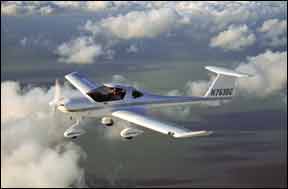
The world of training aircraft has all but reinvented itself since Diamond introduced the DA20 to the North American market nearly 20 years ago. When the Katana appeared, Diamond reasoned that the fleet of ancient Cessna 150s and 152s was growing weary and operators would lust for replacements. What it didn’t anticipate was a couple of significant downturns, a glut of overproduction and the rise of the light sport aircraft market. The latter hasn’t exactly set towering sales records, but it doesn’t take many missed sales to turn a modest program into a struggling one. Nonetheless, Diamond has still found success with the DA20 as a basic trainer and as an inexpensive, owner-flown fun flyer that’s fast enough to fly the occasional cross country, albeit in VFR conditions only. Flight schools say customers like the DA20 for its sporty looks and handling, reasonable costs and expansive views from the airplane’s unique bubble canopy. Although many of those customers might not realize it, there’s something else to like, too: The DA20 has one of the best safety records in general aviation, hands down and with no asterisks.

Read More »

Used Aircraft Guide: Cessna Skymaster

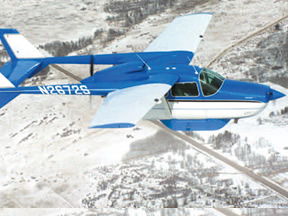
The idea of the push-pull twin makes such fundamental sense, that it has been applied to aircraft designs in one form or another for nearly 100 years and in literally dozens of models you’ve never even heard of. As recently as 2005, Adam Aircraft tried the idea again with the A500 push-pull piston twin. Like many before it, the airplane was gutted more by market reality than by a fundamental flaw in the idea. Then there’s the Cessna 337, arguably the most commercially successful push-pull attempt, at least in terms of numbers built. And although the 337 Skymaster isn’t the most popular twin ever marketed, it’s done all right for itself and has achieved its primary goal: eliminating asymmetric thrust and simplifying the pilot’s workload in the event of an engine out.

Read More »

Used Aircraft Guide: Citabria and Decathlon

Owners who fancy a little light aerobatics—or even semi-serious competition—might lust after a Pitts S1 or an Extra 300. But then reality sets in. Those airplanes require no small degree of skill to simply fly safely and that’s before we consider the insurance premiums. And that’s why so many owners inevitably gravitate toward the Citabria or the Decathlon, starter aerobatic airplanes that turn out to have much more capability than many realize until they take a close look. These models have a lot going for them. They aren’t expensive to buy or maintain, they don’t have any serious gotchas and any pilot of average skill can learn to fly and land them safely. Moreover, they can double as respectable back-country flyers, which is something you’re not likely to do in a Pitts or an Extra.

Read More »

Used Aircraft Guide: Cessna Hawk XP

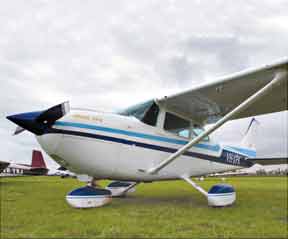
The Cessna Skyhawk has been in near-continuous production for over 50 years and there are over 40,000 of the model out there in the world. There’s a reason for that: The design simply works. That’s not to say Cessna hasn’t evolved the design and explored variations on the theme. One of these is the Hawk XP, essentially a 195-HP 172 with a constant-speed prop. Some people think of the XP as a Cessna 182 engine in a 172 body. It’s not. Others imagine it’s an aftermarket upgrade to a stock 172. There is such a thing, but the XP was a factory model. The Hawk XP is a 172 that carries more, climbs better and cruises a bit faster than standard 172, without giving up the predictable handling or maintenance. For some buyers, that’s exactly what they need.

Read More »

Used Aircraft Guide: Cessna 195

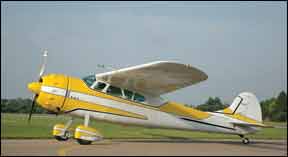
How many classic airplanes can combine useful basic transportation utility with the panache of a big, belching radial engine? We can think of only one: The venerable Cessna 195 Businessliner. (Cessna named it that for a reason. It really was one of the first business aircraft.) Many vintage aircraft are indeed works of art, but the 195 is actually a practical classic. One owner refers to his 195 as “a Cessna 206 that gets preferred parking at the fly-in breakfasts.” A direct descendant of the 1934 C-34 Airmaster, the C-190 series represents a lot of Cessna heritage—it was the first all-metal Cessna and the first to fly with the Wittman spring steel landing gear, and the last Cessna to be built with a radial engine.

Read More »

Used Aircraft Guide: Piper Seneca

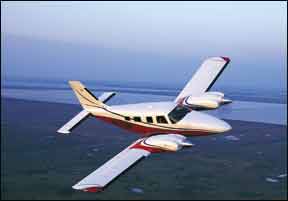
Most piston twins have carved themselves a market share for a few years, then vanished as market conditions changed. Piper’s Twin Comanche and Aztec are examples and so is the Beech Travel Air, Duke and Duchess. On the other hand, for various reasons, some twins have endured and Piper builds two of them, the Seminole and the Seneca. Both have endured for various reasons, although neither is made in much volume these days. It’s easy to see why the Seneca has endured. It does nothing exceedingly well—it’s not fast, nor a joy to fly nor will it turn heads on the ramp—but it does a lot we’ll enough.

Read More »

Used Aircraft Guide: Cessna Cardinal RG

At EAA Airventure in 2006, a mysterious airplane made a low flyby, arriving unannounced. It turned out to be the Cessna NGP, the now-tabled high-performance follow-on to the popular 210 that Cessna dropped from the line in 1986. But at a glance, it was easy to mistake the airplane for something else: the Cessna 177 Cardinal RG. And many observers did. Although introduced 40 years ago, in 1971, the Cardinal RG remains one of the sleekest and most attractive highwing airplanes ever marketed. Despite its age, it retains a loyal following. It’s easy to see why. The RG is one of the best compromises for its class in terms of speed, payload, cost of ownership and economy.

Read More »

Used Aircraft Guide: Cessna 421

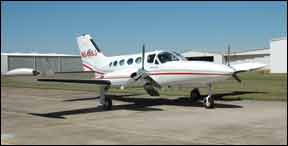
Like the Lockheed Constellation, Cessna’s 421 Golden Eagle is an airplane of another age. Impossibly sleek, fast and comfortable, it’s hard to imagine such a thing ever being built at all, never mind again. But owners rave about the 421’s exceptional combined capabilities and even though many of them could easily afford turbines or light jets, they stick with their Golden Eagles for delivering the best value for the money spent. But that’s not to say owning a 421 is cheap. Far from it. The engines alone can amount to $50,000 or more each and with known ice, pressurization and even a lav of sorts, there’s a lot to maintain. Said one owner: “Don’t even ask what it costs to run it. That just shows you can’t afford it.”

Read More »

Used Aircraft Guide: Cessna 150/152

On the cover of Aviation Consumer’s July 2010 issue is one of the most forlorn photos we’ve ever published: The nosegear of an LSA sitting in the middle of a lonely runway, having dropped out of the airplane after takeoff rotation. Although we didn’t intend it that way, the photo ended up as a testament to another airplane entirely, the Cessna 150. The reason? Venerable old 150s are still flying side-by-side on the rental line with new-age light sport designs and the older airplanes, despite decades of abuse, still hold up better than some of the newer designs and often require less maintenance. The harsh lesson here is that despite advances in materials and computer-aided design, the 1950s engineers who designed the 150 knew their way around structure and half a century later, what they built still remains serviceable for the foreseeable future. The airplane that trained thousands of pilots endures.

Read More »

Used Aircraft Guide: Beech Baron

Anyone who has flown a Beechcraft will have come away impressed with the lines quality and, especially, the handling qualities. All the way down to the lowly Musketeer, Beech just took pains to get the airplanes handling qualities a cut above everything else, and that applies in spades to the Baron series. Even so, every aircraft company has to make compromises. In the 55 Baron, for instance, what many find to be pleasant handling characteristics can prove to be a handful in poor weather, or when the air turns green with turbulence. And nothing comes for free. No one mistake the Barons for being cheap to own or operate, although thanks to a perennially soft market for twins, theyre no longer ruinously expensive to buy. In fact, there are some real bargains out there on 55s.

Read More »

Used Aircraft Guide: Beech Model 19/23

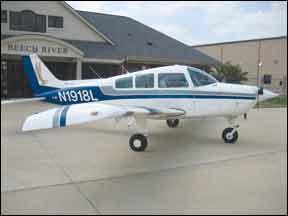
The concept of “training” and Beechcraft go together like ketchup and ice cream, which is to say you know about both, but Beech airplanes don’t spring to mind when you think of cheap-to-fly entry-level airplanes. Nonetheless, during the heady days of GA in the 1970s, Beech did dip its toe in the trainer market. The model 19 and 23 series Beechcraft, the Musketeer, Sport and Sundowner, were Beechs answer to Pipers Cherokee line and if not the 150/152, then the 172 from Cessna. Beech didnt exactly set the world on fire with sales, but the two models did acceptably well. Theyre neither the fastest nor sleekest looking of the GA lot, but theyre better built than the competition and there’s no question that these airplanes-really, all of the Beech line-are the best handling light GA aircraft.

Read More »