









Used Aircraft Guide

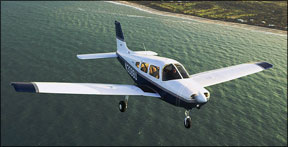
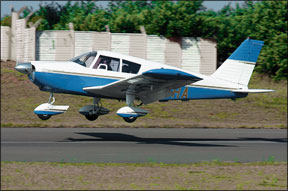
Used Aircraft Guide: Cherokee 235/Dakota

When Fred Weick and John Thorp set out to design a less expensive alternative to Pipers Comanche, its unlikely they thought the resulting PA-28 series would become so popular, so durable or so varied. Since introducing the Cherokee 150 and Cherokee 160 (PA-28-150 and PA-28-160, respectively), in 1961, Piper has stretched, T-tailed, turbocharged and reproduced that basic airframe tens of thousands of times. Its original “Hershey-bar” wings eventually gave way to a longer, semi-tapered design, the landing gear has been folded and many different powerplants have been fitted. While much has changed, the designs basic utility, systems, handling and reliability have remained. Three models remain in production-four, if you count the twin-engine PA-44-180 Seminole-almost 50 years later. While PA-28 Cherokees came in many flavors, the most powerful of them-the Dakota-isn’t the fastest but is perhaps the most flexible. It and earlier 235-HP Cherokees take advantage of the markets affinity toward muscular four-place singles, a natural attraction proven popular enough to support two significant entries for many years: the Cessna 182 Skylane and Piper PA-28-235/236. The 182 came first and outlasted the 235/236: By any measure, its been a success. Like the Piper, it features a good combination of utility, roominess and performance. Pipers version, however, never matched the 182s popularity, even though it combines the Skylanes chief attributes: decent performance, simplicity, and common, proven components. If your needs include a big dose of horsepower pulling a simple airframe, the most powerful PA-28 Cherokee is a very solid candidate.
Read More »

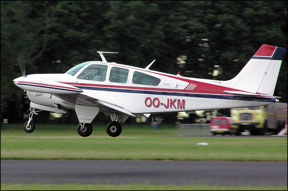
Used Aircraft Guide: Beech 33 Debonair/Bonanza

Beechcrafts Model 33 Bonanza was one of the few piston singles to survive the great general aviation slump of the 1980s. The quintessential doctor/lawyer single, it even outlived the previous archetype, the Model 35 V-tail Bonanza, by 12 years, only succumbing even as the landmark product-liability-reforming General Aviation Revitalization Act of 1994 became law. Ultimately, the six-seat Model 36 proved more popular than the four/five seat 33s. Since both reportedly cost about the same to manufacture, its a wonder the 33 held on as long as it did. But the four-seat, straight-tail Bo remains popular today. Owners love its flying qualities, performance, cabin comfort and sturdy construction. While many pilots, however, have words on the high cost of parts and maintenance supposedly typical of Beech aircraft, owners generally report a well-cared-for example needs very little. There are a few things to be careful of when operating a Bonanza, whether a 33 or V-tailed 35.

Read More »

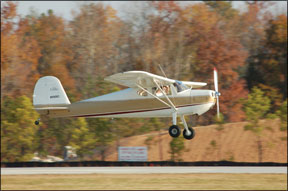
Used Aircraft Guide: Cessna 120/140

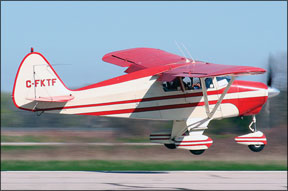
The U.S. military trained thousands of pilots during WWII, pilots many aircraft manufacturers naturally assumed would continue flying once they returned home. But the hoped-for “an airplane in every garage” buying boom was never able to sustain itself, even if huge numbers of new airplanes were manufactured. Piper was building Cubs and, soon, Cruisers and Pacers pretty much as fast as it could. With a few exceptions-Beechs Bonanza, for example-most offerings were taildraggers. The first of Cessnas to be built in volume was the diminutive Cessna 120, followed in short order by a fancier model called the 140. At the time, the Cessna 120/140s were perfectly serviceable and practical two-place airplanes. They were reasonably priced to buy and economical to own. Although some had fabric wings, they were made mostly of metal, avoiding the periodic need for recovering. The good news is the qualities making them popular in the late 1940s are still present. Today, what little they give up to Pipers Cubs in panache, they more than make up for in reduced acquisition costs and arguably more-forgiving handling qualities.The 120s model history is rather short, since it was produced only for four years, from 1946 to 1950. Since Cessna had the training market firmly in its sights, the 120 sold for a mere $3245. That amount is equivalent to slightly more than $34,000 in 2007 dollars. Try to find a new, FAA-certificated, all-metal trainer for that kind of money today. Cessna made the 120 about as simple as airplanes get, with side-by-side seating, yokes rather than sticks, no flaps and no rear window. Standard equipment did not include an electrical system, although a generator was available as an option. Whether they left the factory with one or not, most 120s have an electrical system these days.

Read More »

Used Aircraft Guide: Pitts Special

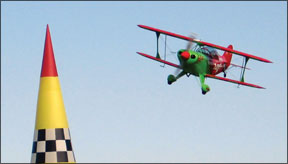
In many ways, the Pitts Special is responsible for the current state of amateur and professional aerobatics. First flown in 1944 (or 1945-sources vary) as a single-seat homebuilt with only a 55-HP engine, the type has developed into todays highly refined and FAA-certified, two-seat, 300-HP aerial hot rod used for advanced training and-at least in lower categories-competitive aerobatics. Many different variants have evolved over the years, including factory-built and experimental versions, but there remain two main types: a single-seater and a two-holer. Today, you can buy a new, factory-built machine from certificate holder Aviat Aircraft, or get the plans and components for a single-seat version from Steen Aero Lab. Dominant in aerobatic competition during the 1960s and 1970s, the Pitts Special long ago ceded that position to more-modern monoplane designs from Extra and Sukhoi. Even Pitts himself saw the monoplane light: Before his death in 2005 at age 89, he designed but never built the Model 13, an enclosed “coupe.” But the basic biplane design of the Special remains popular as a recreational and training aircraft, and still can be seen strutting its stuff at airshows, fly-ins, pancake breakfasts and private hangars throughout the world.

Read More »

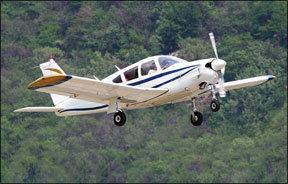
Used Aircraft Guide: Piper Tri-Pacer

There was a time when almost all light airplanes were taildraggers. Tricycle-gear airplanes were rare, mainly because taildraggers-or conventional-gear airplanes, if you prefer-generally were better at dealing with the unpaved runways at most airports. This common kinship among light airplanes continued into the early 1950s, broken only by such types as the Ercoupe, Navion and Beech Bonanza, to pick three. Up at Lock Haven, Pennsylvania, in the late 1940s, the Piper Aircraft Corporation was making a wide range of airplanes, including the venerable Cub, mostly of fabric stretched over a wood or metal frame. Out in Wichita, Cessna and Beech were only beginning their transition to all-metal airplanes with tricycle gear, which must have made for some sleepless nights at Piper. While the company apparently couldnt develop an all-metal airplane overnight, it could convert its four-seat, conventional-gear Pacer to the tricycle-gear configuration ahead of many others.

Read More »

Used Aircraft Guide: Meyers 200

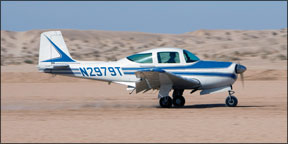
There’s something about the Meyers 200 that doesnt look like a 40-year-old factory airplane. Its bubble canopy and gently-tapered wings are reminiscent of modern, composite airplanes. Sweep the tail and clean up the cowling a bit, youd start thinking Lancair had an all-metal retractable. Alas, the Meyers is a product of the late 1950s, with aluminum shells over massive tubular frames and heavy, hydraulic systems. The good news is its construction gives the airframe enormous strength. Meyers devotees note that the airplanes center section required no beef-up when the 200 was transformed into a 300-knot turboprop (more, below). The Meyers can also keep up with just about anything in its class, even many of the current composite-construction speedsters. The only real drawback is a low useful load. Meyers owners find the airplanes real beauty is in its quality. With few applicable ADs and almost no service-difficulty history, owners of this rare airplane are ecstatic about it.

Read More »

Used Aircraft Guide: Robinson R44

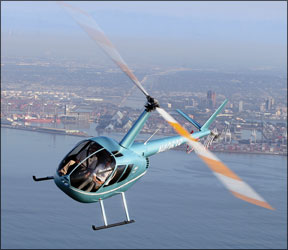
Pilots looking for a used aircraft usually have a mission in mind: Carry a specific payload over a certain distance in a minimum amount of time. And if you need to get to and from remote locations while mixing it up at nearby Big City International, you might have overlooked the helicopter. Until the early 1990s, anyone needing a personal helicopter configuredhad to go the turbine route; there were no piston-powered four-passenger helicopters. That changed in late 1992 when the Robinson Helicopter Company obtained FAA certification of its R44, a four-place rotorcraft powered by a Lycoming piston engine. While offerings from Enstrom, Schweizer, Brantley and even the venerable Bell 47 have proven popular, none of them seat more than a pilot and two passengers at most. Robinsons R44, on the other hand, takes the standard two-plus-two seating configuration of the a personal airplane and gives it a vertical takeoff and landing capability. The result is a hugely popular four-seat single-Robinson sold 664 copies of the R44 in 2007-that just happens to have a rotary wing.

Read More »

Used Aircraft Guide: Piper Warrior

When considering basic airplanes, the 150/160-hp four-place, fixed-gear single is about as ubiquitous as one can get. The niche serves as the beginning rung of a market ladder where airplanes begin to be used as practical transportation tools. They wont haul a lot of people or cargo, nor will they do it quickly, but they offer economical travel. They often serve as a pilots first “real” airplane after primary training, and the market demands they be reliable, inexpensive to operate and relatively easy to fly. Airplanes in this class are sort of like Toyotas: not terribly exciting or fancy, perhaps, but they do what you need them to without costing an arm and a leg. Cessnas Skyhawk owns this market, of course, and used-airplane prices reflect that dominance. At least two of its mainstream competitors, the Piper PA-28-151 or -161 Warrior and AGAC AA-5 Traveler/Cheetah, are good, solid airplanes that can be had for less. (Beechs entry, the Sport, is short on performance when compared to the Warrior and Cheetah.) The AA-5 went the way of the dodo in the late 1970s, and attempts to resurrect it (in the form of the Tiger) failed. Beginning in the mid-1980s, Piper, too, fell on hard times and was forced into bankruptcy, finally emerging several years (and a few abortive buyout attempts) later as the New Piper. In 2006, “new” was dropped from the companys name. Unlike the Skyhawk, and with only one or two exceptions, the Warrior has been in production throughout, even if the number of airframes manufactured in each model year could be counted on the fingers of one hand. Now in the “Warrior III” configuration, the model is marketed mainly as a trainer.

Read More »

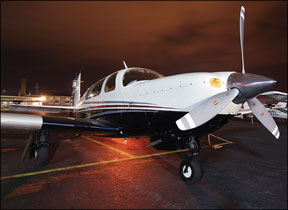
Used Aircraft Guide: Mooney M20R Ovation

Airplanes are compromises: Theyre never large enough, fast enough or light enough for all potential customers. And going faster is always a popular upgrade. After all, we don’t fly airplanes to go slow. Of the two basic ways to increase top speed-clean up the airplanes aerodynamics or stuff in a larger engine-each has their benefits and drawbacks. But when one method has been tried, or reaches the point where further refinement isn’t cost effective, designers turn to the other. Mooneys M20 series is something of Exhibit A for this practice: The basic airframe had been cleaned up over the years and powered by different engines, resulting in iconic models like the M20J Model 201 and its turbocharged sister, the 231. But after those models saturated their markets, going faster still meant bolting on a different, larger powerplant. After all, there’s no replacement for displacement. In this instance, take a long-fuselage Mooney, trade its small Lycoming for a big-bore Continental, make a few other refinements, and the result is a comfortable190-knot speedster known as the M20R Ovation. Still in production today, the Ovation has seen its share of evolution.

Read More »

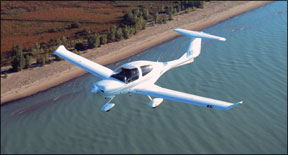
Used Aircraft Guide: Diamond DA40 Star

The first time we clapped eyes on what was then the prototype of Diamonds new four-place single-what eventually became the Star-we politely oohed and ahhed. But secretly, we thought the thing didnt have a prayer. First, it was small. Second, it had a canopy rather than doors and last, it had that weird hatch for the rear-seat occupants. Who would buy that? Quite a few flight schools and individual owners, it turned out. The current FAA registry shows nearly 600 DA40s on the rolls in the U.S., with the total production now at about 1040 worldwide. Given its European roots, Diamond came at the DA40s design as sort of hybrid between the sleek glass gliders the company started out producing when it was Hoffman Flugzeugbau and more traditional aircraft U.S. customers are accustomed to. This yielded what we think can fairly be called a world airplane.

Read More »

Used Aircraft Guide: Piper Arrow

Pipers Arrow isn’t the fastest, the roomiest or the most stylish single-engine retractable available on the used market. But-just as all cross-country airplanes are compromises-it has enough of those qualities to give it enduring popularity. And it might be the most economical, if you don’t mind giving up some cruise speed to others in its class, like a Mooney or Bonanza. It also has the advantage of not being an orphan-the Arrow is still being made. Since its little more than a retractable Cherokee, the Arrow is a logical step-up airplane for pilots accustomed to Pipers fixed-gear four-seaters. Moving from one cockpit to the other, everything will be familiar, from gauge placement to systems to handling and procedures. Thats no accident, of course: Offering a full line of airplanes was the basic marketing model for all of the major manufacturers in the 1960s and 1970s. As they started out in two-seat trainers, pilots were encouraged to step up into similar four-place, fixed-gear models, then to retractables from the same blood line.

Read More »

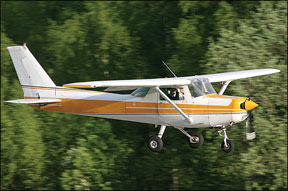
Used Aircraft Guide: Cessna 152

If any airplane can be considered economical, the Cessna 152 probably makes the cut. A “modernized” version of the Cessna 150, the 152 was first delivered in 1977 as a 1978 model and quickly found its way into training and rental fleets around the world. But its production run ended a short eight years later when the bottom fell out of Cessnas piston-aircraft market in 1985 and all production ceased. Although Cessna restarted piston-aircraft production in 1996, the 152 wasnt part of that revival. Over its eight years of production, 7584 examples of the 152, including A152 Aerobat and French-made Reims Aviation variants, were built. Today, the FAA shows more than 3800 copies presently wearing an N-number; many others are overseas, soldiering on alongside competing contemporaries from Piper (the PA-38-112 Tomahawk) and Beech (the Model 77 Skipper).

Read More »