









Used Aircraft Guide

Used Aircraft Guide: Cessna 182 – Still a Load Hulling Standard

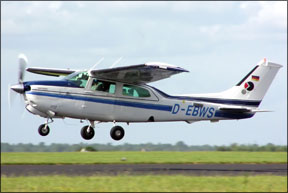
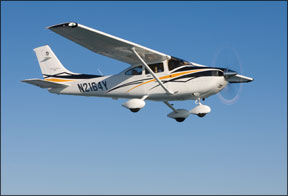
By all measure of logic, the Cessna 182 should have passed out of production years ago. Given its horsepower, its slow and in an age of $5 avgas, its hardly economical. It handles like a truck. But its that truck part that explains why, in 2008, Cessna sold 223 new Skylanes, making it essentially tied with the Cessna 172 in sales popularity. Sales tanked in 2009, but that was true for the entire market. Still, in the teeth of a vicious recession, the airplane retains relatively good values on the used market, although not many are selling. The reason for this, we surmise, is that the 182 will haul about anything you can throw at it, it has good dispatch reliability and hardly any handling, except for nose-first landings. All that adds up to one thing: Buyers are comfortable with Skylanes and for many, its as far up the pecking order as theyll go in their flying careers. These days, you can buy a 182 with a full G1000 glass panel and a luxe interior for a price in the low $400s. A big investment, to be sure, but less money than a new SR22 from Cirrus.

Read More »

Used Aircraft Guide: Piper Archer

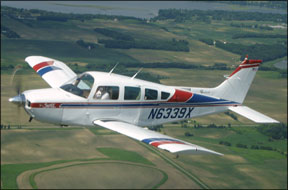
In the heady days of the 1960s and 70s, personal airplane manufacturers were heavily invested in marketing their products the same way Detroit had been selling cars: Get new owners hooked on an entry-level model, offer several step-up models and make annual but incremental improvements. Just as Detroits Big Three had dealer networks, Beech, Cessna and Piper had them also, offering everything from primary flight training to maintenance, rental and charter.Rarely would a new pilot trained in, say, a Cessna 150 look at another manufacturers product as a step-up airplane, because a larger, faster version of what he was already flying was readily available. Brand loyalty was important to general aviations Big Three back then, just as it was to Detroit. But times changed, models were eliminated and some brands went out of production entirely, at least for a time.

Read More »

Used Aircraft Guide: Mooney K-Model – Goes Fast, Sips Gas

Of age mellows people, the same thing might be said of airplanes, at least if the airplane in question is Mooneys M20K series. The airplane arrived in the GA market at a time when turbocharging was relatively new and the demand for high flying aircraft was thin. Mooney didnt get the M20Ks turbocharging system right on the first try and the airplane developed a reputation as a maintenance hog. Thirty years later, that reputation has been mostly burnished and the fact that the M20K bores along between 160 and 200 knots on relatively little fuel has improved the models used price. Still, the cabin is small and with a single door, hard to get into. For that reason and others, Mooneys have a bit of cult status to them. They are in no way everymans airplane in the way that a Cessna or a Piper is. But if cruising fast yet miserly is your wont, the M20K models-the 231, the 252 and the Encore-are strong contenders.

Read More »

Used Aircraft Guide: Cirrus SR20

Only 10 years ago, the idea of a certificated, “plastic” airplane had many old-timers shaking their heads in skepticism. It looks kind of interesting, but no “real” pilot would want of those things-its got a parachute, fergawds sake! Today, the Cirrus SR20-and especially its big brother, the SR22-have upended traditional ideas of what a personal airplane should look like, how it should be used and how it should be equipped. The SR20 could be thought of as the product that started changing how the industry thinks of a modern personal airplane. Those changes have been evolutionary, not revolutionary. For example, the early SR20s, in fact, retained the too-familiar vacuum-powered “steam gauge” flight instruments, albeit complemented by a large multifunction display. Todays copies have eliminated the vacuum system and gone all-electric, with full glass panels; steam gauges are only there for backup. And even if the SR20 responds respectably for its horsepower, performance didnt break new ground, either.

Read More »

Used Aircraft Guide: Piper Seminole

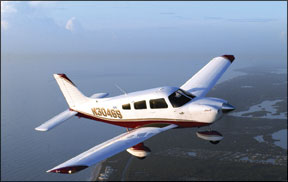
Of all the changes general aviation has gone through in the past 20 years, the piston twin arguably has borne the brunt. Fuel prices, plus improved engine and systems reliability, have made piston twins less desirable than in their heyday of the 1960s and 70s. And for the same money as a new piston twin, pilots these days often can find a used single or twin turboprop with plenty of time left on its engines. Operating expenses are higher, but so are performance, reliability and comfort. But the piston twin does live on, at least at Piper and Hawker Beechcraft. The latter still offers the six-seat Model 58 Baron while Piper will be happy to sell you a roughly comparable Seneca V. Cessna, despite once selling a wide range of piston twins, left that market long ago and shows no signs of returning. Meanwhile, other piston twins are available new from Tecnam, Diamond and Vulcanair, to name three. But, if youre looking for a smaller, simpler twin, Piper also still makes the Seminole, sort of a double-breasted Arrow IV.

Read More »

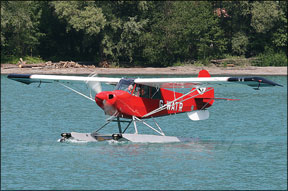
Used Aircraft Guide: Aviat Husky

Utility airplanes occupy an interesting market niche. Like any other airplane, they take off and land, cruise at altitude, carry a payload and offer some creature comforts. Naturally, just about any spam-can does that and probably can do it faster, more economically and with more pampering of the pilot and passengers. But unlike most other airplanes, utility airplanes are optimized to use short, unimproved fields without drama or damage, carry lots, require little maintenance and be field-repairable, just a few of the features with which the typical tricycle-gear, all-metal single has trouble. Over the years, types like Pipers Super Cub, the Maule series and the American Champion Scout have come to exemplify a utility airplane. All three were originally designed decades ago and have changed little since, fully depreciating their design and engineering costs. Too, there’s little “wrong” with these models: They aint broke, so they don’t need fixin. Put another way, the basic piston-powered utility airplane is mature technology. Into this niche came the Aviat (formerly Christen) Husky, unapologetically designed with the Super Cub firmly in mind. The result is a Part 23-certificated, well-built and good-performing airplane successfully competing against its forebears. In fact, its success is all the more remarkable since it was designed and certificated in the 1980s, something of a dark age for new general aviation designs. Utility airplanes, of course, are put to many different uses, including romantic bush flying, plus more mundane pursuits like pipeline patrol, ranching and even training. By all accounts, the Aviat Husky tackles all these challenges with equal aplomb, making it worth consideration by anyone looking into buying a utility airplane.

Read More »

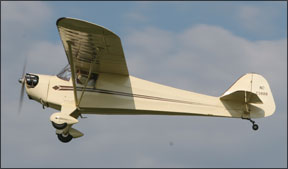
Used Aircraft Guide: The LSA Capable Taylorcraft

The years just after World War II must have been an exciting time to be involved in aviation. As the war wound down, manufacturers like Aeronca, Cessna, Piper and Taylorcraft were putting the finishing touches on new designs they were convinced would be market leaders. War-time training had turned out scores of thousands of pilots, most of whom it was thought would want something to fly when they got home. At the time, the state of the art for a personal airplane was a basic, two-seat traildragger of modest horsepower and tube-and-rag construction. Wood, as often as not, was a major airframe constituent and IFR was something not even all the airlines practiced. But, as it turned out, most returning pilots just wanted to settle down and raise a family; theyd had enough flying for one lifetime. While the hoped-for boom in demand for personal airplanes went bust, anticipated competition resulted in some classic designs: The Cessna 120/140, the Piper PA-11/12 and the Taylorcraft series come to mind, all of which remain popular today. And many-though by no means all-have seen a renewed interest, thanks to the FAAs light sport aircraft rules, which were five years old this summer. Of them, the Taylorcraft is among the types with the longest production history, new, non-LSA-compliant models having been produced as recently as the 1990s. Though its unlikely any new Taylorcraft will be manufactured, parts are readily available, as is some level of factory support. More on that, below.

Read More »

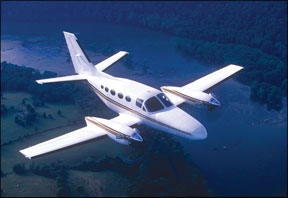
Used Aircraft Guide: Cessna 425 Corsair/Conquest I

For anyone alert and paying attention to general aviation during the 1970s, current offerings from the “big three” manufacturers-Beech, Cessna and Piper-must have seemed like an afterthought. Back then, all three companies offered a full range of propeller-driven aircraft, from two-seat trainers to mile-chewing turboprops. Heck, Cessna even began selling jets early in that decade. For most of us mere mortals, though, a turboprop was about all we could expect to ever try stuffing into a hangar. But even there, we had choices. Beech had been busy making its King Air line since the mid-1960s, while Piper gained FAA certification of its first Cheyenne model in 1972. Cessna, perhaps nodding to Beechs preeminence in the market, leapfrogged turboprops altogether, preferring to put its development dollars into the Citation line, a move thats paid off handsomely. But the 70s were almost ready to yield to the 1980s before Cessna type-certificated its first turboprop, the Model 441, in August 1977. Now known as the Conquest II, the Model 441 was an evolution of the Model 404 Titan, a piston-powered twin, powered by Garrett (now Honeywell) TPE331-8 Series turboprop engines. Confusingly, the Model 425-eventually dubbed Conquest I-earned its type certificate almost three full years later, and started life as the Cessna Corsair. Itself an evolution of the very successful Model 421, the 425 was powered by venerable Pratt & Whitney Canada PT6A-112 engines. Before production of Cessnas “Baby Turboprop” ended in 1986-along with a lot of other models from among the GA manufacturers-some 236 Model 425 Corsair/Conquest Is were produced.

Read More »

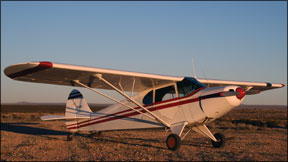
Used Aircraft Guide: Piper PA-12 Super Cruiser

While much of the recent chatter among used-airplane market watchers involves the seemingly bottomless price plunges for plastic and metal cross-country platforms, the rag-and-tube market isn’t down nearly as much. Part of the reason, of course, is these airplanes never appreciated like big-bore singles. Another reason is constant demand for simpler, slower, inexpensive fun airplanes capable, in a [IMGCAP(1)]pinch, of actually going somewhere, albeit sedately and only in good weather. The steady growth in light sport aircraft popularity demonstrates the depth of a market for new low-and-slow airplanes, even if many of them first see service as trainers. But the price point for a new LSA can easily scare away the buyer in search of a simple, fun airplane, leading them to consider older, classic airplanes of relatively simple fabric and tube construction. Any time fabric-covered airplanes are considered, Pipers classic J-3 Cub and PA-18 Super Cub usually make the list. Sometimes overlooked is the PA-12 Super Cruiser, which falls somewhere between those two icons, yet provides a low-cost entry into the world of utility and fun flying. For many missions, the Super Cruiser is a reasonable and less-expensive alternative to the Super Cub, affording greater speed, comfort and flexibility than the J-3. One downside, of course, is these early Pipers are more than 50 years old-while parts availability is still good, finding a competent mechanic familiar with tube-and-fabric designs to stay on top of mechanical concerns is critical.

Read More »

Used Aircraft Guide: The Cessna 210 Centurion

The six-seat retractable single is a market niche to which many prospective owners aspire. And why not? They are as fast as many twins, can carry prodigious payloads, come with plenty of panel space to install any goodies the previous owner neglected and generally are easy to fly. The solo powerplant avoids a twins upkeep costs while most systems-with landing gear being a notable exception-are almost as simple as the trainer first soloed. Despite all that, there really are only three broad models from which to choose: The 36-series Bonanza, Pipers Lance/Saratoga and Cessnas 210 Centurion. Yes, Piper also has the non-pressurized, cabin-class Matrix-ne Malibu-but its not really been on the market long enough or in great enough numbers to make most prospective purchasers lists. And if fixed gear is more your cup of tea, then both Piper and Cessna have other offerings making the cut. But the six-seat retractable offers a good mix of the things pilots with a need to go places and carry more than two people often look for: good range/endurance, loading flexibility, enough cruise speed that inevitable headwinds don’t prolong the agony that much and the ability to mix easily with the airliner flow into the larger airports.

Read More »

Used Aircraft Guide: The Beech Sierra

The normally aspirated 200-HP piston single is a popular niche, filled with a variety of aircraft types. Each, however, comes in the same basic configuration of four seats, a constant-speed prop and-except for the Cirrus SR20 and the much older Beech Musketeer Super III-retractable landing gear. For example, this is where the Mooney 201 resides, alongside most Piper Arrows and Cessnas Cardinal RG, all of which were developed from earlier models with less horsepower and, except for the Mooney, originally equipped with fixed gear. Beechs entry into this market-like its competitors offerings-was also a growth model, from the Model 23 Musketeer, in this case. Never a speed demon, the Musketeer and other models using the same basic airframe-and most any product from Beech, for that matter-are well-known for quality components and construction as we’ll as comfort. The end result, the Model 24R Sierra, isn’t the sleekest of the 200-HP crowd, and it certainly isn’t the fastest. It might be the most comfortable, however, and perhaps the most reliable. Beechs Musketeer was the companys answer to the Cherokees and Skyhawks of the world. The first of that line, the Model 23, hit the market in 1963. Three years later, the Model A23-24 Super III debuted. With 200 HP and fixed gear, it wasnt nearly as fast as the same-power Mooneys of its day (the Arrow and Cardinal RG hadnt hit the market yet). In 1970, Beech made the decision to fold the A23-24s landing gear, dubbing the result the Model A24R Super R. The Sierra name came with the B24R in 1973. Also, Beech one-upped Cessna, Mooney and Piper by making the A23-24 and the 24R models nominal six-seaters, if so ordered from Beech; they cannot practically be retrofitted with the aft seat, due to structural differences.

Read More »

Used Aircraft Guide: Piper Comanche

Aviation history is littered with “what-if” questions. What if Fred Noonan had been a better navigator? What if the Hindenberg hadnt approached Lakehurst, New Jersey, with a thunderstorm nearby? What if the Susquehanna River hadnt flooded Pipers Lock Haven, Pennsylvania, factory in 1972-would the venerable Comanche still be a leading light in Pipers line-up? Despite its relatively high parts count and labor requirements compared to, say, the Cherokee Arrow, there are many good reasons to think so. First hitting the market in 1958, the PA-24 Comanche was a radical departure for Piper-until then, the company had built mostly rag-and-tube taildraggers. Instead, the Comanche was a thoroughly modern design focused on speed and good looks, and targeting the high-performance piston-single market being tapped by the Beech Bonanza and Cessna 210, among others. Pipers sleek, roomy all-metal design featured an oval-section fuselage, tapered laminar-flow wing and sharp-edged styling. The looks still turn heads today and a South African company is even building an all-composite look-alike for the kit-built crowd, the Ravin. More important for the discriminating used aircraft buyer, the Comanche lends itself to upgrading, and owners who bring the airplane up to the state-of-the-art tend to hang onto them forever.

Read More »