Register

Search Results for: piper

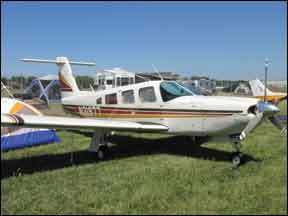
Used Aircraft Guide: Piper Saratoga and Lance

All airplanes are compromises. Since most of us lack an unlimited budget, we’re often forced to choose between going fast in a relatively small cockpit or dragging around a larger cabin more slowly. It’s simple, really: The “go-fast” airplane will get us to our destination sooner, but we might be forced to leave behind a few things, or a few people. The slower, large-cabin bird gets us there just fine, thank you, and lets us carry all the stuff we’ll need upon arrival. In the six-seat, retractable piston-single market, there are three basic choices: Beech’s Model 36 Bonanza, Cessna’s Model 210 Centurion or Piper’s PA-32R series, the Lance and Saratoga. The Bonanza arguably handles better than the other two while probably squeezing out a knot or two over the Centurion.

Read More »
Used Aircraft Guide

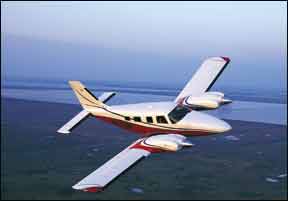
Used Aircraft Guide: Piper Seneca

Most piston twins have carved themselves a market share for a few years, then vanished as market conditions changed. Piper’s Twin Comanche and Aztec are examples and so is the Beech Travel Air, Duke and Duchess. On the other hand, for various reasons, some twins have endured and Piper builds two of them, the Seminole and the Seneca. Both have endured for various reasons, although neither is made in much volume these days. It’s easy to see why the Seneca has endured. It does nothing exceedingly well—it’s not fast, nor a joy to fly nor will it turn heads on the ramp—but it does a lot we’ll enough.

Read More »
Uncategorized

Used Aircraft Guide: Piper Super Cub

While Alaska’s official bird is a pretty two-tone number called the Willow Ptarmigan, the state bird that works for a living is the Piper Super Cub. For reasons related to perfect timing, a marriage of the right powerplant to a robust airframe and sheer, stubborn staying power, the Super Cub has earned what seems to be a permanent home in bush community. Other aircraft can arguably outdo the Cub in payload capability, speed and cabin space, but the Super Cub simply holds its own in an economic combination of all three that’s hard to beat. And we’re told there’s more than one Super Cub beating around the bush with only one original part: the aircraft data plate.

Read More »
Aircraft

Load Hauler Bargains: Pipers Have an Edge

Hauling half a ton without feeding two engines is just the ticket for air taxi, small cargo outfits and families of five plus a dog. The number of makes is actually surprising if you look worldwide and count antiques, and its growing with aircraft like the Piper Matrix, Expedition (Found) Aircraft E350 and Gippsland Airvan. The used market, however, is still dominated by four venerable models that have been around since the ’60s: Pipers Cherokee 6/Lance/Saratoga line, Beechs 36-Series Bonanza, the Cessna 206/207 and the Cessna 210. This is likely where you’ll find a good deal, although were told well-priced six-seaters don’t last long, even in this economy.

Read More »
Used Aircraft Guide

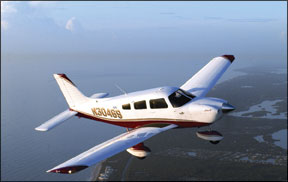
Used Aircraft Guide: Piper Archer

In the heady days of the 1960s and 70s, personal airplane manufacturers were heavily invested in marketing their products the same way Detroit had been selling cars: Get new owners hooked on an entry-level model, offer several step-up models and make annual but incremental improvements. Just as Detroits Big Three had dealer networks, Beech, Cessna and Piper had them also, offering everything from primary flight training to maintenance, rental and charter.Rarely would a new pilot trained in, say, a Cessna 150 look at another manufacturers product as a step-up airplane, because a larger, faster version of what he was already flying was readily available. Brand loyalty was important to general aviations Big Three back then, just as it was to Detroit. But times changed, models were eliminated and some brands went out of production entirely, at least for a time.

Read More »
Aircraft

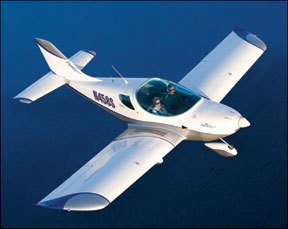
PiperSport LSA: Sleek, Comfortable

For the established manufacturers, the light sport evolution has presented an opportunity and a dilemma. The opportunity is that LSAs might gin up the market for certified aircraft by offering buyers a low cost of admission. The dilemma? How to capitalize on that. Do you leave LSAs to the upstarts or build your own? Cessna built its own, Cirrus stuck a toe in the LSA water and withdrew it-or at least delayed the plunge-and now comes Piper with the announcement that it will offer the former Czech Aircraft Works SportCruiser as a rebranded PiperSport. The announcement came at the U.S. Sport Aviation Expo in January in Sebring, Florida. Pipers new CEO, Kevin Gould, explained that buying and marketing someone elses design made more sense than spending hard-to-come-by developmental dollars to ultimately build an airplane thats not much different from the dozens already out there. Point taken.

Read More »
Used Aircraft Guide

Used Aircraft Guide: Piper Seminole

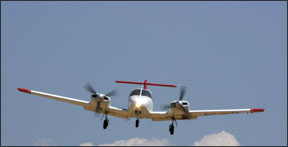
Of all the changes general aviation has gone through in the past 20 years, the piston twin arguably has borne the brunt. Fuel prices, plus improved engine and systems reliability, have made piston twins less desirable than in their heyday of the 1960s and 70s. And for the same money as a new piston twin, pilots these days often can find a used single or twin turboprop with plenty of time left on its engines. Operating expenses are higher, but so are performance, reliability and comfort. But the piston twin does live on, at least at Piper and Hawker Beechcraft. The latter still offers the six-seat Model 58 Baron while Piper will be happy to sell you a roughly comparable Seneca V. Cessna, despite once selling a wide range of piston twins, left that market long ago and shows no signs of returning. Meanwhile, other piston twins are available new from Tecnam, Diamond and Vulcanair, to name three. But, if youre looking for a smaller, simpler twin, Piper also still makes the Seminole, sort of a double-breasted Arrow IV.

Read More »
Used Aircraft Guide

Used Aircraft Guide: Piper PA-12 Super Cruiser

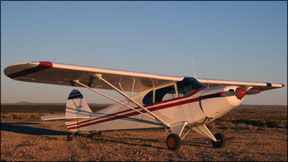
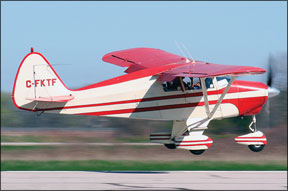
While much of the recent chatter among used-airplane market watchers involves the seemingly bottomless price plunges for plastic and metal cross-country platforms, the rag-and-tube market isn’t down nearly as much. Part of the reason, of course, is these airplanes never appreciated like big-bore singles. Another reason is constant demand for simpler, slower, inexpensive fun airplanes capable, in a [IMGCAP(1)]pinch, of actually going somewhere, albeit sedately and only in good weather. The steady growth in light sport aircraft popularity demonstrates the depth of a market for new low-and-slow airplanes, even if many of them first see service as trainers. But the price point for a new LSA can easily scare away the buyer in search of a simple, fun airplane, leading them to consider older, classic airplanes of relatively simple fabric and tube construction. Any time fabric-covered airplanes are considered, Pipers classic J-3 Cub and PA-18 Super Cub usually make the list. Sometimes overlooked is the PA-12 Super Cruiser, which falls somewhere between those two icons, yet provides a low-cost entry into the world of utility and fun flying. For many missions, the Super Cruiser is a reasonable and less-expensive alternative to the Super Cub, affording greater speed, comfort and flexibility than the J-3. One downside, of course, is these early Pipers are more than 50 years old-while parts availability is still good, finding a competent mechanic familiar with tube-and-fabric designs to stay on top of mechanical concerns is critical.

Read More »
Aircraft

Used Aircraft Guide: Piper Comanche

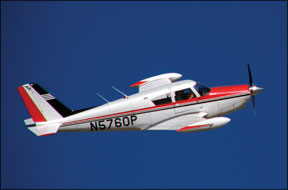
Aviation history is littered with “what-if” questions. What if Fred Noonan had been a better navigator? What if the Hindenberg hadnt approached Lakehurst, New Jersey, with a thunderstorm nearby? What if the Susquehanna River hadnt flooded Pipers Lock Haven, Pennsylvania, factory in 1972-would the venerable Comanche still be a leading light in Pipers line-up? Despite its relatively high parts count and labor requirements compared to, say, the Cherokee Arrow, there are many good reasons to think so. First hitting the market in 1958, the PA-24 Comanche was a radical departure for Piper-until then, the company had built mostly rag-and-tube taildraggers. Instead, the Comanche was a thoroughly modern design focused on speed and good looks, and targeting the high-performance piston-single market being tapped by the Beech Bonanza and Cessna 210, among others. Pipers sleek, roomy all-metal design featured an oval-section fuselage, tapered laminar-flow wing and sharp-edged styling. The looks still turn heads today and a South African company is even building an all-composite look-alike for the kit-built crowd, the Ravin. More important for the discriminating used aircraft buyer, the Comanche lends itself to upgrading, and owners who bring the airplane up to the state-of-the-art tend to hang onto them forever.

Read More »
Aircraft

Piper Matrix: Strong Performer, Good Value

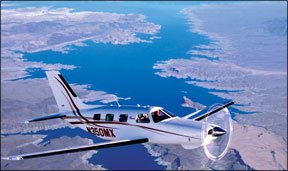
The Piper Matrix is un-American. The rules clearly state that automobiles and airplanes are to get bigger, heavier, more complicated and less efficient as the production years pass. Go look it up. Cars outgrow garages and airplanes lose useful load. Simplifying an American vehicle is not acceptable. Increasing an airplanes efficiency and useful load is probably a federal offense. The offender-Piper-has created a very good airplane thats selling as fast as it can be built. Piper took a risk in creating a simplified, unpressurized version of its decades-old Malibu/Mirage. To the extent market history exists for such a decision, its lousy. In 1980, Cessna produced an unpressurized version of the Model 340A, the 335, which did poorly and was dropped after only one year of production. In the new Matrix, Piper didnt make Cessnas mistake of reducing performance of an existing model and it kept the same 350-HP Lycoming TIO-540-AE2A that the Mirage has. Piper also spent money on market surveys to assess demand for the proposed airplane as we’ll as the right price point. Despite the current economic downturn, it appears the decision was a winner.

Read More »
Used Aircraft Guide

Used Aircraft Guide: Piper Tri-Pacer

There was a time when almost all light airplanes were taildraggers. Tricycle-gear airplanes were rare, mainly because taildraggers-or conventional-gear airplanes, if you prefer-generally were better at dealing with the unpaved runways at most airports. This common kinship among light airplanes continued into the early 1950s, broken only by such types as the Ercoupe, Navion and Beech Bonanza, to pick three. Up at Lock Haven, Pennsylvania, in the late 1940s, the Piper Aircraft Corporation was making a wide range of airplanes, including the venerable Cub, mostly of fabric stretched over a wood or metal frame. Out in Wichita, Cessna and Beech were only beginning their transition to all-metal airplanes with tricycle gear, which must have made for some sleepless nights at Piper. While the company apparently couldnt develop an all-metal airplane overnight, it could convert its four-seat, conventional-gear Pacer to the tricycle-gear configuration ahead of many others.

Read More »
Used Aircraft Guide

Used Aircraft Guide: Piper Warrior

When considering basic airplanes, the 150/160-hp four-place, fixed-gear single is about as ubiquitous as one can get. The niche serves as the beginning rung of a market ladder where airplanes begin to be used as practical transportation tools. They wont haul a lot of people or cargo, nor will they do it quickly, but they offer economical travel. They often serve as a pilots first “real” airplane after primary training, and the market demands they be reliable, inexpensive to operate and relatively easy to fly. Airplanes in this class are sort of like Toyotas: not terribly exciting or fancy, perhaps, but they do what you need them to without costing an arm and a leg. Cessnas Skyhawk owns this market, of course, and used-airplane prices reflect that dominance. At least two of its mainstream competitors, the Piper PA-28-151 or -161 Warrior and AGAC AA-5 Traveler/Cheetah, are good, solid airplanes that can be had for less. (Beechs entry, the Sport, is short on performance when compared to the Warrior and Cheetah.) The AA-5 went the way of the dodo in the late 1970s, and attempts to resurrect it (in the form of the Tiger) failed. Beginning in the mid-1980s, Piper, too, fell on hard times and was forced into bankruptcy, finally emerging several years (and a few abortive buyout attempts) later as the New Piper. In 2006, “new” was dropped from the companys name. Unlike the Skyhawk, and with only one or two exceptions, the Warrior has been in production throughout, even if the number of airframes manufactured in each model year could be counted on the fingers of one hand. Now in the “Warrior III” configuration, the model is marketed mainly as a trainer.


Read More »