









Register

Technology Analysis

LED Landing Lights: Better Than Expected

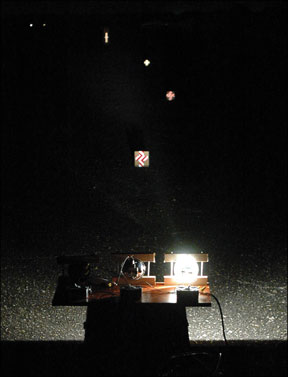
Automotive technology trickles into aviation in fits and starts and with spotty success. HID lighting, for example, was practically standard equipment on some cars before it finally gained a foothold in the light aircraft GA market. Now LEDs-light emitting diodes-are undergoing a similar evolution. Weve seen them in cars and on motorcycles for years and lately, theyve found their way onto wingtip and nav/position lights. Next step: landing lights. In this article, were examining a new product recently sent to us by a company called AeroLEDs. AeroLEDs is by no means the only supplier of this technology. Whelen, for example, makes a line of LED landing lights and we know of some other similar products in development. Well do a detailed comparison of all the LED products in a future issue, but in this article, were interested in testing the concept itself. Landing and taxi lights are big draws on the airplane electrical system for a reason: You need a bunch of light to reach through the murk to find night details necessary to establish depth perception and hazard detection. Although theyre inefficient in terms of converting electricity to light, conventional incandescent bulbs are still more than bright enough to do the job, which explains why theyve endured so long. At $20 a pop, theyre also relatively cheap, if not always reliable. Can LEDs hope to compare? We aimed to find out. LEDs are one of those alluring technologies that seem too good to be true. They deliver bright, cool light with a fraction of the power required for an incandescent lamp. This, more than anything, explains why LEDs are turning up in everything from flashlights to automotive tail lights. LEDs themselves have more to do with transistors than with traditional filament-type bulbs. LEDs have p-n or positive-negative semiconductor junctions, just like transistors do. When power is applied to the junction, electrons flow and drop into so-called electron holes-they actually revert to different orbits in the junction material. When that happens, energy in the form of photons is released. Physically, the p-n junction is small and so are LEDs. An individual LED is bright, but its overall light output is small, so to approach the requirements for something like a landing light or even a navigation light, multiple LEDs are ganged together. The SUNSpot product that AeroLEDs sent to us has 16 LEDs arranged in a circular lens assembly.
Read More »

406 ELT Update: More Choices, But…Wait

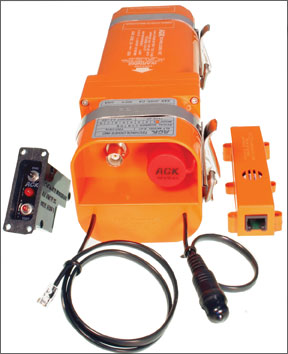
With the feds set to pull the plug on the monitoring of 121.5/243.0 MHz ELTs in just four months (by February 2009), the market for 406 MHz technology is still in the wake-up phase. Several readers have contacted us for advice on buying, so heres a brief update. Right up front, we’ll say don’t get in a hurry to buy. Model selections are still limited and prices are high. Perhaps an inexpensive personal locator beacon is the best-value fill-in option for a year or so. We covered 406 MHz units in the July 2007 issue of Aviation Consumer and since then, the market has advanced. To review, 406 units are smart ELTs that transmit digitally encoded aircraft tailnumber, pilot information and beacon serial number and some have the ability to transmit the last recorded GPS-derived position data. These beacons are the way to go; the question is when. Historically, there have only been a few key players in the light aircraft ELT world, but were surprised that more manufacturers havent jumped at the chance to capitalize on the 406 frenzy. Artex was first on the block with an affordable (if you can call a $1000 ELT affordable) 406 MHz system through the entry-level ME406 and it remains a popular seller.

Read More »

Why FADEC Struggles: Benefits Remain Elusive

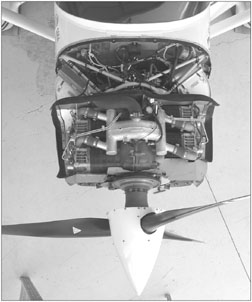
When famed researcher-and inventor of the electric starter motor-Charles Kettering discovered that no compound worked as we’ll as tetraethyl lead to kick up the octane of gasoline, he couldnt have guessed that nearly 100 years later, science would still be looking for something almost as good. That the search hasnt born fruit is one reason-although not the only one-that we still fly behind magnetos, not the electronic ignitions that have been commonplace in cars for three decades. Its not for lack of trying. Teledyne Continental has had a certified FADEC for piston engines for some eight years, homebuilders fly with various iterations of electronic ignitions and General Aviation Modifications intriguing PRISM system thus far exists only as a test article. And the tests confirm that these ignition systems can prevent detonation in high power engines burning lower octane unleaded aviation fuels. So whats the problem?

Read More »

Mooney’s Return

Back from bankruptcy for the umpteenth time, Mooney has a new, blisteringly fast model. But what it most needs is efficient manufacturing.

Read More »

Adam Jet Flight Trial

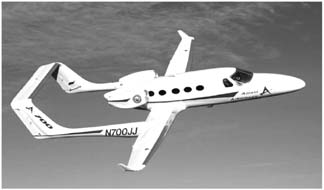
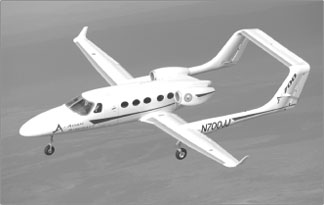
Think of it as a typical piston twin but with a heckuva lot more power. Still, owner-pilots will require serious training to fly it safely.

Read More »

XM Datalink Choices

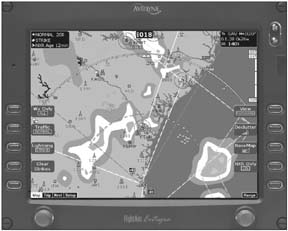
XM Radio data isn’t the only weather game in town but its becoming the hottest. Heres the state-of-the-art in XM, for both portable and panel-mount systems.

Read More »

Electronic HSIs

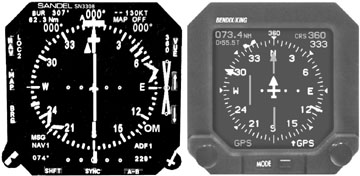
Are they a practical choice for replacing a conventional mechanical HSI? In many cases, the economics arent convincing.

Read More »