










Technology Analysis

Cheap Flight Timers: No Frills Functionality

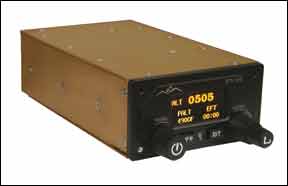
Given today’s avionics and RNAV approaches, do you really need a timer? Truth is, many of the devices in our panels and on our portable gadgets already have a timer built in. Using that timer, however, can be a challenge as the sequence of commands to access it in the Garmin G1000, for instance, might not be something you’re going to always remember or find sufficiently convenient. So, we think a dedicated, standalone timer is still useful. Sure, you could use the timer function in your smartphone, on the Pebble Smart watch or the one in Garmin’s D2 pilot watch, but we think timers are best placed within the instrument scan.

Read More »

BendixKing Redux: No Killer Products Yet

It’s been nearly three years since BendixKing announced its commitment to revitalize the brand name that once stood for quality, value and industry-leading innovation. At the time, the announcement hinted there would be a repeat of an era when King Radio was king of the avionics market.

Read More »

FlyQ EFB for iPad: Intuitive, Full-Featured

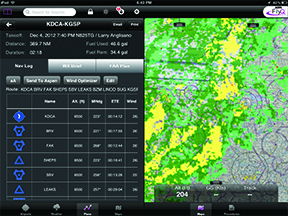
AOPA may take the attaboy for the organization’s FlyQ app, but it’s really Seattle Avionics Software that’s done we’ll with the latest FlyQ EFB. FlyQ EFB evolved from the AOPA member-freebie FlyQ flight planning resource for desktop and smartphones. We’ve always been fond of Seattle Avionics’ approach to flight planning and their design of well-thought-out apps for the Android market. Their handiwork continues with FlyQ EFB for iPad.

Read More »

First Word: January 2013

The unpleasant concept of a thinking computer taking over when we’re the pilot in command has been wrestled in literature until it’s a cliché, but technology has reached the point where we may have to face it.

Read More »

myWingMan For iPad: Bendix/King Simplicity

Bendix/King sees its potential market slice as building avionics that are easier to use than a Garmin. While it has yet to deliver any clean-sheet designs of its own since announcing its comeback over a year ago, the newly introduced myWingMan tablet app could be the launch pad for a fresh product line.

Read More »

FSS Revamp: Web Access, Hazard Alerts

Lockheed Martin Flight Services (LMFS) has created a website for flight planning, filing flight plans and adverse condition alerting. It’s mostly easy to use, we like what we see and are looking forward to planned increased capabilities.

Read More »

Budget Transponders: Sandia, Trig Save Space

Aside from digital displays and push-button features, entry-level transponders have been slow to advance. That’s changing—since manufacturers are developing new models that save panel space, simplify installation and include advanced features as standard.

Read More »

Letters: November 2012

I am not clear about the options for interfacing ADS-B portable receivers (September Aviation Consumer) with various software and platforms. Do the receivers output a standardized string, be it by cable, Wi-Fi or Bluetooth, that can be received and utilized by any software and platform as long as the software contains ADS-B receiver support? Or is data output unique to each manufacturer? For example, as far as external GPS receivers are concerned (most of them use Bluetooth), as long as the software supports external GPS (via Bluetooth in this case), one should generally be able to use any GPS receiver, regardless of software publisher or platform.

Read More »

Vortex Generators: Real Bang For the Buck

It’s one of those aircraft truisms that performance requires compromise. Controllability at low speed means compromising the wing that enjoys high-speed cruise. That’s what makes vortex generators (VGs) seem too good to be true: They claim lower stall speeds in singles and twins without a penalty in cruise speed. Sometimes they bump up the gross weight. For twins, they reduce minimum controllable airspeed (Vmc). This is speed below which controlled flight becomes impossible with the critical engine failed and the other engine at full power. Below Vmc, there isn’t enough rudder and aileron authority to counter the natural yaw and roll of the asymmetrical thrust. Translation: The airplane rolls over and crashes.

Read More »

Rotax 912 iS: So Long, Bing Carbs

With its 912-series engines, Rotax owns the light sport propulsion market. But even though the 912s are technologically more advanced than the typical Lycoming or Continental engine, buyers have been wondering when Rotax would get around to fuel injection and electronic ignition. In early March, it did just that. At the company’s Gunskirchen, Austria, factory, it rolled out the new 912 iS, an “eco” engine with improved fuel economy, electronic fuel injection and a sophisticated, dual-channel ECU architecture with all the features you’d expect a modern aircraft engine based on automotive technology to have.

Read More »

Redbird’s Bold Move: Sim-Centric GA Training

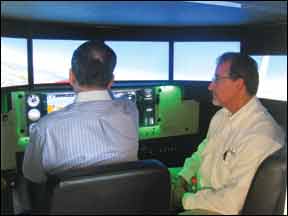
In 2007, Redbird Flight Simulations had a prototype flight simulator that basically consisted of Microsoft Flight Simulator on several screens and a moving cockpit enclosure. We flew it for two minutes before it broke. Things have improved since then. Today the company ships better than one a simulator a day, if you count both their tabletop version and full-motion enclosures. Most are reconfigurable, GA sims, but they also build custom simulators for specific aircraft such as the King Air C90. With over 430 units in the field now (223 full-motion), Redbird is the largest simulator company in the world in terms of devices sold.

Read More »

Redbird’s Bold Move: Sim-Centric GA Training

In 2007, Redbird Flight Simulations had a prototype flight simulator that basically consisted of Microsoft Flight Simulator on several screens and a moving cockpit enclosure. We flew it for two minutes before it broke. Things have improved since then. Today the company ships better than one a simulator a day, if you count both their tabletop version and full-motion enclosures. Most are reconfigurable, GA sims, but they also build custom simulators for specific aircraft such as the King Air C90. With over 430 units in the field now (223 full-motion), Redbird is the largest simulator company in the world in terms of devices sold.

Read More »