









Register

Search Results for: insurance

Used Aircraft Guide

Used Aircraft Guide: Cessna Skymaster

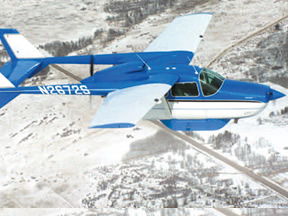
The idea of the push-pull twin makes such fundamental sense, that it has been applied to aircraft designs in one form or another for nearly 100 years and in literally dozens of models you’ve never even heard of. As recently as 2005, Adam Aircraft tried the idea again with the A500 push-pull piston twin. Like many before it, the airplane was gutted more by market reality than by a fundamental flaw in the idea. Then there’s the Cessna 337, arguably the most commercially successful push-pull attempt, at least in terms of numbers built. And although the 337 Skymaster isn’t the most popular twin ever marketed, it’s done all right for itself and has achieved its primary goal: eliminating asymmetric thrust and simplifying the pilot’s workload in the event of an engine out.
Read More »
Used Aircraft Guide

Used Aircraft Guide: Citabria and Decathlon

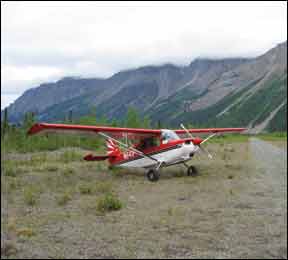
Owners who fancy a little light aerobatics—or even semi-serious competition—might lust after a Pitts S1 or an Extra 300. But then reality sets in. Those airplanes require no small degree of skill to simply fly safely and that’s before we consider the insurance premiums. And that’s why so many owners inevitably gravitate toward the Citabria or the Decathlon, starter aerobatic airplanes that turn out to have much more capability than many realize until they take a close look. These models have a lot going for them. They aren’t expensive to buy or maintain, they don’t have any serious gotchas and any pilot of average skill can learn to fly and land them safely. Moreover, they can double as respectable back-country flyers, which is something you’re not likely to do in a Pitts or an Extra.

Read More »
Accessories

Pilot Logbook Apps: LogTen Pro Does It All

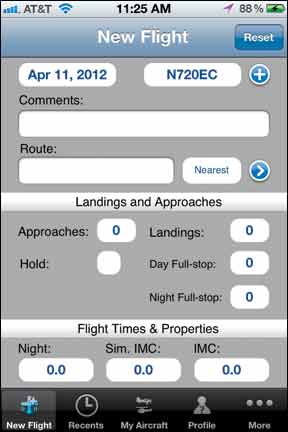
There’s nothing wrong with a paper logbook. It’s simple, cheap and satisfying to use. But digital logbooks automatically back up, total your time for insurance, an 8710 or duty limits, and, if it’s on a mobile device, are always with you. We were shocked how many options there were for logging via an app, either as a standalone solution or paired with desktop versions. Luckily, a few solutions distinguished themselves from the pack. LogTen Pro exists both as an iOS logbook and a desktop program for the Mac. What we found impressive was that the iOS apps are almost as burly as the desktop version—better in some ways. The two obviously can synchronize, but it’s not necessary, especially with the big-screen interface of an iPad.

Read More »
Used Aircraft Guide

Used Aircraft Guide: Cessna Hawk XP

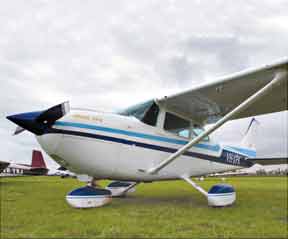
The Cessna Skyhawk has been in near-continuous production for over 50 years and there are over 40,000 of the model out there in the world. There’s a reason for that: The design simply works. That’s not to say Cessna hasn’t evolved the design and explored variations on the theme. One of these is the Hawk XP, essentially a 195-HP 172 with a constant-speed prop. Some people think of the XP as a Cessna 182 engine in a 172 body. It’s not. Others imagine it’s an aftermarket upgrade to a stock 172. There is such a thing, but the XP was a factory model. The Hawk XP is a 172 that carries more, climbs better and cruises a bit faster than standard 172, without giving up the predictable handling or maintenance. For some buyers, that’s exactly what they need.

Read More »

Used Aircraft Guide: Piper Saratoga and Lance

All airplanes are compromises. Since most of us lack an unlimited budget, we’re often forced to choose between going fast in a relatively small cockpit or dragging around a larger cabin more slowly. It’s simple, really: The “go-fast” airplane will get us to our destination sooner, but we might be forced to leave behind a few things, or a few people. The slower, large-cabin bird gets us there just fine, thank you, and lets us carry all the stuff we’ll need upon arrival. In the six-seat, retractable piston-single market, there are three basic choices: Beech’s Model 36 Bonanza, Cessna’s Model 210 Centurion or Piper’s PA-32R series, the Lance and Saratoga. The Bonanza arguably handles better than the other two while probably squeezing out a knot or two over the Centurion.

Read More »
Industry News

Letters: April 2012

I greatly appreciate your informative article about aircraft paint shops. (See September 2011 Aviation Consumer.) It was informative and contemporary. Currently, I am doing a complete refurbishing on a 1978 Cherokee Six that I just purchased. So, I read and reread your article with interest. I do have one criticism. Aviation Consumer is my favorite monthly magazine. I love reading it since you provide the uneducated, like me, with facts, statistics and hardcore data. This helps with making a purchase decision. My only criticism of your article is that it would have been better from my perspective if you would have provided a checklist of what an aircraft paint project should include. This information would help me pick the right facility and ensure a complete job.

Read More »
Used Aircraft Guide

Used Aircraft Guide: Cessna 195

How many classic airplanes can combine useful basic transportation utility with the panache of a big, belching radial engine? We can think of only one: The venerable Cessna 195 Businessliner. (Cessna named it that for a reason. It really was one of the first business aircraft.) Many vintage aircraft are indeed works of art, but the 195 is actually a practical classic. One owner refers to his 195 as “a Cessna 206 that gets preferred parking at the fly-in breakfasts.” A direct descendant of the 1934 C-34 Airmaster, the C-190 series represents a lot of Cessna heritage—it was the first all-metal Cessna and the first to fly with the Wittman spring steel landing gear, and the last Cessna to be built with a radial engine.

Read More »
Maintenance

Corrosion Treatments: Well Worth The Trouble

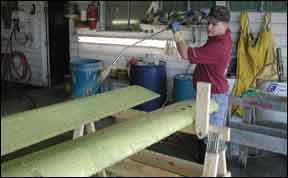
Corrosion is like aging; it does its damage slowly and is easy to overlook—until major systems begin to fail. Unlike aging, we know how to stop corrosion in aircraft. It’s cheap insurance against a slow destruction of your airframe. The downside is a cleaning up your airplane for at least a few weeks, and possibly several months. You also might discover corrosion damage that would have passed unnoticed for years and now appears as loose rivets and joints. We’re not sure revealing lurking damage is a downside, however. We’d rather stop the spread and know the full extent of any degradation here and now. This is where owners of fiberglass aircraft get to turn to the next article with a smug expression on their faces. The rest of us who fly aluminum birds should read on.

Read More »
Used Aircraft Guide

Used Aircraft Guide: Piper Seneca

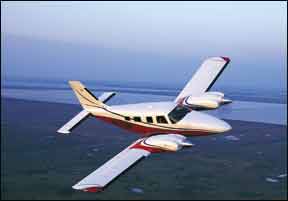
Most piston twins have carved themselves a market share for a few years, then vanished as market conditions changed. Piper’s Twin Comanche and Aztec are examples and so is the Beech Travel Air, Duke and Duchess. On the other hand, for various reasons, some twins have endured and Piper builds two of them, the Seminole and the Seneca. Both have endured for various reasons, although neither is made in much volume these days. It’s easy to see why the Seneca has endured. It does nothing exceedingly well—it’s not fast, nor a joy to fly nor will it turn heads on the ramp—but it does a lot we’ll enough.

Read More »
Uncategorized

Turbine Step Ups: What’s Involved?

For the moment, let’s set aside the vulgar discussion of money and consider whether turbine aircraft are all they’re claimed to be. Well, of course they are. Case closed. Turbines are faster than piston-engine aircraft, fly higher and since all the engines’ moving parts are always rotating in the same direction, they’re generally more reliable. Moreover, the owner of a turbine aircraft is untroubled by that pesky problem of whether a high-octane fuel will be available and what it will cost. There’s no argument that Jet A is the world fuel of the future and it’s available in parts of the world where high-octane avgas has long since disappeared.

Read More »
Used Aircraft Guide

Used Aircraft Guide: Cessna Cardinal RG

At EAA Airventure in 2006, a mysterious airplane made a low flyby, arriving unannounced. It turned out to be the Cessna NGP, the now-tabled high-performance follow-on to the popular 210 that Cessna dropped from the line in 1986. But at a glance, it was easy to mistake the airplane for something else: the Cessna 177 Cardinal RG. And many observers did. Although introduced 40 years ago, in 1971, the Cardinal RG remains one of the sleekest and most attractive highwing airplanes ever marketed. Despite its age, it retains a loyal following. It’s easy to see why. The RG is one of the best compromises for its class in terms of speed, payload, cost of ownership and economy.

Read More »
Used Aircraft Guide

Used Aircraft Guide: Cessna 421

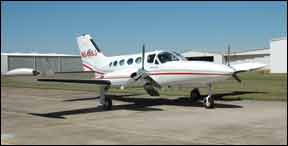
Like the Lockheed Constellation, Cessna’s 421 Golden Eagle is an airplane of another age. Impossibly sleek, fast and comfortable, it’s hard to imagine such a thing ever being built at all, never mind again. But owners rave about the 421’s exceptional combined capabilities and even though many of them could easily afford turbines or light jets, they stick with their Golden Eagles for delivering the best value for the money spent. But that’s not to say owning a 421 is cheap. Far from it. The engines alone can amount to $50,000 or more each and with known ice, pressurization and even a lav of sorts, there’s a lot to maintain. Said one owner: “Don’t even ask what it costs to run it. That just shows you can’t afford it.”

Read More »