












Industry News
First Word: 09/06
OSHKOSH AND INNOVATIONAt EAA AirVenture in Oshkosh, Eclipse CEO Vern Raburn was ceremoniously handed a conditional type certificate for the Eclipse 500 light jet. This sent me scurrying into the archives to see how Eclipses original claims stacked up to the final, certified reality. Well examine that later when we get a look at the 500s POH but one thing caught my attention. The small jet revolution has taken the better part of a decade…

First Word: 08/06
AN INSIDE LOOK AT TCMThe photo on this page merits an explanation. It might look like just another snapshot of a Flight Service Station or an ATC facility, but it was taken where you might least expect it: inside the Teledyne Continental Motors engine plant at Mobile, Alabama.
Letters: 08/06
Gear-Up CostsI read your article “What a Gear-up Costs” with some interest, since I happen to fly an older Baron very similar to the one featured in some of the pictures with the article. I think there’s another possible cost of a gear-up that might need to be considered: the cost of losing the airplane […]
First Word: 07/06
WHY DONT COMPANIES CALL BACK?Several times a week, at least, readers e-mail or phone me about problems with subscriptions-missing issues, billing errors, rejected passwords for the Aviation Consumer Web site, that sort of thing. Technically, my job is words and pictures; we have a fully staffed (and efficient) customer service department to handle the subscription queries. Nonetheless, I chase down these complaints and I often leave the original note lodged in my inbox so I…

Mooney’s Return
Back from bankruptcy for the umpteenth time, Mooney has a new, blisteringly fast model. But what it most needs is efficient manufacturing.
First Word: 05/06
THIELERT AND SUPERIOR
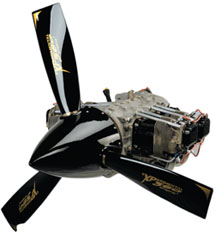
Twice this month, I have heard disgruntled aircraft owners-one of them a service guy for a major OEM-ask when Toyota or Honda is going to get into the aircraft piston engine business. I keep wanting to say, well, how about never? But then I realized most of us have been looking across the wrong ocean for leading-edge engine developments. How about Germany rather than Japan?
[IMGCAP(1)]And thats exactly the significance of the announcement in March that the Thielert Group bought Superior Air Parts, lock, stock and cylinder barrel. I spoke to Frank Thielert the day after the sale was announced and he said the companys business plan is to leave Superiors s…
First Word: 04/06
PRODUCT DEFECTS AND DOING THE RIGHT THING
As a former president once said, I feel your pain if you happen to own an airplane equipped with both a Lycoming engine and a WSI AV200 datalink receiver. Chances are, you’ll have to rip the guts out of the engine and that happy box back there in the avionics bay will soon be so much obsolete junk.
The companies responsible for these events-Lycoming and WSI-hate it when I put things in such unapologetic terms. I feel their pain, too. But heres the ugly truth: Lycoming oversaw the design, production and sale of at least 2400 crankshafts deemed to be defective and as we go to press, it has announced that another 5100 need to be replaced i…
First Word: 02/06
A Great Idea Made Less Great
In this issue, you’ll find an in-depth review of Avidynes new active traffic product being offered at a price that will finally make it affordable for Skyhawk and Archer drivers. Kudos to Avidyne and Ryan for making this happen. But this breakthrough is not quite as terrific as it might have been.
Specifically, its saddled by what I call the $5000 surprise. And here it is: If youve seen the ads for the TAS600 selling for under $10,000 and you want to install one in, say, your older Mooney 231, youre out of luck, partner. (The fact that we own an older 231 is purely coincidental, by the way.) Because the 231 is certified for flight above 18,500 f…
First Word: 01/06
Quality, Global Competition and Lycoming
In this months issue, were publishing an interview with Ian Walsh, Lycomings new general manager. Walshs principle challenge is to fix quality control lapses at the companys Williamsport, Pennsylvania engine plant and to usher Lycoming into a future certain to be dominated by lean, innovative manufacturing.
Thus far, from the perspective of an outsiders nose pressed against the window, Lycoming seems to be on the right track. Walsh has instituted vigorous new quality control strategies and is pondering new products, such as electronic controls and diesel technology. All good stuff. But the reality is that Lycoming is a poster chil…
Letters: 01/06
Oxygen Starvation?
The first color issue of Aviation Consumer is fantastic. Although I would have still been a loyal subscriber with black-and-white images, the color provides a significant added value and it is much appreciated.
A comment and question. In the pulse oximeter flyoff, the 2 in SpO2 should be a subscript, not a superscript. Sorry to be picky. As an anesthesiologist, SpO2 is a significant concern to me during my patients operations.
Needless to say, I was shocked to see your test pilots SpO2 in the range of 80 to 84 percent. At what altitude was this photograph taken? Was he experiencing symptoms of hypoxia? In the operating room, an SpO2 of 80 perc…