Industry News

First Word: April 2012

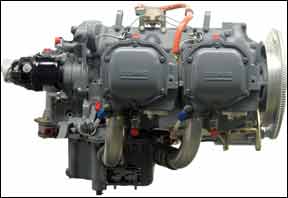
When the Rotax division of Bombardier Recreational Products (BRP) rolled out its new 912iS engine at its Gunskirchen, Austria, headquarters in early March, I wasn’t too surprised. From talking to a couple of vendors, I had a pretty good idea of what was coming and the engine more or less lived up to those expectations. Well, okay, there were two surprises. One was how far along the engine really is. It’s basically there. You could hardly open the door of a FIAT 500 (nice handling, no motor) without bumping into an actual engine, a component or some BRPer rolling around in 912iS logo wear. Rotax has obviously been at this awhile and has put in place all the bits and pieces of support you normally don’t expect until an engine is shipping to dealers.

Read More »

Letters: April 2012

I greatly appreciate your informative article about aircraft paint shops. (See September 2011 Aviation Consumer.) It was informative and contemporary. Currently, I am doing a complete refurbishing on a 1978 Cherokee Six that I just purchased. So, I read and reread your article with interest. I do have one criticism. Aviation Consumer is my favorite monthly magazine. I love reading it since you provide the uneducated, like me, with facts, statistics and hardcore data. This helps with making a purchase decision. My only criticism of your article is that it would have been better from my perspective if you would have provided a checklist of what an aircraft paint project should include. This information would help me pick the right facility and ensure a complete job.

Read More »

Tax Considerations: Biz Aircraft Deductions

With the 100 percent bonus depreciation rule in effect, 2011 was a good year to buy a new aircraft for business use. But to claim the benefits of the bonus, you need to get your filing details in order and not overlook the record keeping necessary to justify the bonus claim. Further, to avoid getting afoul of the IRS, it’s critical to understand what business use really is. As for 2012, the bonus will be 50 percent, but if combined with allowable expensing elections, you can still claim a sizable chunk of depreciation to reduce your tax burden and make the cost of a new airplane for business use more appealing than it otherwise might be.

Read More »

Bulletproof Engines: Are There Any?

Next to $5 avgas, the cost of routine engine maintenance and overhauls takes the biggest bite out of the aircraft ownership budget. You can always choose not to paint your airplane or live with ratty seats, but if the engine tanks, you’ve got an 1800-pound radio stack you can’t even use because there’s no way to spin the alternator. Our owner reports on various models consistently confirm what we’ve always known: Some owners spend a lot less on aircraft maintenance simply because they own airplanes equipped with engines we have often considered bulletproof. This concept is, itself, a misnomer. Nothing in aviation is truly bulletproof, but it’s fair to say that some engines have a better service history than others and, conversely, some are simply money pits. That’s not to say they don’t perform, but it’ll cost you more and reliability will suffer.

Read More »

First Word: March 2012

Although I didn’t plan it that way, this issue deals with a couple of critical aircraft maintenance considerations: corrosion prevention efforts and engine maintenance. The ugly reality here is that owners, because they are flying less, are also doing less preventive maintenance, if they’re doing any at all. It has now become normal to see an airplane in annual with 20 or fewer hours on the clock during the previous year. You can blame this on high fuel prices if you want, but I think there’s more to it than that.

Read More »

Letters: March 2012

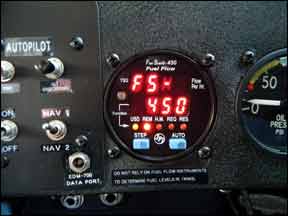
In spring, I had a new Garmin GTN750 installed in my 1983 Mooney 201 and was amazed by the unit’s performance. The only thing missing was fuel management capability and as a result, I had the fuel flow option added to the existing EDM-700 and wired into the GTN. Since this was my first exposure to fuel flow monitoring, I didn’t know what to expect in terms of reliability and accuracy. And what I experienced in the field blew me away. I was expecting a reporting accuracy rate of perhaps 96 percent, but was pleasantly surprised to find the accuracy greater than 99 percent. At each fill-up, I compare the fuel loaded onboard with what the unit stated as actually having been used and the numbers are always within a few ounces.

Read More »

LSA Finance Woes: Crippling the Industry

The light sport aircraft market was hyped up with so much promise, but still struggles to deliver real payoff. It’s not that the aircraft aren’t selling—they are, as much as anything is selling. But market has been primarily one of cash, not credit. While credit is tight in all economic sectors today, LSAs have some specific issues that make them a tougher sell to the bean counters at the bank.

Read More »

First Word: February 2012

When I travel around and visit various aviation businesses, a common complaint is how difficult—and expensive—it is to move a certification project of any kind through the FAA. The smaller the company is, the more stressful the process is because major companies like Garmin and Cessna cast a darker shadow and have the staff who can spend time doing nothing but jumping through FAA hoops. Small companies can’t afford that. When light sport came along, the idea was to spur innovation by getting the FAA out of the loop and letting manufacturers do their own approvals with loose oversight by ASTM International.

Read More »

Letters: February 2012

I read your synopsis on our data in the cockpit; how discouraging. (See Aviation Consumer, December 2011.) May I ask a question and make a comment? First, I think I vaguely remember reading some time ago that a portion of the aviation fuel tax had been set aside and saved up to fund the NextGen system, and that these funds were diverted to other uses not even within aviation. Am I correct or mistaken on this, or did something similar to this happen?

Read More »

Good Glass Deals: Skyhawks and DA40s

We’re a long way from every cockpit having some form of a glass panel, but we’re getting there. Aftermarket installations of products like Aspen’s Evolution and Garmin’s G500 are making inroads and as some airplanes head for the scrap heap (or Brazil), the percentage of glass cockpits slowly grows. If you want glass, the cheapest, least painful way may be to simply shop the used market for the first airplanes that got glass panels, meaning 2003 to about 2007. These airframes have taken their predictable depreciation nosedive, but many of them are still a long way from the ratted-out phase.

Read More »

First Word: January 2012

When Alan Klapmeier was in his stride at Cirrus five years ago, he liked to say that one thing he hoped to accomplish at Cirrus was to prove that you don’t need special DNA to fly an airplane. That’s probably true as far as it goes, but the other shoe to be dropped is this: You might need some special DNA to survive flying an airplane.That’s one of several conclusions I came to after poring over more than 500 accident reports for this month’s article on SR20 and SR22 safety. With its 26G seats, crashworthy cabin space and especially the CAPS BRS parachute, Cirrus didn’t necessarily promise the SR20/22 would be one the safest airplanes ever.

Read More »

Cirrus Examined: Just Average for Safety

When Cirrus kicked open the barroom doors in 1999 with an innovative new airplane equipped with a parachute, it promised to turn the page on light aircraft safety. In our initial report on the Cirrus SR20, we deemed it “one of the most crashworthy airplanes in GA history.” A dozen years hence, does the accident history support the expectations? Has Cirrus delivered what many buyers hoped it would? And while we’re at it, how does it compare to other models? Which have the best accident rates, which the worst?

Read More »