










Register

Safety

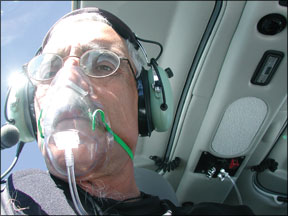
Better Hypoxia Training: Rob Bests a Chamber

We sometimes think that another word for hypoxia ought to be denial or, at the very least, the phrase “false sense of well-being” should morph to “self-delusion.” In the aviation press, we have beaten the hypoxia topic to a pink pulp, because it lends itself so readily to the pointing of a boney finger at the profoundly stupid things pilots sometimes do. In this regard, hypoxia is the multi-headed beast-we can be dumb about ignoring its dangers, dumb about ignoring training meant to mitigate the risk and really dumb when it actually happens. And how often is that? We don’t really know, because even if an accident is caused by hypoxia, the post-mortem may offer only speculative conclusions. In many GA accidents, the true cause may drift downwind with the smoke from the wreckage simply because light aircraft forensics are so inadequate.

Read More »

LSA Insurance: Planes Yes, Pilots Maybe

For aviation insurers, its the best of times and the worst of times. In many traditional parts of the aircraft insurance market, an overabundance of capital and new insurers is forcing premiums-especially those for corporate airplanes-down to new lows. At the same time, buyers are snapping up new airplanes of all sizes faster than manufacturers can build them. And the two new market areas of the decade, Very Light Jets and Light Sport Aircraft, are beginning to take off.In some ways, Light Sport Airplanes are an insurers dream. If the glass-half-full guys are even remotely right, there will be shoals of them. And from an underwriters viewpoint, theyre attractive because they have what insurers call “low severity.” Severity is essentially the average cost of an accident.

Read More »

Online CFI Renewals: Jepp/AOPA is Top Pick

Heres a surprising statistic: Of the just under 600,000 pilots listed on the FAAs records 90,000-or about one in six-are flight instructors. How many actually actively teach? Probably under 50 percent, but instructor certificates are perishable items and the poor slugs who own them must renew them every 24 months. There are various ways to do this, but the most popular seems to be the flight instructor refresher clinic, or FIRC. For decades, these courses meant a three-day weekend sitting in a stuffy conference room with a bunch of other renewing CFIs in a ritual butt-numbing marathon. The dawn of the internet brought the option of grinding through 16 hours of online training sitting alone in front of a computer. All the drudgery without the camaraderie. Aint technology grand? But are these courses any good? Are they even tolerable? We looked at courses offered by American Flyers, Gleim Publications and a collaboration between Jeppesen and AOPA. Each approaches the online challenge differently, but they can be compared in three key areas: content, organization and price.

Read More »

Top 10 Aircraft Safety Investments

In the days before even modest sedans had six airbags, vehicle sniffing radar and kiddie seats that could double as nuclear containment devices, car guy Lee Iacocca once famously said safety doesnt sell, style does. Four decades later, in the airplane realm, safety apparently does sell, given the success of Cirrus with its full-airplane parachute system.

Read More »

Pilot Life Insurance: Low Rates From PIC

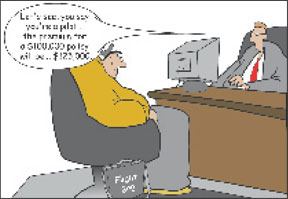
If you fly for fun or for a living and you have shopped for life insurance, you probably heard the agent draw a breath when he learned you were a pilot. If you fly, you pay more for life insurance. A lot more. My own experience in buying life insurance is typical. After asking my age, weight, whether I smoked and a number of other health-related questions, the agent quoted me the companys most attractive rates, with all the appropriate disclaimers.

Read More »

Airbags for Airplanes: They Look Promising

Like everyone else in general aviation, we often pine for the technology thats standard equipment in cars. But for reasons related to economics and the federal government, these take their time trickling down to little airplanes. One of these technologies is airbag restraint systems.

Read More »

Seatbelt Upgrades: Y-Belts Are a Top Choice

Nothing is more basic to aircraft and automotive safety than seatbelts. But it took the FAA awhile to figure that out. It wasnt until 1978 that the FAA required all pilot and co-pilot seats to have lap belts and shoulder harnesses. After 1988, all cabin seats were required to have shoulder restraints.

Read More »

G1000 Training: King Schools is Tops

Like the old saw about getting to Carnegie Hall, the only way to master the Garmin G1000 is practice, practice, practice. If youre a sometime user of this system or new to it entirely, youre wasting good money if you show up for your G1000 flights unprepared.

Read More »

What a Gear-up Costs

Even for a modest single, the bidding starts at $40,000 or 20 years worth of premiums. Insurers always pay but so will you in higher rates, betterment and for hidden damage.

Read More »