










Register

Search Results for: insurance

Industry News

Aircraft Partnerships: Find the Right People

On the surface, co-owning an aircraft just makes sense. Most airworthy privately-owned light singles fly less than 100 hours a year-in many cases far less. Regular use is better for the aircraft and better for amortizing the fixed costs (hangar, insurance, databases) per hour of flight. More users should mean more bang for everyones buck. Unfortunately, several owners also mean more opportunities for conflicts in time, resources, flying style, opinion and even personality. Being connected to anyone by your checkbook can put a strain on the best relationship. There’s no magic formula for creating the right partnership. But our survey results hit the same key points with metronome-like regularity: Good partnerships have clear expectations between partners of similar economic standing, and they have written rules or bylaws to settle disputes.
Read More »
Uncategorized

Used Aircraft Guide: Commander 112/114

Its always interesting to contemplate general aviations boom-and-bust cycles. While exceptions certainly abound, it seems every other decade since the 1930s has included introduction of new aircraft or new technologies that further advance the state of the art. The 1970s were an upswing, avocado-green vinyl upholstery and Continentals Tiara engine notwithstanding. In addition to the iconic taper-wing Piper Cherokees, Cessnas original Citation and Beechs Model 200 Super King Air, the 70s also ushered in the Rockwell Commander 112/114 series of four-seat piston singles. For years, what was then called North American Rockwell had been trying to find the right mix of ramp appeal, performance and features to enter the general aviation market in a big way. Early attempts-the Lark and Darter, and efforts to revive the Meyers 200-didnt work out as the company hoped.

Read More »
Engines

Tecnams Rotax Twin: Budget Performance

Despite being one of the bigger players in LSA market, Tecnam Aircraft isn’t we’ll known in the U.S. The company has actually been building aircraft and aircraft parts for over 60 years, and has 3000 aircraft flying worldwide. For comparison, Cirrus Aircraft and Diamond Aircraft have each delivered slightly over 4000 airplanes to date. Tecnam is reorganizing in the U.S. with a new website (www.tecnam.net), an expanding dealer and support network and a new aircraft: the Tecnam P2006T light twin. The P2006T (That name doesnt quite roll off the tongue, does it?) has specs more like a single than a twin. Its gross weight is only 2601-50 pounds more than a Cessna 172SP-and cruise speed is in the 140- to 150-knot range. The really novel item is that the P2006T sports two Rotax 912 S3 engines. The S3 is the certified version of the Rotax found in most LSAs. Each engine puts out about 100 HP.

Read More »
Engines

Turbo Overhauls: Sooner Not Later

Pity the poor turbocharger: It sits in your engines exhaust stream, subject to extreme heat and corrosive gases, spinning at up to 120,000 RPM, boosting manifold pressure. Pity also the turbocharged aircraft operator, since he or she gets to pay for maintaining and overhauling the turbo, its controller and its wastegate. Although turbos often last as long as the engine itself before needing overhaul, they also can need attention we’ll before scheduled TBO. And, even if the engine doesnt need work before an overhaul, you might want to consider overhauling the turbo halfway to the engines TBO anyway. Its sort of like paying it forward. In some cases, problems with the engine can mean turbo issues, too, since they share the same lubricating oil; what gets into your engines oil also can get into your turbo. Whether your turbo is sent out for overhaul with the engine or removed before TBO after a routine inspection uncovered a problem, there are few things you need to know and decide before giving the shop a go-ahead for work.

Read More »
Used Aircraft Guide

Used Aircraft Guide: Piper PA-12 Super Cruiser

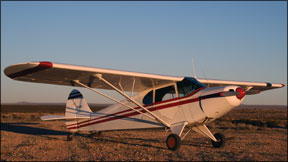
While much of the recent chatter among used-airplane market watchers involves the seemingly bottomless price plunges for plastic and metal cross-country platforms, the rag-and-tube market isn’t down nearly as much. Part of the reason, of course, is these airplanes never appreciated like big-bore singles. Another reason is constant demand for simpler, slower, inexpensive fun airplanes capable, in a [IMGCAP(1)]pinch, of actually going somewhere, albeit sedately and only in good weather. The steady growth in light sport aircraft popularity demonstrates the depth of a market for new low-and-slow airplanes, even if many of them first see service as trainers. But the price point for a new LSA can easily scare away the buyer in search of a simple, fun airplane, leading them to consider older, classic airplanes of relatively simple fabric and tube construction. Any time fabric-covered airplanes are considered, Pipers classic J-3 Cub and PA-18 Super Cub usually make the list. Sometimes overlooked is the PA-12 Super Cruiser, which falls somewhere between those two icons, yet provides a low-cost entry into the world of utility and fun flying. For many missions, the Super Cruiser is a reasonable and less-expensive alternative to the Super Cub, affording greater speed, comfort and flexibility than the J-3. One downside, of course, is these early Pipers are more than 50 years old-while parts availability is still good, finding a competent mechanic familiar with tube-and-fabric designs to stay on top of mechanical concerns is critical.

Read More »
Uncategorized

Used Aircraft Guide: Cessna 337 Skymaster

In the light-twin world, there’s Cessnas 337 Skymaster push-me/pull-you design-plus a handful of Adam 500s-and then there’s everything else. Eliminating asymmetric thrust from the single-engine handling equation was what Cessna had in mind when it brought the Skymaster to market. It succeeded, since the airplane handles pretty much the same when one or both engines are turning. But some compromises were made along the way, many of which can hike maintenance costs. In an engine-out situation, conventional piston twins generally need to be handled with kid gloves lest the airplane get too slow and roll over on its back. Close to the ground, that can be very bad. Which is one reason Cessna aligned the Skymasters two engines with the airframe centerline, offering pilots the safety of a second engine without the penalty of adverse handling. If one quits, identify it, feather it and don’t worry about the dead-foot, dead-engine drill. The FAA even granted the 337 its own class rating, limiting pilots to centerline-thrust twins only. That part of Cessnas plan worked, since there’s little question the Skymaster is easier to fly on a single engine than a conventional twin. But, since the VMC rollover accident doesnt happen that often in the real world, the airplanes overall accident record isn’t that much better than conventional twins.

Read More »
Used Aircraft Guide

Used Aircraft Guide: The Cessna 210 Centurion

The six-seat retractable single is a market niche to which many prospective owners aspire. And why not? They are as fast as many twins, can carry prodigious payloads, come with plenty of panel space to install any goodies the previous owner neglected and generally are easy to fly. The solo powerplant avoids a twins upkeep costs while most systems-with landing gear being a notable exception-are almost as simple as the trainer first soloed. Despite all that, there really are only three broad models from which to choose: The 36-series Bonanza, Pipers Lance/Saratoga and Cessnas 210 Centurion. Yes, Piper also has the non-pressurized, cabin-class Matrix-ne Malibu-but its not really been on the market long enough or in great enough numbers to make most prospective purchasers lists. And if fixed gear is more your cup of tea, then both Piper and Cessna have other offerings making the cut. But the six-seat retractable offers a good mix of the things pilots with a need to go places and carry more than two people often look for: good range/endurance, loading flexibility, enough cruise speed that inevitable headwinds don’t prolong the agony that much and the ability to mix easily with the airliner flow into the larger airports.

Read More »
Commentary

Letters: 06/09

I enjoyed your article on four-place cruisers in the March 2009 Aviation Consumer. However, I would like to set the record straight on a couple of points and provide another perspective regarding resale values and what defines “best value.” Regarding production volumes of the DA40 versus the SR20, more DA40s have been produced from startup through the end of 2008 than total SR20s through 2008, even though the SR20 has been in production three years longer. Since 2003, the DA40 has outsold the SR20 every year. Here are the statistics to support that. You commented that the purchase price for a comparable used SR20 is generally less than a DA40. As you can see from the numbers above, the higher price of the DA40 cannot be attributed to lower production volume as you supposed as there have been 20 percent more DA40s produced than SR20s. The difference is more likely driven by the markets acknowledgement that the DA40 is an overall better value than the others, resulting in higher demand. Having an airplane retain more of its original value is hardly a negative. Less depreciation equates to a lower overall cost of ownership as owners recapture a larger proportion of their original investment on sale. This factor is often overlooked by prospective owners when evaluating the true cost of owning an airplane. True value is much more than purchase price. Its also operating costs, insurance costs, maintenance costs and investment recapture upon sale.

Read More »
Uncategorized

Roll Your Own Glass: No Ideal Solution

As we pointed out in our April issue of Aviation Consumer, there are some sweet deals on used, glass-cockpit aircraft. But for many owners, this jump in the ownership food chain might not be practical or affordable. If youre perfectly happy with your current wings (or just have good reason not to sell right now) but lust for the big-screen glass that dazzle front and center in new cockpits, you have options. Unfortunately, there are caveats a-plenty. Our definition of glass here includes a primary flight display (PFD) and some kind of modern multi-function display (MFD) and modern IFR-GPS the likes of Garmins GNS-series navigators. Traffic and satellite weather are in the mix as well. Were talking fully certified systems focused toward certificated aircraft-nothing experimental or portable installed on the panel. Step one is a review of your stock electrical system. New, all-electric aircraft require electrical-bus and electrical-system redundancy. Your old airframe likely doesnt have dual batteries, dual alternators or dual electrical busses, and equipping a 70s-vintage Skylane to these specs just isn’t going to happen. Some equipment wont accept a 14-volt input voltage, including the popular Avidyne EX500 MFD. That means a current-hungry voltage converter if installed in a 14-volt system. That brings us to the other major issue: overwhelming the electrical system of an older bird in supporting all those fancy new avionics. Many 14-volt alternators werent intended to keep up with this intense charging demand. Some owners with full panels report increased incidents of alternator failure or screen blackouts when running high-draw accessories like landing lights or gear and flap motors. Have your shop do an electrical load analysis for your proposed avionics suite. And always keep a healthy battery in the aircraft. It works hard. Reworking the original bus and installing properly rated push/pull circuit breakers and proper labeling can be surprisingly pricey and time-consuming. Is it worth it to rewire analog engine gauges and warning lights while the panel is open? How about replacing old switches with modern, lighted rockers? What about all that old wiring lurking behind the panel and woven through the airframe? This can get expensive even before putting in the new stuff.

Read More »
Used Aircraft Guide

Used Aircraft Guide: The Beech Sierra

The normally aspirated 200-HP piston single is a popular niche, filled with a variety of aircraft types. Each, however, comes in the same basic configuration of four seats, a constant-speed prop and-except for the Cirrus SR20 and the much older Beech Musketeer Super III-retractable landing gear. For example, this is where the Mooney 201 resides, alongside most Piper Arrows and Cessnas Cardinal RG, all of which were developed from earlier models with less horsepower and, except for the Mooney, originally equipped with fixed gear. Beechs entry into this market-like its competitors offerings-was also a growth model, from the Model 23 Musketeer, in this case. Never a speed demon, the Musketeer and other models using the same basic airframe-and most any product from Beech, for that matter-are well-known for quality components and construction as we’ll as comfort. The end result, the Model 24R Sierra, isn’t the sleekest of the 200-HP crowd, and it certainly isn’t the fastest. It might be the most comfortable, however, and perhaps the most reliable. Beechs Musketeer was the companys answer to the Cherokees and Skyhawks of the world. The first of that line, the Model 23, hit the market in 1963. Three years later, the Model A23-24 Super III debuted. With 200 HP and fixed gear, it wasnt nearly as fast as the same-power Mooneys of its day (the Arrow and Cardinal RG hadnt hit the market yet). In 1970, Beech made the decision to fold the A23-24s landing gear, dubbing the result the Model A24R Super R. The Sierra name came with the B24R in 1973. Also, Beech one-upped Cessna, Mooney and Piper by making the A23-24 and the 24R models nominal six-seaters, if so ordered from Beech; they cannot practically be retrofitted with the aft seat, due to structural differences.

Read More »
Used Aircraft Guide

Used Aircraft Guide: Cherokee 235/Dakota

When Fred Weick and John Thorp set out to design a less expensive alternative to Pipers Comanche, its unlikely they thought the resulting PA-28 series would become so popular, so durable or so varied. Since introducing the Cherokee 150 and Cherokee 160 (PA-28-150 and PA-28-160, respectively), in 1961, Piper has stretched, T-tailed, turbocharged and reproduced that basic airframe tens of thousands of times. Its original “Hershey-bar” wings eventually gave way to a longer, semi-tapered design, the landing gear has been folded and many different powerplants have been fitted. While much has changed, the designs basic utility, systems, handling and reliability have remained. Three models remain in production-four, if you count the twin-engine PA-44-180 Seminole-almost 50 years later. While PA-28 Cherokees came in many flavors, the most powerful of them-the Dakota-isn’t the fastest but is perhaps the most flexible. It and earlier 235-HP Cherokees take advantage of the markets affinity toward muscular four-place singles, a natural attraction proven popular enough to support two significant entries for many years: the Cessna 182 Skylane and Piper PA-28-235/236. The 182 came first and outlasted the 235/236: By any measure, its been a success. Like the Piper, it features a good combination of utility, roominess and performance. Pipers version, however, never matched the 182s popularity, even though it combines the Skylanes chief attributes: decent performance, simplicity, and common, proven components. If your needs include a big dose of horsepower pulling a simple airframe, the most powerful PA-28 Cherokee is a very solid candidate.

Read More »
Avionics

Letters: 03/09

Nice article on the Garmin 330ES. I strongly agree on not jumping to ADS-B technology right now. The FAA is working with an Aviation Rulemaking Committee (ARC) to figure out what to do with the universally opposed ADS-B NPRM from last year. Things could change. If you have a WAAS navigator, the Garmin 330ES is probably the cheapest way to comply with the ADS-B mandate. Add the 330ES and you have “ADS-B out” (which is what is required in the NPRM), plus the 330ES suffices for the transponder that you still have to keep after complying with the NPRM. One thing that keeps getting forgotten with ADS-B is the VFR aircraft or the low-end IFR aircraft. If you don’t have a WAAS navigator-and there is zero reason to spend the money to put one in a VFR aircraft-then you are talking some big bucks to comply with the NPRM with the 330ES. Youll have to get a WAAS navigator and the 330ES, plus installation of a GPS antenna. The 330ES can give you TIS traffic, but it wont give you TIS-B traffic from ADS-B aircraft transmitting their position to you. With the UAT, you can purchase Garmins GDL-90, which includes a WAAS chip and the equipment for sending and receiving ADS-B signals. You still need to keep your transponder unless you buy some kind of display. Nonetheless, complying with the ADS-B-out NPRM would be cheaper with the UAT for the VFR or low-end IFR aircraft, since you don’t have to buy the WAAS navigator.

Read More »