









Register

Search Results for: insurance

Uncategorized

Used Aircraft Guide: The Mooney 201

Amazingly, even the latest speed champions from Kerrville-the Mooney Type S Acclaim-trace their heritage to the original Mooney type certificate. The basic airframe has evolved over the years, but the concept of a semi-monocoque rear fuselage mated to a metal-skinned steel-tube cabin, a long and slender tapered wing and distinctive reverse tail has endured. The J-model evolved most directly from the F-model, which was itself descended from the short-body C-models of the mid-1970s. The first J-model or 201-the number derives from its supposed top cruising speed in MPH-appeared in 1977. It sported a 200-HP Lycoming four-banger-the IO-360-improved landing gear and a sloping windshield, among other changes. All of these were the product of a concerted effort by Mooney to kick the model line up a couple of notches. The 201 is, to the surprise of many, very much the work of the late LeRoy LoPresti. LoPresti had a long aeronautical background, including a stint on the Apollo lunar program at Grumman. He became a near legend for his ability to get the utmost from an airplane through aerodynamic cleanups, which hed done with success on the Grumman Tiger. Applying his magic to the M20F model, LoPresti and the Mooney team created the M20J. A number of changes were made, the most visible being a new cowling and a more aerodynamic windshield. The interior was addressed, too, with adjustable seats and a contemporary flat panel with organized electricals and circuit breakers rather than the typical dogs breakfast arrangement of the 1960s and 1970s.

Read More »
Aircraft

Fun-Size Floatplanes: Options for Most Budgets

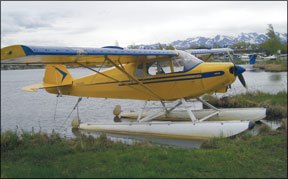
According to seaplane instructors, the most commonly uttered phrase by a landplane pilot following the first seaplane lesson is: “My Gawd, this is fun. Why didnt I do it sooner?” The second is often, “I want one of these things.” With the hook firmly set, lets look at what the truly smitten goes through in determining how much fun he or she can afford and what kind of seaplane to buy. We strongly suggest that the first step in such a process is to join the Seaplane Pilots Association. Its an excellent organization for those who want to have anything to do with seaplanes. Its forums contain a wealth of information on specifics of seaplane ownership and operation. What constitutes a fun seaplane? We consider fun seaplanes as ones where the idea is to fly purely for pleasure; in which the owner wants to knock around the sky and explore the waterways that are suitable and legal for seaplanes to alight; to take at least one passenger and enough stuff for a picnic or to go fishing or maybe stay overnight at a remote cabin or campsite on the shore. Fun seaplanes are for the aeronautical version of the sailors “gunkholing.” The airplane is not going to work for a living, need to haul a lot of stuff, travel great distances or handle particularly rough water or weather. We opine that fun seaplanes have but one engine that develops less than 200 HP, but we recognize that such a cutoff is arbitrary. The 145-HP Aeronca Sedan and 150- to 180-HP Piper Super Cubs and 180-HP Huskies are often serious, working seaplanes hauling cargo and people on a day-to-day basis.

Read More »
Maintenance

Pay for Play: Managed Maintenance

Although pilot training provides the knowledge and experience we need to safely fly an aircraft per the regulations, little more than the school of hard knocks is offered to help us maintain it. Amid stories of five-figure annual inspections for piston singles, the typical aircraft owner faced with a maintenance-related decision is more likely to defer to the shop than to seek a professional second opinion. That can get expensive. And, until now, professional maintenance management-that is, having a professional make these decisions on the owners behalf-simply wasnt available for personal aircraft at any cost. But is there even a market for such a thing? Mike Busch thinks there is. Busch is long-time maintenance advisor to the Cessna Pilots Association, the FAAs National Aviation Maintenance Technician of the Year for 2008 and founder of the Savvy Aviator Seminars on aircraft ownership. In mid-2008, he founded Savvy Aircraft Maintenance Management (SAMM) which offers to professionally manage the scheduled and unscheduled maintenance of most models of owner-flown aircraft. This service strikes us as moderately priced and the company bills it as a service that will pay for itself by saving owners money. Is it worth it? Our contacts with early clients of SAMM indicate that theyre pleased with the service and seeing reduced maintenance expenses, along with increased confidence.

Read More »
Used Aircraft Guide

Used Aircraft Guide: Beech 33 Debonair/Bonanza

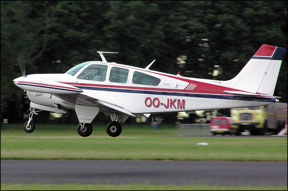
Beechcrafts Model 33 Bonanza was one of the few piston singles to survive the great general aviation slump of the 1980s. The quintessential doctor/lawyer single, it even outlived the previous archetype, the Model 35 V-tail Bonanza, by 12 years, only succumbing even as the landmark product-liability-reforming General Aviation Revitalization Act of 1994 became law. Ultimately, the six-seat Model 36 proved more popular than the four/five seat 33s. Since both reportedly cost about the same to manufacture, its a wonder the 33 held on as long as it did. But the four-seat, straight-tail Bo remains popular today. Owners love its flying qualities, performance, cabin comfort and sturdy construction. While many pilots, however, have words on the high cost of parts and maintenance supposedly typical of Beech aircraft, owners generally report a well-cared-for example needs very little. There are a few things to be careful of when operating a Bonanza, whether a 33 or V-tailed 35.

Read More »
Commentary

Letters: 01/09

I just received the November 2008 issue of The Aviation Consumer and read the article on deicing. I have a TKS system on a Mooney 262 (a 231 modified firewall forward to 252 specs). From my experience, don’t trust estimates. The original installation cost was estimated at just over $25,000. By the time we were done, it was over $35,000. This kind of price escalation is nothing new to people with experience in aircraft maintenance and upgrades. More important, I was disappointed in what the article failed to disclose about TKS. Your article clearly pointed out the critical deficiencies of Thermawing and pneumatic boots, but failed to state the TKS is ice prevention and is not deice. While most people and even the manufacturer talk about it as a deice system, it will not deice light rime ice nor will it deice clear ice once it has frozen into the pores.

Read More »
Uncategorized

Cataract Surgery: Success for Many Pilots

Just when youve got a few decades of aviation experience under your slightly expanding belt, and have lost that wide-eyed rookie look … things start to look blurry and hazy. Every day. And then your doctor drops the hammer: Youve got cataracts. But the news isn’t as bad as it could have been 30 years ago. Cataracts are fixable. A cataract occurs when the normal clarity of the lens of the eye is reduced, resulting in blurred, cloudy vision. These chemical changes are frequently caused by normal aging, but can also be caused by medications, injury, diseases, or environmental factors such as UV exposure or smoking. Cataracts usually occur in people 55 and older, and usually develop in both eyes, although at different rates. They impair your visual acuity in dim light, and also create light sensitivity and glare. Vision with a cataract is similar to looking through a steamy window. In addition to cloudy vision, cataracts also cause a number of other symptoms, such as dark shadows that seem to move with the eye (similar to “floaters,” or loose cells within the fluid of the eyeball), the need to use more light to read, double vision, a loss of color vision, as we’ll as increased nearsightedness as the lens becomes denser.

Read More »
Editorial

First Word: 10/08

Not that long ago, I was introducing some folks from Cirrus Design to the Maine delicacy known as the lobster roll, having just finished a flight in their new Cirrus SR22 Perspective. We were talking about growth of our industry called general aviation and how niche projects usually work and grand visions almost always crash and burn. Ive flown most iterations of the Cirrus from the vacuum-system SR20 through the SR22 Perspective. An SR20 in 1999 was billed as Lexus quality, but it had the fit and finish of a 1979 Toyota Corolla. Those days are long gone and the Perspective is every bit a Lexus. The thing is: Whos buying these things and will they keep doing so? The SR22 is a capable machine, but starting at $590,900, with another $70K in options, its an exclusive club even within a niche. A clue came from a friend of mine who just flew the Perspective and is likely to buy one-just as soon as he can sell his MU-2. A Mitsubishi MU-2 to a Cirrus is a big step down, especially considering his usual trip is more than 1000 miles. But the savings in fuel, insurance and training make it worth the hit for him.

Read More »
Avionics

Letters: 10/08

I am very surprised that the Piper Matrix is selling so well. I suppose glitz, fancy new paint and a glass panel supersede the pragmatic need for a very important element: pressurization. The Malibu is relatively slow below 10,000 feet; the wing with its high aspect ratio being designed to shine in the upper teens and flight levels. Piper should have compelled Lycoming to reconfigure its Matrix engine for LOP operations. In my TCM Malibu, I burn 6 GPH less for comparable speed (205 knots) than a Lycoming Mirage. I strongly suspect that Matrix owners, after a year or two of wistfully watching Malibu/Mirages climb above them into on-top blue skies while they bump along in the clouds sucking on the oxygen tube, may come to rue the day they rejected pressurization. Six thousand hours, including 4000 hours in a pressurized Malibu, have told me that I would rather give up flying than go back to a non-pressurized airplane.

Read More »
Used Aircraft Guide

Used Aircraft Guide: Pitts Special

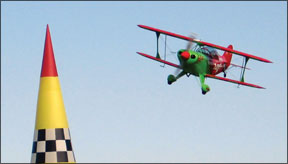
In many ways, the Pitts Special is responsible for the current state of amateur and professional aerobatics. First flown in 1944 (or 1945-sources vary) as a single-seat homebuilt with only a 55-HP engine, the type has developed into todays highly refined and FAA-certified, two-seat, 300-HP aerial hot rod used for advanced training and-at least in lower categories-competitive aerobatics. Many different variants have evolved over the years, including factory-built and experimental versions, but there remain two main types: a single-seater and a two-holer. Today, you can buy a new, factory-built machine from certificate holder Aviat Aircraft, or get the plans and components for a single-seat version from Steen Aero Lab. Dominant in aerobatic competition during the 1960s and 1970s, the Pitts Special long ago ceded that position to more-modern monoplane designs from Extra and Sukhoi. Even Pitts himself saw the monoplane light: Before his death in 2005 at age 89, he designed but never built the Model 13, an enclosed “coupe.” But the basic biplane design of the Special remains popular as a recreational and training aircraft, and still can be seen strutting its stuff at airshows, fly-ins, pancake breakfasts and private hangars throughout the world.

Read More »
Industry News

Forming a Corporation: Works Well For Groups

Prospective aircraft buyers must decide how to structure the ownership of the airplane. For an individual, the options are to put it in the owners name or to form a corporation to own the airplane. with the individual as the sole shareholder. (An L.L.C. is so nearly identical that we’ll use the word corporation to cover both.) If there is to be more than one owner, the aircraft may be owned as a partnership, with each owners name showing on the registration, a limited partnership (so rare in general aviation that we’ll ignore it here) or as an asset of a corporation with the owners being shareholders. The quick and dirty advice for which is best is simple: For an individual, a corporation does not provide any advantage unless the owner/pilot is doing significant charitable flying (medical mercy, environmental, etc.) and wants to use the available tax deduction for renting the airplane to him or herself. For group ownership, a corporation provides benefits that are worth exploring if the owners are willing to do the paperwork, reporting and file the required tax returns.

Read More »
Used Aircraft Guide

Used Aircraft Guide: Piper Tri-Pacer

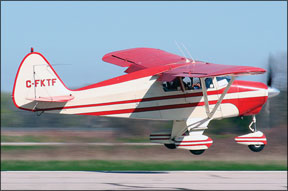
There was a time when almost all light airplanes were taildraggers. Tricycle-gear airplanes were rare, mainly because taildraggers-or conventional-gear airplanes, if you prefer-generally were better at dealing with the unpaved runways at most airports. This common kinship among light airplanes continued into the early 1950s, broken only by such types as the Ercoupe, Navion and Beech Bonanza, to pick three. Up at Lock Haven, Pennsylvania, in the late 1940s, the Piper Aircraft Corporation was making a wide range of airplanes, including the venerable Cub, mostly of fabric stretched over a wood or metal frame. Out in Wichita, Cessna and Beech were only beginning their transition to all-metal airplanes with tricycle gear, which must have made for some sleepless nights at Piper. While the company apparently couldnt develop an all-metal airplane overnight, it could convert its four-seat, conventional-gear Pacer to the tricycle-gear configuration ahead of many others.

Read More »
Used Aircraft Guide

Used Aircraft Guide: Robinson R44

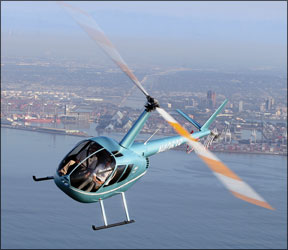
Pilots looking for a used aircraft usually have a mission in mind: Carry a specific payload over a certain distance in a minimum amount of time. And if you need to get to and from remote locations while mixing it up at nearby Big City International, you might have overlooked the helicopter. Until the early 1990s, anyone needing a personal helicopter configuredhad to go the turbine route; there were no piston-powered four-passenger helicopters. That changed in late 1992 when the Robinson Helicopter Company obtained FAA certification of its R44, a four-place rotorcraft powered by a Lycoming piston engine. While offerings from Enstrom, Schweizer, Brantley and even the venerable Bell 47 have proven popular, none of them seat more than a pilot and two passengers at most. Robinsons R44, on the other hand, takes the standard two-plus-two seating configuration of the a personal airplane and gives it a vertical takeoff and landing capability. The result is a hugely popular four-seat single-Robinson sold 664 copies of the R44 in 2007-that just happens to have a rotary wing.

Read More »