









Register

Search Results for: piper

Avionics

Noise Suppression: Lone Star Eliminates

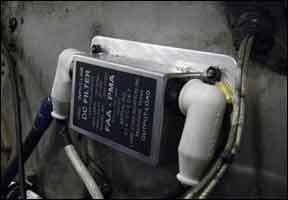
For the owner who’s invested thousands of dollars for a high-end audio system upgrade, electromagnetic interference or EMI, is a frustrating and common problem. While it’s natural to point the finger at the shop who just performed an otherwise high-quality avionics installation, there’s a good chance the source of the noise has been there all along­—and now amplified by the clarity of a new audio system and ANR headsets. Unfortunately, this could mean extra repairs that weren’t budgeted for. In this article, we’ll look at the common sources of electromagnetic interference and popular noise suppression products that could eliminate most of it.
Read More »
Aircraft

Arion Lightning LS-1: Not for the Masses

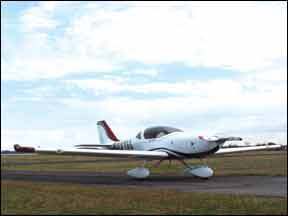
How about this for a challenging design concept? Start with a two-seat speedster with fighter-like handling, slow it down to meet the LSA 120-knot speed limit without excising any of the structure necessary for the stresses of the higher speed, then jump through the ASTM hoops to turn it into a production machine. That is exactly what Arion Aircraft did with its Lightning LS-1, an LSA that is finger-on-the trigger responsive in flight and among the fastest LSAs out there. The Lightning is one of the few LSAs that is not intended to be used as a primary trainer. “Although a very few buyers have learned to fly in their Lightnings, we did not design it for flight training,” explained Arion’s Nick Otterbach, one of the lead designers of the airplane.

Read More »
Aircraft

Speed: Buying 180 Knots for $180,000

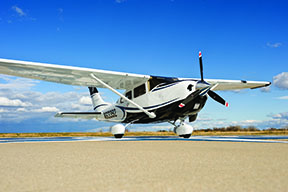
Speed matters. Ask any pilot. Frustratingly, speed costs money and lots of speed, as the warbird set says, costs cubic money. In the single-engine piston world, we’d each love to blast across the sky over 230 knots in a Cessna TTX, yet for most, the exchequer doesn’t quite stretch to the nearly three-quarters of a million dollars needed to buy one. In this day and aviation market age, a $180,000 purchase price isn’t out of line, especially if it’s split a few ways. Moving through the air at 180 knots is cooking along nicely, so in keeping with our general fascination with symmetrical numbers, we decided to create the 180 for 180 club and then find out what airplanes are qualified to join—those that have a real-life cruise speed of at least 180 knots and a Bluebook value of $180,000 or less. It turns out that a nice selection of airplanes qualify for the club. Naturally, our research lead to a number of caveats—few of the airplanes in the speed and price range were built in this century, and every single one of them is of sophisticated design with complex systems, so a careful pre-buy carried out by a maintenance technician who knows the type of aircraft is essential if you are going to avoid purchasing yourself a financial nightmare.

Read More »
Maintenance

Boot Replacement: Minimal Competition

When your airplane’s in annual, you probably monitor the caller ID with dread, living in fear of a call from your A&P that portends something expensive. If your airplane has de-ice boots—approved for known icing or not—they could easily be this year’s money hole. A full-up replacement set can cost, installed, anywhere from $11,000 for a single to $20,000 for twins. …

Read More »
Used Aircraft Guide

Used Aircraft Guide: Cessna 206

It’s not fast, nor is it that slow, but it is stable, rugged, reliable, has six real seats and is remarkable for being able to carry a half-ton or so after the tanks are filled. You can put it on floats, turbocharge it, dump skydivers from it, and carry small packages or just your family. It has proven tough and reliable enough to be a fixture in the bush throughout the world, holding on even as turbines shoulder out piston-power.

Read More »
Uncategorized

Renter’s Insurance Low Time = Low Limits

While it’s easy to peg GA’s continuing decline on rising avgas prices or threadbare FBO aircraft, the reality is more diverse. It’s a “death by a thousand cuts,” where cost and the fleet are major wounds, but free time, demographics, and a score of other factors play in.

Read More »

Used Aircraft Guide: Diamond DA40 Star

We’ve watched the evolution of the Diamond DA40 series with interest. Our first reaction to what would become the Diamond Star was to be less than impressed. We thought the canopy was a marketing ploy that would make emergency egress difficult, and the cabin looked small and uncomfortable. Then we flew it.

Read More »
Editorial

First Word : November 2012

I continue to be impressed with the ability of LSA designers to meet the strange and arbitrary weight limit for the category and still carry a reasonable amount of fuel. At the same time, I am hearing more and more questions about the crashworthiness of the airplanes and whether the manufacturer of such a flyweight machine can incorporate some degree of protection against a quick, unplanned stop for those who fly in them.

Read More »
Commentary

Letters: October 2012

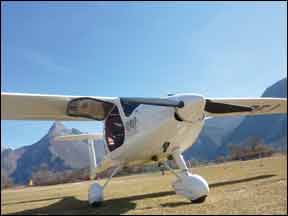
Flying a Piper Archer II, I drooled over the gas mileage of your best LSA pick, the Pipistrel Virus. So I flew to the SLA showcase in early 2012 at Sebring, Florida airport to get a closer look at the Virus. Once I got into the pilot’s seat, I wondered who would buy this airplane? To me, it is downright dangerous, as the main wing spar intrudes into the cockpit, crossing just a little bit in front of and above your head. (I am only 5 feet 9 inches.) In a not-too-perfect forced landing, your head could easily be crushed by the impact with the main spar. I mentioned my concern to the salesman who responded that, “You lean forward in front of the spar just before impact”… then I surmised the back of my head could be crushed as the indeterminate G forces toss my body and head around in milliseconds, seatbelts notwithstanding.

Read More »
Aircraft

Super Legend: Lycoming O-233 Debut

Other than having wings, an engine and a tall sticker price, certified and light sport airplanes don’t have much in common save one thing: People who buy both will pay for higher performance. And that’s the idea behind the new Lycoming O-233-powered Super Legend.After a fashion, the Super Legend is to the standard Legend as the Super Cub is to a J-3. The Super Legend is based on Piper’s venerable PA-18 and, according to Legend’s Darin Hart, some of the parts are directly interchangeable. (That’s true of the O-200 Legend, too.) With the Super Legend, American Legend is going after that strata of the market to whom performance, features and cache matter more than price. That turns out to be the dominant share of buyers, according to LSA market summaries. When we visited Legend’s Sulphur Springs, Texas factory in late August, it was in the final stages of LSA approval for the Super Legend. Hart told us despite the higher price tag, every other buyer is opting for the Lycoming version over the Continental O-200 model. In this report, we’ll take a look at how the O-233 (and flaps) transforms the Legend airframe.

Read More »
Aircraft Stepups

Turboprop Conversions: Pricey, Capable

Power and speed—two of aviation’s touchstones—have been pursued as long as there have been airplanes and people willing to throw money at them. Aftermarket designers have hung ever-larger piston engines on factory airframes, with varying levels of success, for decades. By the 1980s mod shops were bolting on turboprops in place of reciprocating engines and achieving impressive speeds, despite the challenges of assuring the airframe could handle the horsepower and juggling the fuel/payload equation on the small airframes. The small size and high power density of turbine engines makes them attractive, as does the increasing difficulty of obtaining avgas outside the U.S. However, there’s no free lunch; jet fuel weighs .7 of a pound per gallon more than avgas. That adds up because turbine engines have higher fuel specifics than piston pounders. For each horsepower output, the turbine uses more fuel than does a piston engine. The result is that the light weight of turbines is offset by the need to carry more, heavier fuel to achieve reasonable range. This becomes particularly acute in the relatively small, piston-powered airframes, and their correspondingly small wings and fuel tanks, designed for piston fuel consumption specifics.

Read More »
Avionics

Glass Panel Upkeep: Inspections, Software

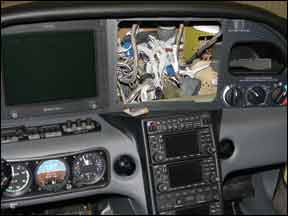
While stepping up to a glass panel may appear to offer lower maintenance bills and downtime, it’s just as likely that when the all-in cost of ownership is added up—including data revisions—glass could cost more than a well-kept steam gauge panel. Glass ownership is fraught with unexpected costs that many owners seem unprepared for. Routine costs might include optional upgrades, which offer system improvements and additional features. Some of these are free through manufacturer-provided software downloads, but cost several hours of billable shop labor to perform. For aging systems, some repairs could run thousands of dollars, especially if you haven’t purchased an extended warranty. In this article, we’ll take a look at some of the maintenance issues you might expect with glass panel ownership.

Read More »