










Register

Search Results for: piper

Used Aircraft Guide

Used Aircraft Guide: Pre-201 Mooney

Owners who have the eventual need for more speed might eyeball the used Mooney market. The search might logically start with the M20J or 201, which first appeared in 1978. While lacking some creature comforts and panel space, these machines are known for having respectable cruise speed, fuel efficiency and simple systems, while delivering the flying sports-car appeal that pilots love about flying Mooneys. If you find an older pre-201 Mooney that’s been we’ll maintained, has a low-time engine and the most popular mods, there’s a lot to love. But it’s not all roses. Since the biggest numbers of pre-J models were produced in the 1960s, age is a concern, as is Mooney’s serial bankruptcy and perceived economic instability, although most shops we spoke with have little trouble getting parts and support. The earliest models had wooden wings. Some of the rest had corrosion problems, fuel tanks with sealant trouble and an aftermarket bladder mod from O & M Aircraft that has an AD. Resale value is another issue.
Read More »
Uncategorized

As Cheap as it Gets: Legacy LSA ÷ 4

Even though I parked the Cubbie on a grass field for the beauty shot above, I’m really not much about the romance of flight. While I savor the fragrance of wet turf mixed with avgas exhaust as much as anyone, the thought of a $5500 annual—and I’ve paid them—tends to turn the rose-colored glasses into a darker shade of cynical. Not that I expect to ever pay a $5500 annual for the Cub, which is exactly the best reason for owning a legacy LSA—not the magic of slipping the surly bonds on rag wings, but the smug satisfaction of doing it for the price of a cheap date at Bob’s Big Boy. How to do that? Split the cost of an already cheap airplane two ways, three ways or four ways. If owning your own airplane increasingly sounds unaffordable, it’s much less so in a partnership to the point that the monthly cost can be we’ll under even a modest car payment. There’s no pretending the capabilities are remotely similar, but if you want to fly or even own, there’s an affordable way to get there.

Read More »
Commentary

Letters: September 2012

When considering the viability of electric-powered aircraft, it’s important to note the huge difference between the internal combustion (IC) engine that burns hydrocarbon fuels and an electric motor that relies on a battery energy source. The ratio of air mass to fuel mass at efficient combustion (stoichiometry) is about 14.6. That is, for every pound of fuel burned, 14.6 pounds of air are consumed. But you don’t have to carry the air since it is available in the atmosphere. Fuel weighs about 6 pounds per gallon, so 16 gallons of fuel weigh about 100 pounds. Over 1400 pounds of air will be consumed in burning that amount of fuel. An electric motor requires that all of the energy be contained in the battery. Since the energy density of lithium batteries is about 26 times less than the energy of gasoline, there is nowhere for electric propulsion to go. It is interesting to note that gasoline has 10 times the energy density of TNT that needs to carry its oxidizer within.

Read More »
Accessories

Cabin Sunshields: Kennon is a Top Pick

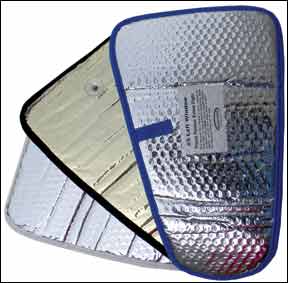
Protecting your cabin and pricey electronics from damaging ultraviolet rays should be a priority. If your aircraft lives outside, chances are you’ve invested in a cabin cover, but you might not use it for short parking stays on transient ramps. Cabin window sunscreens can be a good alternative. They’ll reduce cabin heat while keeping the sun from frying avionics, cabin accessories and interior components while also deterring theft. We judge sunscreens on three primary traits: Fit, durability and ease of storage. When they fit properly, they keep the sun out and reduce cabin heat. Good durability means they’ll continue to fit properly and stay in one piece after repeated manhandling and sloppy stowage.

Read More »
Avionics

Avidyne Plug and Play: Upgrades Made Easy

Avidyne is targeting Garmin’s customer base and simplifying installations with the CNS line of drop-in avionics that replace an entire Garmin stack. The core products include the IFD540 and IFD440 GPS navigators and can plug into existing GNS530 and 430 wiring. The concept of plug-and-play avionics is hardly revolutionary. In 1990, Michel Avionics’ MX-series TKM radios came close to perfecting no-wiring upgrades. Radios that mated with the aircraft’s existing wiring and mounting hardware became so popular that nearly 40,000 TKM navcomms were placed in service. This cheap alternative to costly avionics retrofit was later mimicked by now-defunct Narco Avionics.

Read More »
Editorial

Legacy LSAs Choices: Champ Still a Winner

Some of the most popular new LSAs are distinctly old-school in their roots. There are three popular modern takes on the Piper Cub. American Champion reintroduced the venerable Champ that begat the Citabrias and Decathlons. There are even a few modern Luscombes out there from an effort to revive that line.

Read More »
Uncategorized

Gear of the Year: Pipistrel Innovation

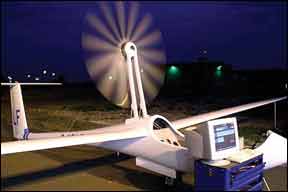
We’re not exactly big on heaping kudos on products that don’t exist. On the other hand, we know an exceptional idea when we see one and at least a couple of those are trickling out of tiny little Pipistrel Aircraft in Slovenia, thus we are picking Pipistrel as our company of the year for its innovation and creativity in aircraft design.

Read More »
Aircraft Stepups

Husky A-1C: Higher Gross, New Gear

When we speak to companies that build new utility airplanes—CubCrafters, Champion, Maule, Aviat and the like—we’re often told that buyers tart the things up with every feature imaginable suitable for jaunts into the bush. But do the owners really fly into remote mountain strips and river sandbars? Some do, but they’re just as likely to hangar the things in Houston or Kansas City and use them as fun flyers. We’re sure that comprises at least half of the market for the Aviat Husky A-1C, which comes as close to a new hardcore taildragging bush airplane as we can imagine.

Read More »
Industry News

Vortex Generators: Real Bang For the Buck

It’s one of those aircraft truisms that performance requires compromise. Controllability at low speed means compromising the wing that enjoys high-speed cruise. That’s what makes vortex generators (VGs) seem too good to be true: They claim lower stall speeds in singles and twins without a penalty in cruise speed. Sometimes they bump up the gross weight. For twins, they reduce minimum controllable airspeed (Vmc). This is speed below which controlled flight becomes impossible with the critical engine failed and the other engine at full power. Below Vmc, there isn’t enough rudder and aileron authority to counter the natural yaw and roll of the asymmetrical thrust. Translation: The airplane rolls over and crashes.

Read More »
Used Aircraft Guide

Used Aircraft Guide: Citabria and Decathlon

Owners who fancy a little light aerobatics—or even semi-serious competition—might lust after a Pitts S1 or an Extra 300. But then reality sets in. Those airplanes require no small degree of skill to simply fly safely and that’s before we consider the insurance premiums. And that’s why so many owners inevitably gravitate toward the Citabria or the Decathlon, starter aerobatic airplanes that turn out to have much more capability than many realize until they take a close look. These models have a lot going for them. They aren’t expensive to buy or maintain, they don’t have any serious gotchas and any pilot of average skill can learn to fly and land them safely. Moreover, they can double as respectable back-country flyers, which is something you’re not likely to do in a Pitts or an Extra.

Read More »
Engines

Austro’s Aggressive Play: Fast Track Development

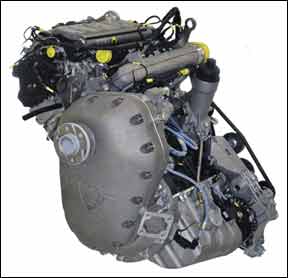
If new aircraft manufacturing ventures require a degree of faith to succeed, Austro Engine GmbH, grafted on to the side of the Diamond Aircraft factory in Wiener Neustadt, Austria must be the industrial equivalent of the Vatican. It’s not that Austro has no chance of success—the reverse may very we’ll be true—but that it’s investing heavily for a future that many in the industry can’t yet draw into sharp focus. The uncertain future of avgas—it seems to be all but dead in Europe and approaching life support in the U.S.—should make diesel engines a natural for strong growth. But with aircraft sales in the tank, that growth has failed to materialize. Gasoline powerplants still outsell diesels by a wide margin and some diesel projects—DeltaHawk, for instance, and Thielert’s slow-as-50-weight-oil life extension efforts, have a forever-over-the-horizon quality. The exception is Austro.

Read More »