









Register

Search Results for: piper

Used Aircraft Guide

Used Aircraft Guide: Cherokee 235/Dakota

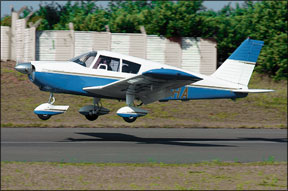
When Fred Weick and John Thorp set out to design a less expensive alternative to Pipers Comanche, its unlikely they thought the resulting PA-28 series would become so popular, so durable or so varied. Since introducing the Cherokee 150 and Cherokee 160 (PA-28-150 and PA-28-160, respectively), in 1961, Piper has stretched, T-tailed, turbocharged and reproduced that basic airframe tens of thousands of times. Its original “Hershey-bar” wings eventually gave way to a longer, semi-tapered design, the landing gear has been folded and many different powerplants have been fitted. While much has changed, the designs basic utility, systems, handling and reliability have remained. Three models remain in production-four, if you count the twin-engine PA-44-180 Seminole-almost 50 years later. While PA-28 Cherokees came in many flavors, the most powerful of them-the Dakota-isn’t the fastest but is perhaps the most flexible. It and earlier 235-HP Cherokees take advantage of the markets affinity toward muscular four-place singles, a natural attraction proven popular enough to support two significant entries for many years: the Cessna 182 Skylane and Piper PA-28-235/236. The 182 came first and outlasted the 235/236: By any measure, its been a success. Like the Piper, it features a good combination of utility, roominess and performance. Pipers version, however, never matched the 182s popularity, even though it combines the Skylanes chief attributes: decent performance, simplicity, and common, proven components. If your needs include a big dose of horsepower pulling a simple airframe, the most powerful PA-28 Cherokee is a very solid candidate.
Read More »
Avionics

Late-Model Cruisers: Cessna, Cirrus Are Tops

It was the best of times, it was the worst of times. Were not talking about Dickens 19th century London, but last week in the used aircraft market. Its the best of times if youre looking for a late-model used aircraft of any kind, the worst if youre trying to sell anything for top dollar. Stated another way, if you made a note to yourself to start shopping for a used model with glass after theyd been on the market for five year, now would be a good time. The market is awash with good deals on recent model aircraft and many of them have full glass for under $200,000-the downward pressure on prices is obvious. High inventories and brokers willing to wiggle improve buying prospects.For this article, were focusing on entry level four-place cruisers, specifically the Cirrus SR20, the Cessna 172, the Piper Archer and the Diamond DA40 Star. There are even better deals in the step-up Cirrus SR22, but we’ll focus on that later. About five years ago, brokers we occasionally talk to surmised that as Cirrus, Cessna, Columbia (now Cessna), Diamond and others pumped new aircraft into the market, this flood of new airplanes would inevitably put downward price pressure on the used fleet. We seem to have crossed this dividing line, thus the used models that had been appreciating or holding their value, now no longer do. Values of older used aircraft havent yet paralleled the sort of depreciation thats standard for cars, but with fewer buyers, they simply don’t retain value as they once did. The trend seems to represent an unusually good buying opportunity for owners looking to upgrade to something newer. Some surprisingly recent model aircraft are selling for prices we wouldnt have dreamed of two years ago. For our purposes, “recent” means 1997 forward-thats the year Cessna came back into the market. Two years later Cirrus introduced the SR20, then Diamond rolled out the DA40 Star.

Read More »
Uncategorized

Used Aircraft Guide: The Mooney 201

Amazingly, even the latest speed champions from Kerrville-the Mooney Type S Acclaim-trace their heritage to the original Mooney type certificate. The basic airframe has evolved over the years, but the concept of a semi-monocoque rear fuselage mated to a metal-skinned steel-tube cabin, a long and slender tapered wing and distinctive reverse tail has endured. The J-model evolved most directly from the F-model, which was itself descended from the short-body C-models of the mid-1970s. The first J-model or 201-the number derives from its supposed top cruising speed in MPH-appeared in 1977. It sported a 200-HP Lycoming four-banger-the IO-360-improved landing gear and a sloping windshield, among other changes. All of these were the product of a concerted effort by Mooney to kick the model line up a couple of notches. The 201 is, to the surprise of many, very much the work of the late LeRoy LoPresti. LoPresti had a long aeronautical background, including a stint on the Apollo lunar program at Grumman. He became a near legend for his ability to get the utmost from an airplane through aerodynamic cleanups, which hed done with success on the Grumman Tiger. Applying his magic to the M20F model, LoPresti and the Mooney team created the M20J. A number of changes were made, the most visible being a new cowling and a more aerodynamic windshield. The interior was addressed, too, with adjustable seats and a contemporary flat panel with organized electricals and circuit breakers rather than the typical dogs breakfast arrangement of the 1960s and 1970s.

Read More »
Aircraft

Fun-Size Floatplanes: Options for Most Budgets

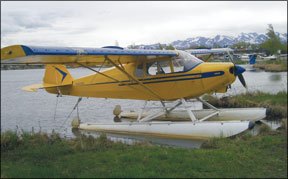
According to seaplane instructors, the most commonly uttered phrase by a landplane pilot following the first seaplane lesson is: “My Gawd, this is fun. Why didnt I do it sooner?” The second is often, “I want one of these things.” With the hook firmly set, lets look at what the truly smitten goes through in determining how much fun he or she can afford and what kind of seaplane to buy. We strongly suggest that the first step in such a process is to join the Seaplane Pilots Association. Its an excellent organization for those who want to have anything to do with seaplanes. Its forums contain a wealth of information on specifics of seaplane ownership and operation. What constitutes a fun seaplane? We consider fun seaplanes as ones where the idea is to fly purely for pleasure; in which the owner wants to knock around the sky and explore the waterways that are suitable and legal for seaplanes to alight; to take at least one passenger and enough stuff for a picnic or to go fishing or maybe stay overnight at a remote cabin or campsite on the shore. Fun seaplanes are for the aeronautical version of the sailors “gunkholing.” The airplane is not going to work for a living, need to haul a lot of stuff, travel great distances or handle particularly rough water or weather. We opine that fun seaplanes have but one engine that develops less than 200 HP, but we recognize that such a cutoff is arbitrary. The 145-HP Aeronca Sedan and 150- to 180-HP Piper Super Cubs and 180-HP Huskies are often serious, working seaplanes hauling cargo and people on a day-to-day basis.

Read More »
Engines

LOP Lab Report : Lean Run is a Home Run

Start with a heaped serving of ignorance, add equal measures of industrial inertia and mediocre engineering, add a dash of petulant, not-invented-here intransigence and you’ll have a lucid understanding of how the airplane industry looked at the mundane world of engine management 10 years ago. Or, more accurately, how it looked at engine leaning. Five years before that, General Aviation Modifications, Inc. had begun marketing its calibrated fuel injectors to wide market acceptance. Along with that, came the old-new idea of running engines lean of peak EGTs to save fuel and tame high CHTs. Reaction from the entrenched interests was harsh. you’ll fry the cylinders, said Lycoming. you’ll fry the valves, said mechanics. you’ll fry everything, said some engine shops. What was needed was a controlled experiment whereby a fleet of airplanes running lean of peak could be carefully monitored. Yes, we know the orginal Piper Malibu specified lean of peak, too. But its engine service history was spotty, probably for reasons not related to leaning. When it introduced the SR22 TN in late 2006, Cirrus provided a better lab rat because every SR22 has sophisticated engine data monitoring. Here was an airplane whose POH required lean-of-peak operation. It was nothing if not a bold stroke.

Read More »
Used Aircraft Guide

Used Aircraft Guide: Beech 33 Debonair/Bonanza

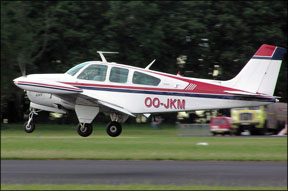
Beechcrafts Model 33 Bonanza was one of the few piston singles to survive the great general aviation slump of the 1980s. The quintessential doctor/lawyer single, it even outlived the previous archetype, the Model 35 V-tail Bonanza, by 12 years, only succumbing even as the landmark product-liability-reforming General Aviation Revitalization Act of 1994 became law. Ultimately, the six-seat Model 36 proved more popular than the four/five seat 33s. Since both reportedly cost about the same to manufacture, its a wonder the 33 held on as long as it did. But the four-seat, straight-tail Bo remains popular today. Owners love its flying qualities, performance, cabin comfort and sturdy construction. While many pilots, however, have words on the high cost of parts and maintenance supposedly typical of Beech aircraft, owners generally report a well-cared-for example needs very little. There are a few things to be careful of when operating a Bonanza, whether a 33 or V-tailed 35.

Read More »
Aircraft

Avidynes Revision Nine: The Best GA Glass So Far

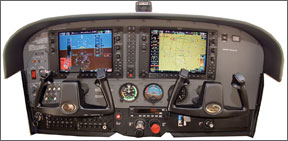
If you had to pick one company that broke the floodgates on glass cockpits for GA, it would be Avidyne. When Cirrus chose the Avidyne Entegra system for the SR-series aircraft, they became an industry leader. Piper also offered the Entegra system, and there are now over 4000 Entregra systems flying. But the Entegra was partly just a pretty face-that is, the GPS/nav/comm functions were actually done by Garmin avionics. When Garmin released its integrated G1000 system, the Entegra looked a bit dated in comparison. Columbia Aircraft offered a choice of systems to new buyers, and every single one chose the G1000. While Garmins G1000 evolved and L-3 Communications introduced its excellent SmartDeck, Avidyne was working away on the next generation of its flight deck system. The bulk of the system will be available this spring as Entegra Release Nine. Looking at both its user interface and capabilities, Avidyne is poised to retake the championship belt in glass cockpits for light aircraft.

Read More »
Uncategorized

Fuel-Cap Covers: Effective on Most Wings

Part of every piston-pilots preflight ritual is sumping the fuel tanks to check for water. Given that a modern Cessna has 13 of these fuel drains, wouldnt it be better just to keep the water out? Thats what Stay-Sealed attempts with a fuel cap to put in place over your existing fuel cap. The company offers covers that fit most single-engine Cessnas and Pipers. The covers arent interchangeable, so order the right type for your airplane. The cap is applied by pressing down and physically locking over the existing fuel cap. You need to pull up on the ring at the center to make sure its really in place. It shouldnt pop off. The company claims it will stay on in an 80 mph wind. It comes off with a slight pop when you pull from the corner with no scuffing to the paint. We tested the Stay-Sealed cover on two high-wing Cessnas by smearing a paste that changes color in the presence of water just inside the filler neck, closing the cap and then drenching the wing until there was standing water. We tried it with an unprotected fuel cap, a canvas aircraft cover and the Stay Sealed cover. (A big thanks to the folks at Cumberland and York Aviation in Biddeford, Maine, for their help with this.)

Read More »
Uncategorized

Used Aircraft Guide: Columbia 300/350

Sizzle sells. If that sizzle is an all-composite fixed-gear single with a modern panel thats faster than most retractables, it sells well. Just ask Cirrus. That sizzle is the premise behind the Columbia (ne Lancair) 300/350, normally aspirated versions of the companys subsequent flagship, the turbocharged Columbia 400. The 300/350s slippery airframe and the large-displacement Continental up front combined for 185 KTAS at 10,500 feet MSL when we first flew an early 300 10 years ago. A lot has happened since then. Speed was important when the Lancair/Columbia first hit the market, but the airplanes greatest initial appeal probably had more to do with not being made of metal or wearing a Beechcraft, Cessna, Mooney or Piper label. It was one of the new-generation singles, spawned by NASAs AGATE (advanced general aviation transport experiments) program and promised growing small aircraft use in inter-city transportation. The concept also brought forth the Cirrus SR20 and SR22, which proved more popular. The good news is a 300 or 350 will still outrun an SR22 by 10 knots or so, and theyre still rare enough to attract a crowd on many ramps. The bad news is-although both the Columbia 300 and SR22 have identical empty and maximum gross takeoff weights, according to the Aircraft Bluebook Price Digest-the 300 gives up 150 pounds in full-fuel payload to the SR22, because its tanks are larger. Its a little more sensitive in loading, too, and lacks the Cirrus airframe parachute system. More on weight and balance issues in a moment. And, of course, Columbia is no more, having been acquired by Cessna during Chapter 11 bankruptcy proceedings.

Read More »
Aircraft Stepups

Are Sales DOA? Hardly, But Buyers Rule

You know the world has changed when your financial advisor calls gushing about what a great day the market had. It lost only 300 points on moderate trading and hes certain the bottom is near. (Until, that is, investors find a way to tap yet deeper negative stratas.) In days of yore, stock market fluctuations far more benign than what weve seen since August have tended to spook airplane buyers into slamming their wallets shut. It stands to reason, then, that the current blood bath on Wall Street should have sent buyers burrowing deep underground, right? Not really, according to our recent survey of aircraft brokers we know. No one would describe the market as booming, but our interviews with brokers revealed less softness than we would have expected and, more important, there are some surprisingly good opportunities for buyers seeking deals on late-model used aircraft-prices are reasonable, inventory is high and sellers are adapting to this new reality. The world is less rosy for owners trying to sell run-of-the-mill, average airplanes, but these airplanes can still move, if the seller is willing to get the price right. (Thats another way of saying if youve got an average airframe tending toward the beater side of the spectrum, don’t expect to get a price anywhere near Bluebook value.)

Read More »
Commentary

Letters: 11/08

A friend lent me his August issue of Aviation Consumer because he knew Id enjoy reading your article on Tri-Pacers. Actually, I own a 1962 Colt, pretty much stock, although it was recovered for the second time five years ago. The previous recover was in 1973, before I owned it. With fabric still airworthy, my concern, as you pointed out, was what lay beneath it. We actually found very little structural rust and corrosion, so the restoration was a picnic and I enjoy flying it once again. Two things pop out in your article. First is the disparity in the current price range for airworthy Tri-Pacers, which your article stated as between $15,000 and $20,000. Ive been seeing prices between $25,000 and $30,000-plus. A little more research might be in order. Second is the phone number to contact Eleanor Mills, membership officer of the Short Wing Piper Club, who has recently moved to Springfield, Missouri. The number is now 417-883-1457 or e-mail swpn@sbcglobal.net. I heartily recommend the group. Their bimonthly news magazine alone is worth the price of admission.

Read More »
Aircraft Stepups

The Fight Against Ice: TKS Still the Top Choice

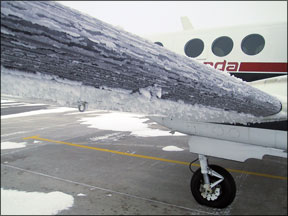
Inflight icing is as hazardous as it has ever been, but it doesnt hide the same demons it once did, which is another way of saying there are fewer icing accidents than there used to be. One reason is that owners are flying less and maybe flying in less icy weather, too. But forecasting technology has improved and-maybe the big one-more airplanes than ever (especially singles) are carrying deicing equipment. And where pneumatic boots used to be the only choice, now there are two others: TKS liquid deicing and, recently, electrically heated surface deicing. Obviously, the technology has moved forward, but are the latest developments any better than the original rubber boot? The short answer is yes, but the detailed answer is that electrical deicing for light aircraft has proven disappointing. (Cessna has dropped it for the 350/400 series aircraft it acquired from Columbia.) Given these developments, which deice system is the most cost effective and least maintenance intensive? And if flight into known icing is your wont, should you buy an airplane based on which system it has?

Read More »