Register

Search Results for: piper

Aircraft

Bargain Retractables

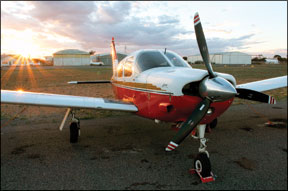
Hows a good time to buy a used airplane. Savvy buyers can snap up pretty much whatever they want, paying as little as 50 percent of what the same plane might have gone for only three or four years ago. But what to buy? Our answer always has been the right airplane for you is the right airplane for your mission. For many of us, that means a four-seater capable of [IMGCAP(1)]cruising at around 130…

Read More »
Used Aircraft Guide

Used Aircraft Guide: Mooney K-Model – Goes Fast, Sips Gas

Of age mellows people, the same thing might be said of airplanes, at least if the airplane in question is Mooneys M20K series. The airplane arrived in the GA market at a time when turbocharging was relatively new and the demand for high flying aircraft was thin. Mooney didnt get the M20Ks turbocharging system right on the first try and the airplane developed a reputation as a maintenance hog. Thirty years later, that reputation has been mostly burnished and the fact that the M20K bores along between 160 and 200 knots on relatively little fuel has improved the models used price. Still, the cabin is small and with a single door, hard to get into. For that reason and others, Mooneys have a bit of cult status to them. They are in no way everymans airplane in the way that a Cessna or a Piper is. But if cruising fast yet miserly is your wont, the M20K models-the 231, the 252 and the Encore-are strong contenders.

Read More »
Aircraft

Used Aircraft Guide: Cirrus SR20

Only 10 years ago, the idea of a certificated, “plastic” airplane had many old-timers shaking their heads in skepticism. It looks kind of interesting, but no “real” pilot would want of those things-its got a parachute, fergawds sake! Today, the Cirrus SR20-and especially its big brother, the SR22-have upended traditional ideas of what a personal airplane should look like, how it should be used and how it should be equipped. The SR20 could be thought of as the product that started changing how the industry thinks of a modern personal airplane. Those changes have been evolutionary, not revolutionary. For example, the early SR20s, in fact, retained the too-familiar vacuum-powered “steam gauge” flight instruments, albeit complemented by a large multifunction display. Todays copies have eliminated the vacuum system and gone all-electric, with full glass panels; steam gauges are only there for backup. And even if the SR20 responds respectably for its horsepower, performance didnt break new ground, either.

Read More »
Industry News

Aircraft Partnerships: Find the Right People

On the surface, co-owning an aircraft just makes sense. Most airworthy privately-owned light singles fly less than 100 hours a year-in many cases far less. Regular use is better for the aircraft and better for amortizing the fixed costs (hangar, insurance, databases) per hour of flight. More users should mean more bang for everyones buck. Unfortunately, several owners also mean more opportunities for conflicts in time, resources, flying style, opinion and even personality. Being connected to anyone by your checkbook can put a strain on the best relationship. There’s no magic formula for creating the right partnership. But our survey results hit the same key points with metronome-like regularity: Good partnerships have clear expectations between partners of similar economic standing, and they have written rules or bylaws to settle disputes.

Read More »
Uncategorized

Used Aircraft Guide: Commander 112/114

Its always interesting to contemplate general aviations boom-and-bust cycles. While exceptions certainly abound, it seems every other decade since the 1930s has included introduction of new aircraft or new technologies that further advance the state of the art. The 1970s were an upswing, avocado-green vinyl upholstery and Continentals Tiara engine notwithstanding. In addition to the iconic taper-wing Piper Cherokees, Cessnas original Citation and Beechs Model 200 Super King Air, the 70s also ushered in the Rockwell Commander 112/114 series of four-seat piston singles. For years, what was then called North American Rockwell had been trying to find the right mix of ramp appeal, performance and features to enter the general aviation market in a big way. Early attempts-the Lark and Darter, and efforts to revive the Meyers 200-didnt work out as the company hoped.

Read More »
Maintenance

Maintaining Your LSA : Few Lurking Land Mines

Back when this whole LSA thing was being conceived, part of the appeal was simplicity: Two seats, fixed-pitch prop, a couple instruments … what could go wrong? Actually, a lot can go wrong, break or just plumb wear out. So-called legacy LSAs can have over half a century on their airframes. Corrosion and fatigue mean just about anything can snap. For a Piper J-3, thats no problem. You could literally build a J-3 from scratch with available replacement parts. For an Aeronca C-3, your options are limited. Flying a new light sport (S-LSA) doesnt guarantee parts and support will be simple. Your experience will almost entirely depend on how the company built the aircraft, how we’ll they prepared for maintenance and how long they stay in business. Old or new, the first step in protecting yourself is understanding why LSA maintenance is different and knowing what questions to ask before you buy. Supportability for legacy LSAs is primarily a numbers game. If enough airframes of a particular are model flying, then its probably worth someones trouble to supply parts. Thats what makes models like the Piper J-3 (Cub) and PA-11 (Cub Special), or the Aeronca 7AC (Champ) and 11AC (Chief) good picks.

Read More »
Used Aircraft Guide

Used Aircraft Guide: Aviat Husky

Utility airplanes occupy an interesting market niche. Like any other airplane, they take off and land, cruise at altitude, carry a payload and offer some creature comforts. Naturally, just about any spam-can does that and probably can do it faster, more economically and with more pampering of the pilot and passengers. But unlike most other airplanes, utility airplanes are optimized to use short, unimproved fields without drama or damage, carry lots, require little maintenance and be field-repairable, just a few of the features with which the typical tricycle-gear, all-metal single has trouble. Over the years, types like Pipers Super Cub, the Maule series and the American Champion Scout have come to exemplify a utility airplane. All three were originally designed decades ago and have changed little since, fully depreciating their design and engineering costs. Too, there’s little “wrong” with these models: They aint broke, so they don’t need fixin. Put another way, the basic piston-powered utility airplane is mature technology. Into this niche came the Aviat (formerly Christen) Husky, unapologetically designed with the Super Cub firmly in mind. The result is a Part 23-certificated, well-built and good-performing airplane successfully competing against its forebears. In fact, its success is all the more remarkable since it was designed and certificated in the 1980s, something of a dark age for new general aviation designs. Utility airplanes, of course, are put to many different uses, including romantic bush flying, plus more mundane pursuits like pipeline patrol, ranching and even training. By all accounts, the Aviat Husky tackles all these challenges with equal aplomb, making it worth consideration by anyone looking into buying a utility airplane.


Read More »
Uncategorized

XM Weather Choices: Aviator Lite is Tops

Its inevitable that when you buy any product that has a dozen or more features, you use a few of them consistently and the rest might as we’ll not be there. High-end gadgets and features look good in the marketing copy, but why pay for extras you don’t really need? And thats exactly the situation with XM WX Weather, a first-rate system thats a great flight safety enhancer, but one that offers far more data than you need. In this article, we’ll examine what each service provides and explain why you can get by with the most basic service or, at the most, the mid-priced upgrade. As is the fashion in modern marketing, XM WX Weather offers three tiers of service-the more you spend, the more you get. While each package adds more features, it also essentially doubles the cost. The Aviator package was the launch product and it hasnt changed much in features and price since it was first introduced. At $49.99 per month, it has nearly a dozen weather products and its introduction fundamentally changed the rules for inflight weather awareness. Probing for the cost-sensitive bottom of the market, a couple of years later, XM WX Weather introduced Aviator LT, a reduced version of the Aviator package that, at $29.99 per month, stripped off nearly two-thirds of the Aviator services features, leaving only the NEXRAD mosaic, METARs, TAFs, precipitation type and TFRs.

Read More »
Used Aircraft Guide

Used Aircraft Guide: The LSA Capable Taylorcraft

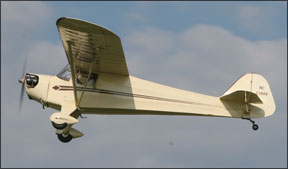
The years just after World War II must have been an exciting time to be involved in aviation. As the war wound down, manufacturers like Aeronca, Cessna, Piper and Taylorcraft were putting the finishing touches on new designs they were convinced would be market leaders. War-time training had turned out scores of thousands of pilots, most of whom it was thought would want something to fly when they got home. At the time, the state of the art for a personal airplane was a basic, two-seat traildragger of modest horsepower and tube-and-rag construction. Wood, as often as not, was a major airframe constituent and IFR was something not even all the airlines practiced. But, as it turned out, most returning pilots just wanted to settle down and raise a family; theyd had enough flying for one lifetime. While the hoped-for boom in demand for personal airplanes went bust, anticipated competition resulted in some classic designs: The Cessna 120/140, the Piper PA-11/12 and the Taylorcraft series come to mind, all of which remain popular today. And many-though by no means all-have seen a renewed interest, thanks to the FAAs light sport aircraft rules, which were five years old this summer. Of them, the Taylorcraft is among the types with the longest production history, new, non-LSA-compliant models having been produced as recently as the 1990s. Though its unlikely any new Taylorcraft will be manufactured, parts are readily available, as is some level of factory support. More on that, below.

Read More »
Industry News

Buying Repo Cessnas: A Few Stellar Deals Exist

For many of us, the mention of a repo man may conjure images of Emilio Estevez hunting down a 64 Chevy Malibu with aliens in the trunk. But the sad truth is that repossessions happen on aircraft just the way they do on any other vehicle bought on credit. There’s a common misconception that these aircraft go back to the manufacturer. They don’t. They go to the bank that financed the sale and now has an aircraft owner defaulting on their loan. Thats a sad day for the owner, but, perhaps, an opportunity for you-if you want a light Cessna or a Bell helicopter. Banks (or finance corporations) don’t want to own aircraft. So much so that our sources tell us they will do almost anything to work with the buyer to avoid taking the aircraft. But it does happen (perhaps more so these days) so there are systems in place to try and recoup some of the loss. For most major finance outlets, that means the repod aircraft goes to a dealer who then resells it. It turns out the right to do this is highly prized and closely guarded information among aircraft dealers. We tried to find out where youd be likely to find a repo Diamond or Cirrus and had only limited success-and where we did have success it was as off-the-record information only.

Read More »
Used Aircraft Guide

Used Aircraft Guide: Cessna 425 Corsair/Conquest I

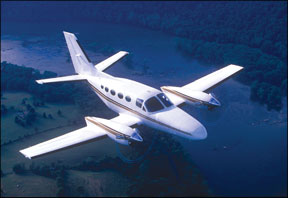
For anyone alert and paying attention to general aviation during the 1970s, current offerings from the “big three” manufacturers-Beech, Cessna and Piper-must have seemed like an afterthought. Back then, all three companies offered a full range of propeller-driven aircraft, from two-seat trainers to mile-chewing turboprops. Heck, Cessna even began selling jets early in that decade. For most of us mere mortals, though, a turboprop was about all we could expect to ever try stuffing into a hangar. But even there, we had choices. Beech had been busy making its King Air line since the mid-1960s, while Piper gained FAA certification of its first Cheyenne model in 1972. Cessna, perhaps nodding to Beechs preeminence in the market, leapfrogged turboprops altogether, preferring to put its development dollars into the Citation line, a move thats paid off handsomely. But the 70s were almost ready to yield to the 1980s before Cessna type-certificated its first turboprop, the Model 441, in August 1977. Now known as the Conquest II, the Model 441 was an evolution of the Model 404 Titan, a piston-powered twin, powered by Garrett (now Honeywell) TPE331-8 Series turboprop engines. Confusingly, the Model 425-eventually dubbed Conquest I-earned its type certificate almost three full years later, and started life as the Cessna Corsair. Itself an evolution of the very successful Model 421, the 425 was powered by venerable Pratt & Whitney Canada PT6A-112 engines. Before production of Cessnas “Baby Turboprop” ended in 1986-along with a lot of other models from among the GA manufacturers-some 236 Model 425 Corsair/Conquest Is were produced.

Read More »
Commentary

Letters: 07/09

Congratulations on a great article on the 210. Thoroughly enjoyed it. However, one comment caught my eye on page 27 “Owners report…annuals that run around $2500 to $3000.” Sorry, I don’t buy that. In 2003, when I was looking for an aircraft, I purchased a used 1982 TR182. I would rather have had a T210 but, being picky about my maintenance, I was not sure that I could afford to maintain the aircraft properly. I settled happily on the TR182, which has been a great airplane. Since 2003, my annuals have been: These are the out-the-door costs and, by the way, the 2004 and 2008 annuals were owner assists-not Cessna service centers, but reputable mechanics. I believe that what you are showing is the basic shop charge for the annual inspection. I think that this could be very misleading. I suggest that you show total costs for the annual and include the shop basic annual charge if you like. That would give a much more realistic cost of ownership to prospective buyers. If I were to believe those annual numbers, maybe I should have purchased a T210.

Read More »