









Register

Search Results for: piper

Aircraft

Diamond DA42-L360: Lycoming Reborn

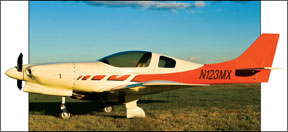
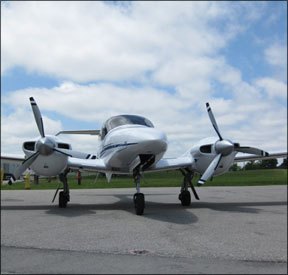
When Diamond was hard into its certification of the DA42 Twin Star in 2005, it knew it was taking a big chance on the untried Thielert 1.7 diesel engines. But it also hedged its bets by running a near parallel certification effort of the same airplane fitted with Lycomings angle-valve IO-360, a we’ll proven powerplant. It back-burnered the Lycoming project once it appeared that the diesel engines were both preferred and were gaining ground in the market. It now appears as though the Lycoming hedge is paying off, by necessity. As is we’ll known by now, the Thielert diesels turned out to have a spotty service record at best, a disastrous one at worst. The engine required numerous periodic replacement parts-mainly gearboxes and clutches-but also lots of unscheduled (and expensive) maintenance that all but tanked the 1.7 diesels as serious contenders. As we go to press this month, Diamond is finishing certification details on the resurrected Lycoming project under its new version of the airplane, the DA42-L360. (The trade name Twin Star has been dropped because of a trademark dispute with a helicopter manufacturer.) The Lycomings will be offered as an option in place of the newly certified Austro AE300, which Diamond also brought to fruition by launching a company just for that purpose. The new engines will be available for both new aircraft and owners of existing Thielert diesel models who may wish to convert. (We suspect many will.)
Read More »
Engines

The Other Diesels: Austros Competition

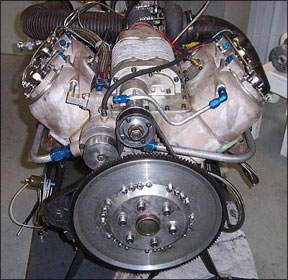
If economic recovery requires the restoration of confidence, we have a suggestion: Just bottle up the bounding confidence that the developers of aerodiesels have that Jet-A engines are the future and distribute it to the general population. Although the aerodiesel market has, at best, stumbled along looking for serious traction, the unswaying conviction of those in the diesel industry seems to be that Jet-A piston engines are an inevitability. According to our count, there are six active projects in the aerodiesel arena: Austro, Centurion (formerly Thielert), DeltaHawk, SMA, Gemini and Zoche. (Remember them?) Heres an update on each.What we found most interesting about the current state of the aerodiesel market is that its four to two in favor of purpose-built aircraft engines rather than engines adapted from the auto segment. The automotive crossovers are Austro and Centurion, both of which are adapted from widely successful Mercedes Benz automotive diesels. SMA, DeltaHawk, Gemini and Zoche are all clean-sheet designs developed specifically for aircraft. Thus far, the only remotely successful aerodiesel is the Thielert (now Centurion) 1.7 and 2.0 liter diesel series which Diamond enabled by adopting it for the DA42 Twin Star and the DA40 TDI.

Read More »
Used Aircraft Guide

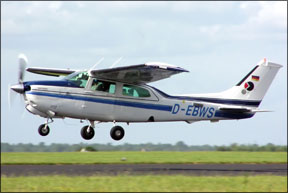
Used Aircraft Guide: The Cessna 210 Centurion

The six-seat retractable single is a market niche to which many prospective owners aspire. And why not? They are as fast as many twins, can carry prodigious payloads, come with plenty of panel space to install any goodies the previous owner neglected and generally are easy to fly. The solo powerplant avoids a twins upkeep costs while most systems-with landing gear being a notable exception-are almost as simple as the trainer first soloed. Despite all that, there really are only three broad models from which to choose: The 36-series Bonanza, Pipers Lance/Saratoga and Cessnas 210 Centurion. Yes, Piper also has the non-pressurized, cabin-class Matrix-ne Malibu-but its not really been on the market long enough or in great enough numbers to make most prospective purchasers lists. And if fixed gear is more your cup of tea, then both Piper and Cessna have other offerings making the cut. But the six-seat retractable offers a good mix of the things pilots with a need to go places and carry more than two people often look for: good range/endurance, loading flexibility, enough cruise speed that inevitable headwinds don’t prolong the agony that much and the ability to mix easily with the airliner flow into the larger airports.

Read More »
Aircraft

CubCrafters LSA Cub: Stunning STOL

As applied to airplanes, the word “performance” has a multi-tiered meaning. Wed guess most pilots think of speed first, then payload or climb and then maybe short or rough field capability. The light sport segment bollixes up the usual logic because none of them are very fast, although they vary in payload and runway capability. On that last point, a new LSA offering from CubCrafters promises to reset the scale on what short takeoff and landing capability means, so much so that there are going to be some envious Super Cub pilots in Alaska drooling over this thing. The airplane is called the Super SportCub and it was unveiled just prior to Sun n Fun. Had it not been for an item in the press announcement, we would have said that this airplane is simply another entry in what is turning out to be just way too many LSAs than the market will ever support. But that one thing was the engine: a 180-HP O-340 four-banger loosely based on Lycomings O-320, but stroked and modified as an experimental engine by Engine Components, Inc. But wait a minute…doesnt the airplane still have to meet the 1320-pound LSA gross weight limit and can it do that with that big engine? It does and, evidently, it can.

Read More »
Homebuilts

Buying Used Homebuilts: A Few Right Choices

The claims sound almost too good to be true. A Lancair IV-P offers 270 knots on 24 GPH or a 1500-mile range with reserves. A Murphy Moose hauls 1300 pounds of cargo and 80 gallons of fuel out of 1000-foot strips and climbs 900 FPM. A nearly-new Epic LT six-seat turboprop can be yours for $300,000 less than a mid-time TBM 700. But unless youre a resourceful and patient type who enjoys the challenge of wrangling maintenance issues or flying an aircraft that demands top-notch piloting technique, you can stop reading here. The designers of kit aircraft didnt repeal the laws of economics or physics. Squeezing out more performance at lower cost comes at a price somewhere else. If youre just looking for a faster or cheaper ride, the tradeoff probably isn’t worth the gain. If tinkering appeals to you, then you need to ask yourself two questions: How much docile handling are you willing to trade for maximizing speed or STOL performance? How willing are you to assume the risks and additional oversight that comes with an aircraft built by an amateur?

Read More »
Uncategorized

Roll Your Own Glass: No Ideal Solution

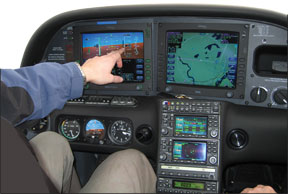
As we pointed out in our April issue of Aviation Consumer, there are some sweet deals on used, glass-cockpit aircraft. But for many owners, this jump in the ownership food chain might not be practical or affordable. If youre perfectly happy with your current wings (or just have good reason not to sell right now) but lust for the big-screen glass that dazzle front and center in new cockpits, you have options. Unfortunately, there are caveats a-plenty. Our definition of glass here includes a primary flight display (PFD) and some kind of modern multi-function display (MFD) and modern IFR-GPS the likes of Garmins GNS-series navigators. Traffic and satellite weather are in the mix as well. Were talking fully certified systems focused toward certificated aircraft-nothing experimental or portable installed on the panel. Step one is a review of your stock electrical system. New, all-electric aircraft require electrical-bus and electrical-system redundancy. Your old airframe likely doesnt have dual batteries, dual alternators or dual electrical busses, and equipping a 70s-vintage Skylane to these specs just isn’t going to happen. Some equipment wont accept a 14-volt input voltage, including the popular Avidyne EX500 MFD. That means a current-hungry voltage converter if installed in a 14-volt system. That brings us to the other major issue: overwhelming the electrical system of an older bird in supporting all those fancy new avionics. Many 14-volt alternators werent intended to keep up with this intense charging demand. Some owners with full panels report increased incidents of alternator failure or screen blackouts when running high-draw accessories like landing lights or gear and flap motors. Have your shop do an electrical load analysis for your proposed avionics suite. And always keep a healthy battery in the aircraft. It works hard. Reworking the original bus and installing properly rated push/pull circuit breakers and proper labeling can be surprisingly pricey and time-consuming. Is it worth it to rewire analog engine gauges and warning lights while the panel is open? How about replacing old switches with modern, lighted rockers? What about all that old wiring lurking behind the panel and woven through the airframe? This can get expensive even before putting in the new stuff.

Read More »
Used Aircraft Guide

Used Aircraft Guide: The Beech Sierra

The normally aspirated 200-HP piston single is a popular niche, filled with a variety of aircraft types. Each, however, comes in the same basic configuration of four seats, a constant-speed prop and-except for the Cirrus SR20 and the much older Beech Musketeer Super III-retractable landing gear. For example, this is where the Mooney 201 resides, alongside most Piper Arrows and Cessnas Cardinal RG, all of which were developed from earlier models with less horsepower and, except for the Mooney, originally equipped with fixed gear. Beechs entry into this market-like its competitors offerings-was also a growth model, from the Model 23 Musketeer, in this case. Never a speed demon, the Musketeer and other models using the same basic airframe-and most any product from Beech, for that matter-are well-known for quality components and construction as we’ll as comfort. The end result, the Model 24R Sierra, isn’t the sleekest of the 200-HP crowd, and it certainly isn’t the fastest. It might be the most comfortable, however, and perhaps the most reliable. Beechs Musketeer was the companys answer to the Cherokees and Skyhawks of the world. The first of that line, the Model 23, hit the market in 1963. Three years later, the Model A23-24 Super III debuted. With 200 HP and fixed gear, it wasnt nearly as fast as the same-power Mooneys of its day (the Arrow and Cardinal RG hadnt hit the market yet). In 1970, Beech made the decision to fold the A23-24s landing gear, dubbing the result the Model A24R Super R. The Sierra name came with the B24R in 1973. Also, Beech one-upped Cessna, Mooney and Piper by making the A23-24 and the 24R models nominal six-seaters, if so ordered from Beech; they cannot practically be retrofitted with the aft seat, due to structural differences.

Read More »
Uncategorized

Turbonormalized Cardinal

Cessnas 177 Cardinal can best be described as one of those should-have-been products that just never…was. Sleek, good looking and with decent payload and speed, it never quite nudged the Skyhawk into retirement, as Cessna had hoped it would. Nonetheless, the airplane still has a loyal following of owners, many of whom pine for additional speed. That wish is now grantable in the form of a new turbonormalizing system now in the final certification stages at Tornado Alley Turbo in Ada, Oklahoma. TAT is we’ll known for its Bonanza and Cessna 185 TN systems, not to mention its hot selling (at least until recently) turbo system for the Cirrus SR22. The new Cardinal conversion-which retails for about $40,000, all in-adds to TATs lineup. In mid-March, we visited TATs Ada skunkworks to examine and fly the TN Cardinal RG. (Only RG owners need apply; the STC doesnt cover the fixed-gear version.) The airplane we flew was equipped with what will be the actual TN hardware, although the final dots and crossed-Ts on the paperwork were expected to be done before summer 2009.

Read More »
Editorial

First Word: 05/09

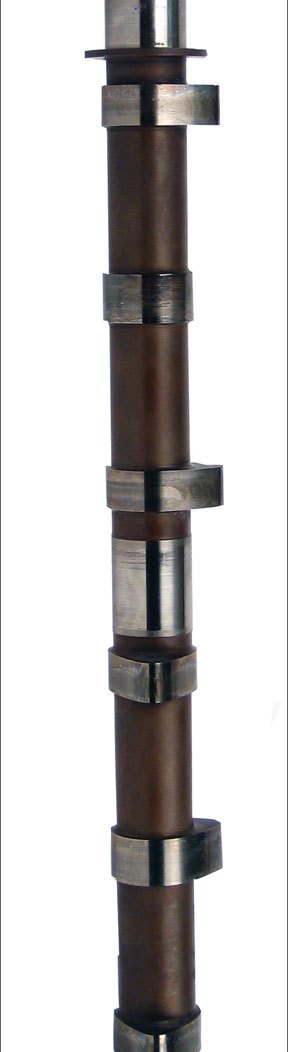
Ho-hum, another week another cylinder recall. Thats a bit of an exaggeration, I guess, but not by much. Considering the number of recalls, ADs and service bulletins that zing by, you have to wonder if weve forgotten how to make airplane parts in the is country. When I started flying in 1969, I only vaguely recall any parts call backs. Of course, I was too poor to own an airplane then and when youre in the renter loop, you don’t notice such things. And noticing or not noticing them may be part of the problem here. As I was researching the article on camshafts in this issue, I asked a couple of the engine shops I know if parts quality has gotten really bad lately or are we just noticing it more. They seemed to be of the universal opinion that things are worse than ever with regard to manufacturing shortfalls making it into the supply chain. Thats not the same as saying quality control is worse than ever because quality is, by its major definition, consistency. My guess is that parts built today are more uniformly on spec than they were 30 years ago or even a decade ago. So why all these recalls? My theory is that statistical process control has something to do with it. This method of quality control works great in the kind of volumes that the auto industry does. I don’t think its quite so hot when the volumes sink to the dozens and hundreds that GA manufacturers typically do. Even though both Lycoming and Continental have largely converted to CNC equippage, there’s still far more handwork in airplane building than in carmaking.

Read More »
Commentary

Letters: 05/09

There is absolutely nothing wrong with your evaluation of three landing lights available to general aviation aircraft. (See March 2009 Aviation Consumer.) I think it will be extremely useful to many aircraft owners who have to wonder what the best option for landing lights really is. However, I am writing because I believe that my company, Laminar Flow Systems Inc., has available a Final-Light LED landing light which would have produced quite a different result, if it could have been included in the tests. I am not faulting Aviation Consumer for not including it-the Final-Light is only just now becoming available, although I showed it a Oshkosh a year ago. It comes with an FAA DER approved 8110-3 form included in the $350 to $400 price. Since there is no immediate prospect of a new test happening, I have made a video of a similar test, which included our Final-Light as we’ll as the ones AC tested, and some other combinations. You can see the video at http://snipurl.com/euzla. You can also find it on YouTube by searching “LED Landing Light Test.” I cannot pretend to the impartiality of the Aviation Consumer tests, but I will state that all the lights were tested under the same conditions. I will also be sending Aviation Consumer a Final Light in the hope that you will get a chance to evaluate it soon.

Read More »
Cockpit Accessories

Buying Used Glass: Beware the Pitfalls

Last month we looked at buys on late-model, four-seat singles (“Late-Model Cruisers: Cessna, Cirrus Are Tops,” Aviation Consumer March 2009) and were shocked at how many good deals there were on used aircraft with glass cockpits. How about a 1300-hour 2005 Cessna 172SP with a G1000 and autopilot for $157,000? We found similarly-equipped 2005 and 2004 Diamond DA40s with about 1000 hours on them for $165,000 and $159,000, respectively. Tipping the scales a bit further was a well-kept 2003 Cirrus SR22 with 1251 hours, TKS de-ice, Skywatch, Stormscope, XM-weather, digital charts, TAWS and the latest revision of the PFD software for $210,000. Looking up the food chain to Mooneys, Columbias, Barons and the like, the deals are less dramatic, but they are still huge discounts from the new prices for relatively low-time aircraft. A good example is the 165-hour 2006 Mooney Ovation 2 with a G1000, known ice and most every option for $350,000. With the economy pulling the rug out from more and more people, repossessed aircraft are hitting the market as well. Were even seeing still-new 2007 models that have been wallflowers waiting for an owner with their sticker price sinking lower and lower.

Read More »
Maintenance

Engine Warranties: Stay Close to Home

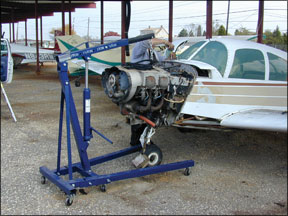
If there is a truism regarding piston aircraft engines, its this: Standard warranties arent. Our research and responses to a recent survey suggest that manufacturer and shop support quality is all over the map, literally and figuratively. For example, engine manufacturers generally enforce limitations in warranty provisions, without exceptions, right? Most of the time, yes, but evidence suggests exceptions are made. At the other end of the spectrum, stories abound of local overhaul shops going beyond their warranties, usually as a way to ensure favorable reports about them spread among area pilots. But if they go out of business, where does that leave you? Despite those exceptions-or perhaps because of them-survey responses indicate youre better off addressing the obvious questions of expense and downtime by sticking close to home: If one shop did all the work, you know where to go if something isn’t right. But if you bought a factory reman, for example, and your local FBO did the installation, getting the right person to pay attention to a problem can be, well, a problem. The good news is there are plenty of choices; the bad news is horror stories are alarmingly frequent. And, as many owners know, it seems no matter whose cylinders are bolted on, there’s no guarantee there wont be an AD or factory recall adding to the frustration.

Read More »